Context
The western tragopan, one of India’s rarest pheasants, faces severe long-term survival challenges despite the success of captive breeding efforts in Himachal Pradesh. Concerns arise from habitat degradation, climate variability, and stalled rewilding initiatives, even as fewer than 9,500 birds remain in the wild.
About Western Tragopan
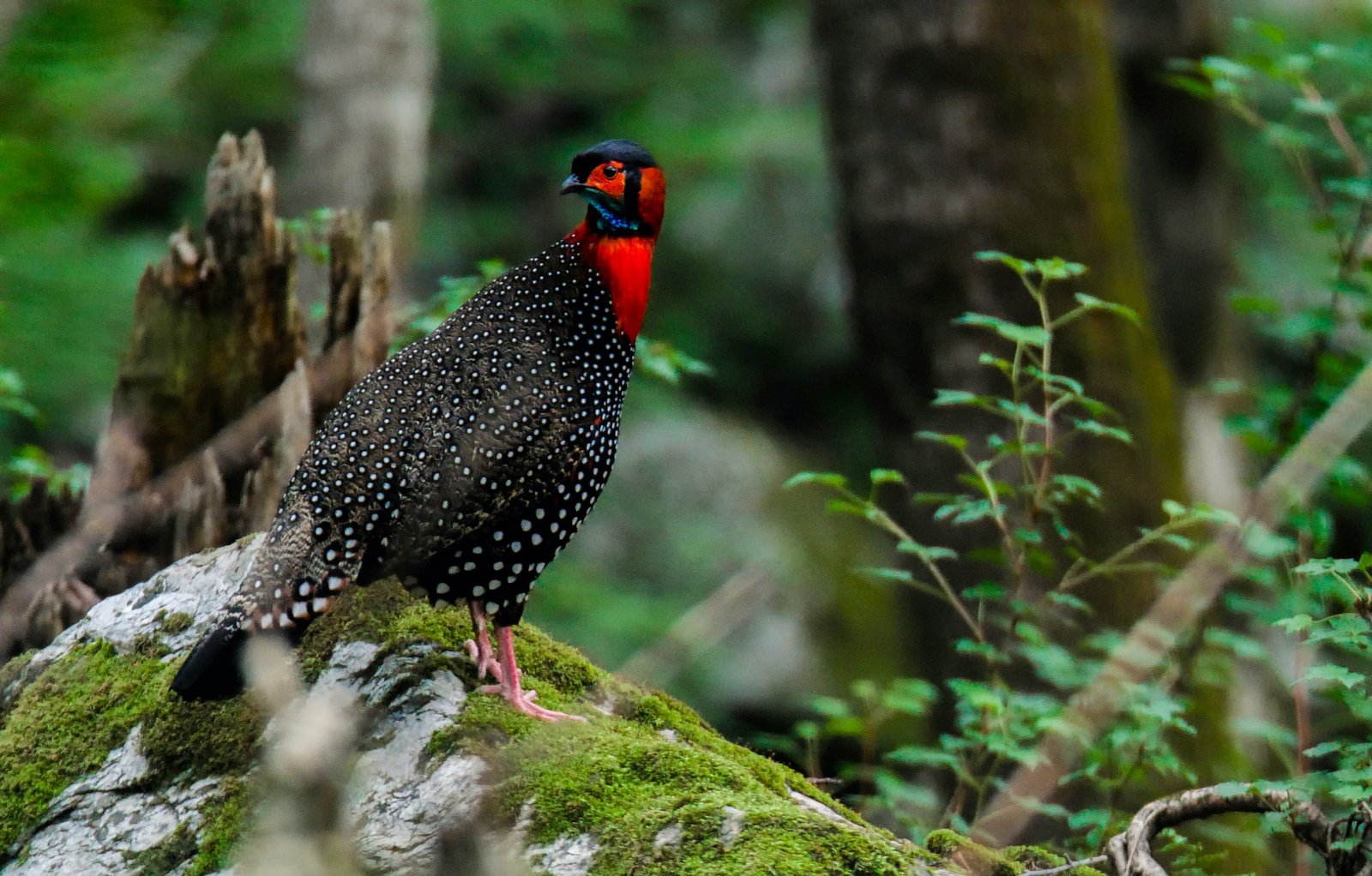
- The western tragopan (Tragopan melanocephalus) is a vulnerable Himalayan pheasant and the state bird of Himachal Pradesh.
- Once found across Jammu & Kashmir, Himachal Pradesh, and Uttarakhand, it now survives in small, fragmented habitats across the western Himalayas and parts of Pakistan.
- Conservation status of Western Tragopan:
- IUCN Red List: Vulnerable (VU)
- Indian Wildlife Protection Act, 1972: Schedule I species (Provides highest legal protection in India)
- CITES: Not listed in CITES Appendices
What is the Western Tragopan Issue?
- Its population is estimated at 3,000–9,500 mature individuals, forming a single subpopulation.
- Habitat fragmentation, human disturbance, and climate change threaten its survival.
- Captive breeding has been successful, but habitat conservation has not improved proportionately.
- Ex-situ and in-situ measures remain poorly integrated.
- Reintroduction trials have begun but remain paused due to funding and research gaps.
| Captive breeding: It is the process of breeding and raising wildlife species in controlled environments such as zoos, breeding centres, or conservation facilities, with the aim of increasing their population, preserving genetic diversity, and supporting future reintroduction into natural habitats. |
Why Does the Conservation Challenge Exist?
- Severe Habitat Fragmentation: Forests in Kazinag and Limber show suitable climate conditions, but human disturbance breaks continuity.
- Single Small Population: All wild individuals belong to one subpopulation, increasing vulnerability.
- Climate Variability: Changes in seasonal timing affect food availability, breeding cycles, and chick survival.
- Overemphasis on Ex-Situ Breeding: Captive breeding progressed, but wild habitat protection lagged behind.
- Resource Limitations: Funding gaps, limited research, and slow protocol development hinder reintroduction.
How Conservation Efforts Have Unfolded?
- Captive Breeding at Sarahan Pheasantry
- First captive births began in 1993.
- Breakthrough in 2005: four chicks hatched through the world’s first successful captive breeding programme for the species.
- Between 2007–2015, 43 captive-born individuals were recorded.
- Genetic analysis showed all captive birds descended from eight wild founders, retaining 87% genetic diversity.
- Husbandry systems were redesigned:
- Dense cover, natural nesting material, seasonal diets, and stress-reduction measures.
- Today, the pheasantry maintains around 46 birds; 6–8 eggs hatch annually with 4–5 chicks surviving.
- Challenges in Early Years
- Several years saw no eggs or chicks.
- Improvements came only after biologists redesigned management practices.
- Climate-linked Biological Disruptions
- Breeding cycles no longer align with insect availability.
- Lower-altitude warming affects habitat suitability.
- Stalled Reintroduction Attempts
- Experimental releases in 2020–2021 showed promising survival (one bird survived nearly a year).
- Since 2023, reintroduction has paused due to funding shortages and the extensive research required for site preparation, predator mapping, and protocol development.
- Role of Communities
- Community-based tourism in areas like Rakhundi and Shilt incentivises villagers to protect habitats.
- Reduced disturbance has already improved wild sightings.
Implications
- Species Survival at Risk: Without habitat protection, captive breeding alone cannot guarantee recovery.
- Genetic Bottleneck Concerns: Dependence on eight founders may reduce long-term genetic resilience.
- Climate-induced Mismatches: Disrupted breeding cycles threaten chick survival rates.
- Need for Integrated Conservation: Ex-situ and in-situ strategies must work together to secure habitats and reintroduce birds successfully.
- Community Involvement as a Key Lever: Local stewardship can stabilise and restore breeding areas.
Challenges & Way Forward
| Challenges | Way Forward |
| Fragmented and disturbed habitats | Strengthen protected areas, restrict disturbance in breeding zones |
| Climate-driven disruption of breeding cycles | Monitor phenology and adapt site-specific conservation actions |
| Stalled reintroduction due to limited funding and protocols | Allocate stable funding and develop standardised reintroduction guidelines |
| Overdependence on ex-situ breeding | Balance ex-situ and in-situ approaches through joint planning |
| Limited local incentives for conservation | Expand community-based tourism and livelihood programmes |
Conclusion
The western tragopan’s future depends on more than captive breeding success. A sustainable recovery requires intact habitats, climate-responsive conservation strategies, long-term reintroduction planning, and empowered local communities. These combined actions can shift the species from survival mode to recovery.
| EnsureIAS Mains Question
Q. Discuss the conservation challenges of the western tragopan. How can ex-situ and in-situ strategies be integrated to ensure its long-term survival amid climate variability and habitat fragmentation? (250 Words) |
| EnsureIAS Prelims Question
Q. Consider the following statements about the western tragopan: 1. It is found only in India and does not occur in Pakistan. 2. All captive western tragopans at Sarahan originated from eight wild founders. 3. Captive breeding of the western tragopan in India first succeeded in 2005. Which of the above statements is/are correct? Answer: b) 2 and 3 only Explanation: Statement 1 is incorrect: The species occurs across the western Himalayas, including northern Pakistan. Statement 2 is correct: Genetic studies show the entire captive population descended from eight wild individuals. Statement 3 is correct: The first successful captive breeding occurred in 2005 at the Sarahan Pheasantry. |