| Important questions for UPSC Pre/ Mains/ Interview:
1. What was the dispute before the Kerala High Court? 2. Why was the celebrity made a party to the consumer dispute? 3. Why did consumer fora initially allow proceedings against the celebrity? 4. What legal provisions were examined by the High Court? 5. What did the Kerala High Court ultimately hold? 6. How did the Court limit the scope of endorser liability? 7. What was the role of the 2022 Misleading Advertisement Guidelines? 8. Why is this judgment important for consumer protection and governance? |
Context
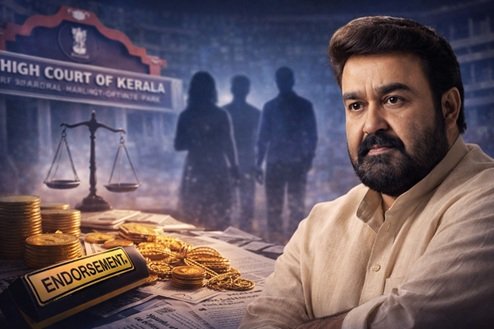
The Court set aside consumer proceedings against actor Mohanlal in a dispute involving alleged unfair trade practices by a finance company. The ruling draws a clear line between promotional activity and transactional responsibility, with wider implications for consumer protection, advertising regulation, and corporate accountability.
Q1. What was the dispute before the Kerala High Court?
- The case arose from gold loans taken by two borrowers in Thiruvananthapuram.
- The borrowers initially pledged gold with a bank at a lower interest rate.
- In 2018, the loans were taken over by a finance company after an assurance of a reduced interest rate.
- The borrowers later alleged that the interest actually charged was higher than what was advertised.
- They claimed they were influenced by advertisements featuring a popular actor who was the brand ambassador of the company.
- When higher interest was demanded at loan closure, they approached the consumer forum alleging unfair trade practices and deficiency in service.
Q2. Why was the celebrity made a party to the consumer dispute?
- The actor was impleaded solely because he appeared in the advertisements of the finance company.
- The complainants argued that the advertisements influenced their decision to shift the loan.
- They sought compensation not only from the company and its manager but also from the celebrity endorser.
- The dispute reflected a broader concern about whether endorsers can be held responsible for misleading commercial claims.
Q3. Why did consumer fora initially allow proceedings against the celebrity?
- The District Consumer Disputes Redressal Commission relied on the broad definition of “endorsement” under the Consumer Protection Act, 2019.
- It held that the complaint was maintainable at the preliminary stage since the actor featured in promotional material.
- The State Consumer Commission declined to interfere at the revision stage.
- This allowed the issue of endorser liability to reach the High Court for authoritative interpretation.
Q4. What legal provisions were examined by the High Court?
- The definition of “endorsement”, which includes any representation that may lead consumers to believe a product reflects the opinion of the person featured.
- The definition of “unfair trade practice”, which covers false or misleading representations regarding price or quality.
- Section 21 of the Consumer Protection Act, which specifically deals with false or misleading advertisements.
- Section 21(5), which protects endorsers who can show that they exercised due diligence to verify advertising claims.
- The Court noted that endorsers are mentioned only in Section 21 and not in provisions governing consumer complaints on service deficiency.
Q5. What did the Kerala High Court ultimately hold?
- A celebrity brand ambassador cannot be held liable for unfair trade practices unless a direct and specific link is established between the endorsement and the consumer transaction.
- Merely appearing in advertisements does not make an endorser a service provider under consumer law.
- The pleadings did not show that the actor interacted with the borrowers or made any assurance to them.
- The alleged assurance came solely from the company’s manager, not from the endorser.
- Therefore, no liability could be fixed on the celebrity for the alleged unfair trade practice.
Q6. How did the Court limit the scope of endorser liability?
- Falling within the statutory definition of an “endorser” does not automatically attract liability.
- Endorser liability is confined to proceedings initiated under Section 21 by the Central Consumer Protection Authority.
- Consumer disputes relating to pricing, service delivery, or contractual breach must be directed against the service provider.
- Expanding liability beyond this would amount to judicial overreach and rewriting the statute.
Q7. What was the role of the 2022 Misleading Advertisement Guidelines?
- The Court examined the Central Consumer Protection Authority’s 2022 guidelines on misleading advertisements.
- These guidelines impose due diligence obligations on endorsers.
- However, the Court clarified that the guidelines operate strictly within the scope of Section 21.
- They do not extend endorser liability to all consumer disputes involving unfair trade practices or deficiency of service.
Q8. Why is this judgment important for consumer protection and governance?
- It reinforces the principle that liability must be based on control and causation, not mere publicity or influence.
- It prevents indiscriminate impleading of celebrities in consumer disputes where they have no transactional role.
- At the same time, it preserves regulatory oversight over misleading advertisements through the CCPA.
- The ruling promotes legal certainty for endorsers while ensuring that companies remain accountable for their commercial conduct.
Conclusion
The Kerala High Court clarified that celebrity endorsement alone does not create consumer liability. Responsibility for unfair trade practices lies with the service provider unless a direct transactional link with the endorser is proven. The judgment strengthens consumer jurisprudence by balancing accountability with fairness and statutory intent.