Context
The recent visit of the Union Minister of Commerce and Industry to Canada, along with a large Indian business delegation, signals efforts to revive and deepen economic engagement between the two countries.
About Canada
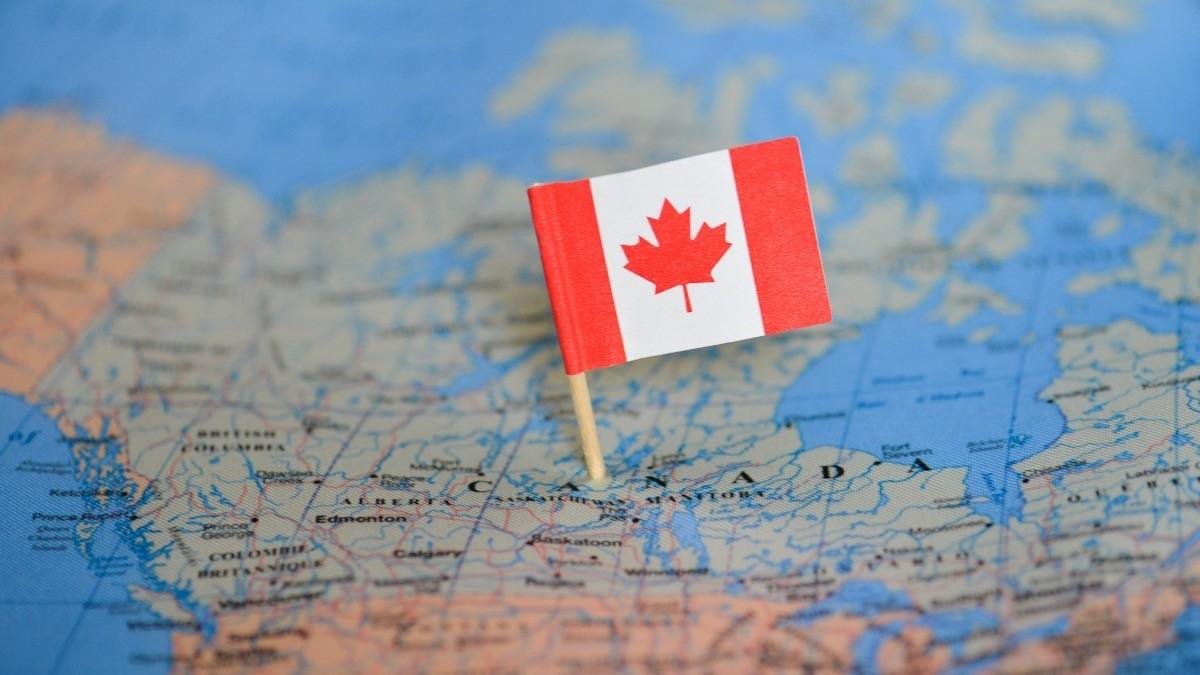
- Canada, located in northern North America, is the world’s second-largest country by area after Russia, and its capital city is Ottawa.
- It is bordered by the Arctic Ocean in the north, the Atlantic Ocean in the east, and the Pacific Ocean in the west.
- Canada shares borders with Alaska in the north-west and the United States in the south, forming the world’s longest international land border.
- The country experiences diverse climatic regions, including Arctic, Subarctic, Prairie, Great Lakes, Cordilleran, and eastern and western coastal regions.
- Major mountain ranges include the Rocky Mountains, St. Elias Mountains, and Laurentian Mountains.
- Major rivers include the Mackenzie, Yukon, and Saint Lawrence rivers.
- The Great Lakes — Superior, Michigan, Huron, Ontario, and Erie — form a natural boundary between Canada and the United States.
- Canada possesses vast mineral resources, including iron ore, nickel, copper, zinc, uranium, potash, gold, diamonds, and rare earth elements.