Context
Recent observations have raised concerns that increasing light pollution is beginning to impact the Atacama Desert, one of the world’s darkest and most important sites for astronomical observations.
About Atacama Desert
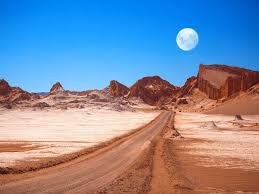
- The Atacama Desert lies in northern Chile and stretches as a long narrow belt of about 1,000 km along the Pacific coastline.
- It is considered the driest desert on Earth, with some areas receiving no rainfall and an average annual precipitation of only around 1 mm.
- The Atacama Desert owes its extreme aridity mainly to the influence of the cold Humboldt (Peru) Current.
- Temperatures remain relatively moderate despite extreme dryness, averaging close to 18°C (about 63°F) throughout the year.
- Geographically, it is positioned between the Andes Mountains to the east and the Pacific Ocean to the west.
- The desert is also located near the borders of Argentina, Peru, and Bolivia.
- About 12 volcanoes are present in the region, mainly along the western fringes of the Andes mountain range.
- The region is archaeologically important due to the discovery of the Chinchorro mummies, the oldest known artificially preserved human remains.
- It is rich in mineral resources, particularly large deposits of sodium nitrate used in fertilizers and explosives.