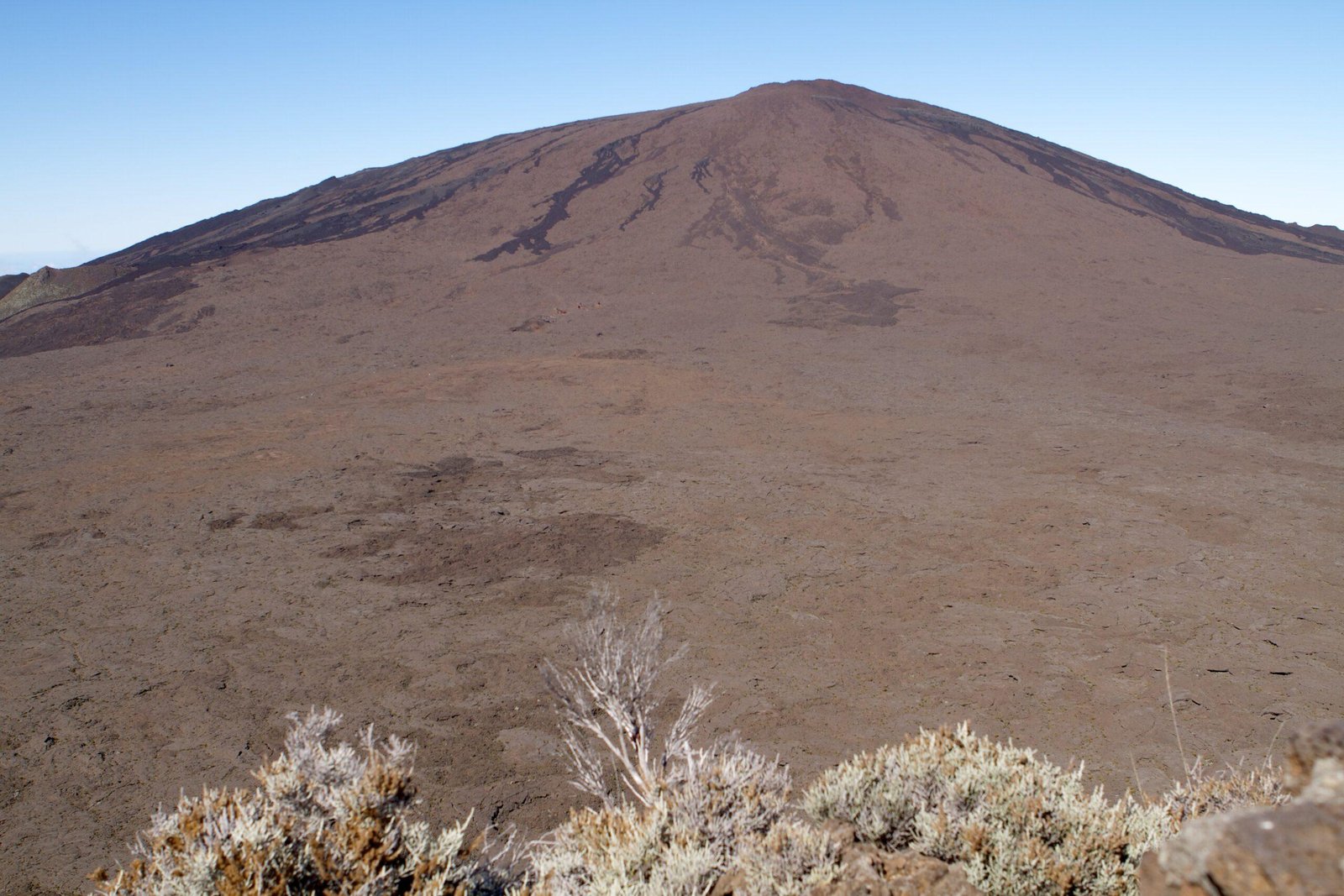
- Piton de la Fournaise, one of Earth’s most frequently active volcanoes, erupted for the 2nd time in 2026.
- The volcano lies on the east–southeastern edge of the French island La Réunion, located in the western Indian Ocean. It is not a standalone formation. Instead, it developed on the side of a much older volcanic structure called Piton des Neiges.
- Piton de la Fournaise is a basaltic shield volcano. It is approximately 500,000 years old. In 2010, it received international recognition when it became part of a UNESCO World Heritage Site, reflecting its outstanding natural value.
- Eruption Behaviour: It experiences frequent but short eruptions. Each eruption usually begins with lava fountains, followed by large streams of molten rock flowing outward. Because its lava is basaltic and very fluid, it spreads over long distances instead of piling up steeply.
- Piton de la Fournaise is studied worldwide because its regular eruptions provide scientists with real-time data on magma movement, lava flow, and crustal activity. It serves as a natural laboratory for understanding shield volcano dynamics.
- Understanding Shield Volcanoes
- They are the largest volcanoes on the planet by area.
- Unlike cone-shaped volcanoes, they have wide bases and gentle slopes.
- Their lava is almost entirely basalt, which flows easily due to low viscosity.
- Instead of explosive eruptions, lava moves outward gradually, covering large regions.
- These volcanoes form over very long geological periods, built layer by layer through repeated eruptions. Example: Hawaiian shield volcanoes.