| Important Questions for UPSC Prelims/ Mains/ Interview
1. What is the U.S.–Bangladesh textile arrangement? 2. Why is this significant for India? 3. What is the structure of Bangladesh’s textile industry? 4. How exposed is India to the U.S. garment market? 5. What is the current tariff situation? 6. What is the status of India–U.S. cotton trade? 7. How might trade dynamics change due to this deal? 8. What are the key concerns for Indian exporters? 9. What are the broader strategic implications? |
Context
A reciprocal trade arrangement between the United States and Bangladesh grants zero reciprocal tariffs on select apparel imports. This has raised concerns for India, as both India and Bangladesh compete in the same U.S. garment market. The deal links tariff benefits to the use of the U.S.-produced cotton and man-made fibre (MMF), potentially altering existing supply chains.
Q1. What is the U.S.–Bangladesh textile arrangement?
- The U.S. will allow zero reciprocal tariffs on certain Bangladeshi textile and apparel products.
- This benefit is conditional:
- Applicable only to a specified import volume.
- Linked to the use of S.-origin cotton and MMF inputs.
- This introduces rules-of-origin–based preferences, tying market access to sourcing decisions.
Q2. Why is this significant for India?
- Bangladesh is among the largest garment exporters to the U.S., directly competing with India, China, and Vietnam.
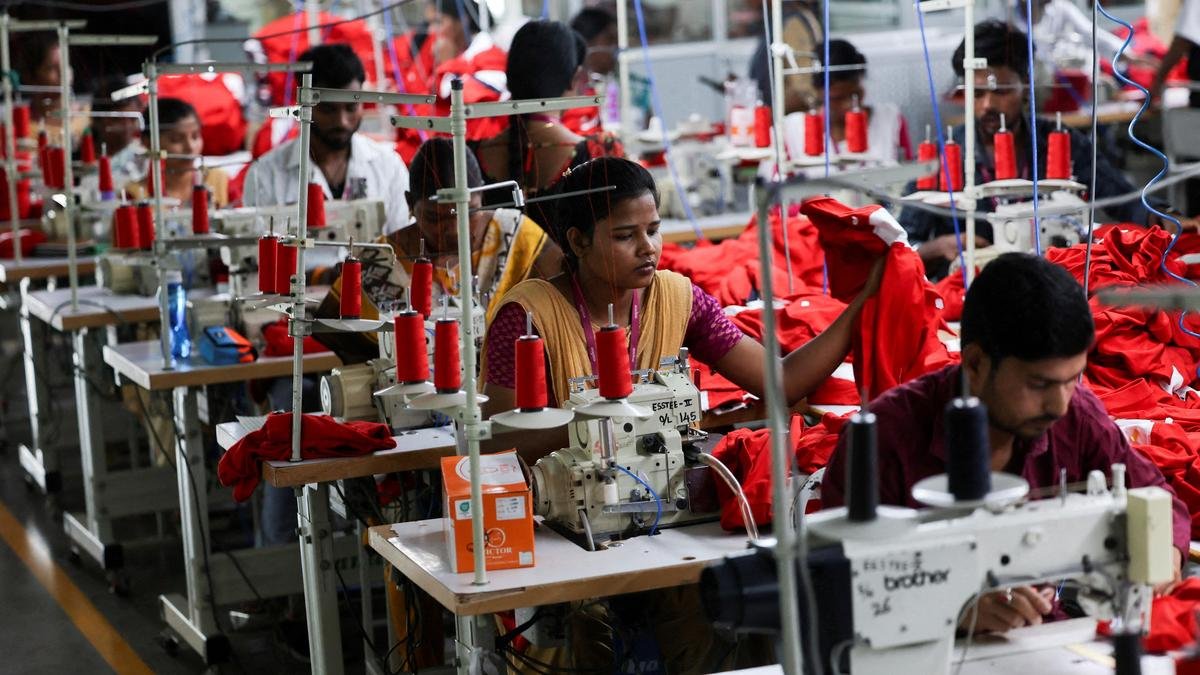
- India and Bangladesh both specialise in cotton-based apparel, placing Indian exporters in direct competition with Bangladeshi firms benefiting from tariff concessions.
Q3. What is the structure of Bangladesh’s textile industry?
- Bangladesh exported garments worth $50.9 billion globally in 2024, including $7.4 billion to the U.S.
- Its garment industry is highly import-dependent for raw materials:
- Textile input imports (2024): $16.1 billion
- From India alone: $3.1 billion
- Bangladesh imports about 85 lakh bales of cotton annually from Brazil, India, and African nations.
- In 2024–25, India supplied:
- 12–14 lakh bales of cotton
- $1.47 billion worth of cotton yarn
- This shows Bangladesh’s garment exports are deeply integrated with Indian raw material supply chains.
Q4. How exposed is India to the U.S. garment market?
- India exports around $16 billion worth of garments annually.
- Nearly one-third goes to the U.S.
- Any preferential access to Bangladesh directly affects Indian exporters operating in the same product categories.
Q5. What is the current tariff situation?
- Indian garments face about 18% reciprocal tariff in the U.S.
- Bangladeshi garments will face 19% (reduced from 20%).
- The tariff gap between India and Bangladesh has narrowed significantly, intensifying competition.
Q6. What is the status of India–U.S. cotton trade?
- India imports about 5 lakh bales of U.S. cotton annually, including 5 lakh bales of extra-long staple cotton (e.g., American PIMA).
- India levies an 11% import duty on cotton, except on ELS cotton.
- Indian mills are already nominated by U.S. brands to supply yarn made from U.S. cotton.
- India’s Commerce Ministry has indicated that Indian exporters may receive similar market access benefits, but operational details remain unclear.
Q7. How might trade dynamics change due to this deal?
- Bangladesh may replace Indian cotton with U.S. cotton to qualify for zero reciprocal tariffs.
- This could immediately impact Indian cotton and yarn exports to Bangladesh.
- However:
- Over 63% of Bangladesh’s garment exports go duty-free to the European Union.
- Its production systems are oriented toward European buyers.
- Shifting to U.S. cotton would require major investments in spinning and fabric processing capacity.
- Therefore, rapid restructuring is not easy.
Q8. What are the key concerns for Indian exporters?
- Uncertainty over removal of India’s 11% import duty on U.S. cotton, affecting cost competitiveness.
- Lack of clarity on how the U.S. will verify S.-cotton content in garments.
- Possible rise in S. cotton prices due to higher demand.
- Tariff relief applies only to reciprocal tariffs, not basic duties.
- Costlier U.S. cotton may make garments less competitive than those using cheaper global cotton.
Q9. What are the broader strategic implications?
The development highlights three structural trends:
- Growing role of rules-of-origin conditions in trade agreements.
- Increasing linkage between trade and supply-chain geopolitics.
- Urgent need for India to align domestic tariff policy with export competitiveness.
India’s textile sector is the second-largest employer after agriculture, making these shifts economically sensitive.
Conclusion
The U.S.–Bangladesh textile arrangement signals a move toward conditional market access based on input sourcing, reshaping regional supply chains. While immediate disruption to India may be limited, risks remain for cotton and yarn exporters if Bangladesh pivots toward U.S. inputs. For India, the episode underlines the necessity of synchronising tariff policy, trade strategy, and supply-chain resilience to protect exports and employment in its vital textile sector.