Chennakeshava Temple Latest News
The Prime Minister’s new office complex, Seva Teerth has been built in the Indian architectural tradition inspired by the features of the 12th-century Chennakeshava Temple.
What is the historical background of the Chennakeshava Temple?
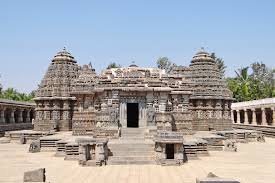
The temple, also known as the Vijayanarayana Temple, is located in Belur (ancient Velapura), Karnataka, on the banks of the Yagachi River.
- Commissioning: It was commissioned by King Vishnuvardhana of the Hoysala Dynasty in 1117 CE.
- Purpose: It was built to commemorate the Hoysalas’ major military victory over the Cholas in the Battle of Talakkad in 1116 CE.
- Timeline: Reflecting the immense detail of its construction, the temple took 103 years and three generations of craftsmen to complete.
- UNESCO Status: It is recognized as a UNESCO World Heritage Site as part of the “Sacred Ensembles of the Hoysalas.
What are the defining architectural features of the Hoysala style?
Hoysala school of architecture was a hybrid of the Nagara and Dravida styles (often called the Vesara style).
- Building Material: The Hoysalas used Chloritic Schist (Soft Soapstone). This material is soft when quarried, allowing for incredibly intricate, jewelry-like carvings, but hardens over time when exposed to air.
- The Jagati: The temple stands on a raised star-shaped platform called a Jagati, which provides a circumambulatory path around the sanctum.
- Stellar Plan: The temple layout follows a Stellate (star-shaped) plan, making it look like a “huge casket” from a distance.
- Madanikas: The temple is world-famous for its 80+ Madanika (Salabhanjika) sculptures—bracket figures depicting women in various poses such as dancing, hunting, or grooming under tree canopies.
- Vijayanagar Influence: While the core is Hoysala, the enclosing Prakara (boundary wall) and the Gopura were added later in the Vijayanagar style.
Why is this temple significant for modern Indian architecture ?
The Chennakeshava Temple is a symbol of regional identity and artistic perfection. Its influence on modern structures like the Seva Teerth highlights a move toward “Cultural Continuity” in state architecture.
- Intricate Storytelling: The horizontal friezes at the base of the temple depict a hierarchy of carvings: elephants (strength), lions (courage), horses (speed), and floral motifs. This serves as a “stone encyclopedia” of medieval social and religious life.
- Technological Marvel: One of the most unique features is the stepped well (Pushkarani) located within the complex, showcasing ancient Indian water management and aesthetic symmetry.
- Symmetry and Proportions: Every pillar in the main hall (Mantapa) is unique, with some being “lathe-turned,” showing advanced mechanical knowledge in the 12th century.