Phoenicia Latest News
- Archaeologists excavating near ruins on the island of Sardinia discovered an Iron Age scarab amulet that originated from ancient Phoenicia. Phoenicia, an ancient maritime powerhouse that dominated Mediterranean trade and shaped the way we write today.
Where was Phoenicia located and what was its geographic significance?
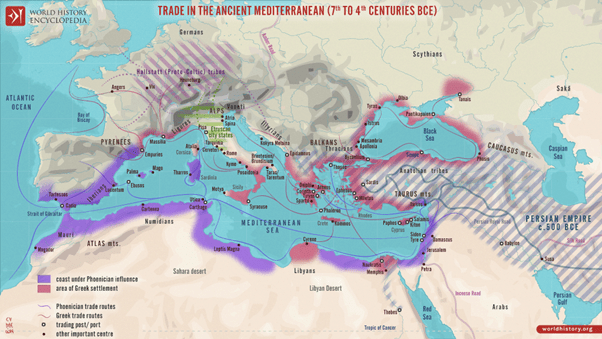
Phoenicia was located at the eastern end of the Mediterranean Sea, primarily covering the territory of modern-day Lebanon, along with parts of coastal Syria and Israel.
- Maritime Orientation: Because they were hemmed in by the Lebanon Mountains to the east and the sea to the west, the Phoenicians turned to the ocean for their livelihood.
- Key City-States: They never formed a single unified empire but operated as a collection of independent city-states, the most famous being Tyre, Sidon, and Byblos (from which the word “Bible” is derived).
- Colonial Expansion: They were the greatest colonizers of the ancient world, establishing settlements across North Africa and Spain. Their most successful colony was Carthage, which later challenged Rome for Mediterranean supremacy.
What were the major cultural and technological contributions of the Phoenicians?
The Phoenicians were not just traders; they were innovators in art and communication.
- The Phoenician Alphabet: Their most enduring legacy is an alphabet of 22 letters. Unlike earlier systems like Cuneiform or Hieroglyphics, this was a phonetic script. It served as the direct ancestor of the Greek and Latin alphabets, which form the basis of most modern writing systems today.
- Tyrian Purple: They were famous for a rare purple dye extracted from the Murex sea snail. This “Royal Purple” was so expensive that it became a symbol of royalty and status across the ancient world.
- Inventions in Glass: While they didn’t invent glass, historians believe the Phoenicians invented the art of glassblowing. They were also master craftsmen in ivory carving, metallurgy, and fine linen.
- Shipbuilding: They developed the Bireme, a galley with two decks of oars, which allowed them to navigate as far as the British Isles and potentially circumnavigate Africa.
How did the Phoenician civilization decline?
The story of Phoenicia is one of resilience followed by assimilation into larger empires.
- Foreign Dominance: Over centuries, their wealthy city-states attracted the attention of regional powers. They were successively controlled by the Egyptians, Assyrians, Babylonians, and Persians.
- The Macedonian Conquest: In 332 BCE, Alexander the Great famously besieged and conquered Tyre, marking the end of Phoenician independence.
- Roman Assimilation: By 64 BCE, the region was fully absorbed into the Roman Empire as part of the province of Syria.