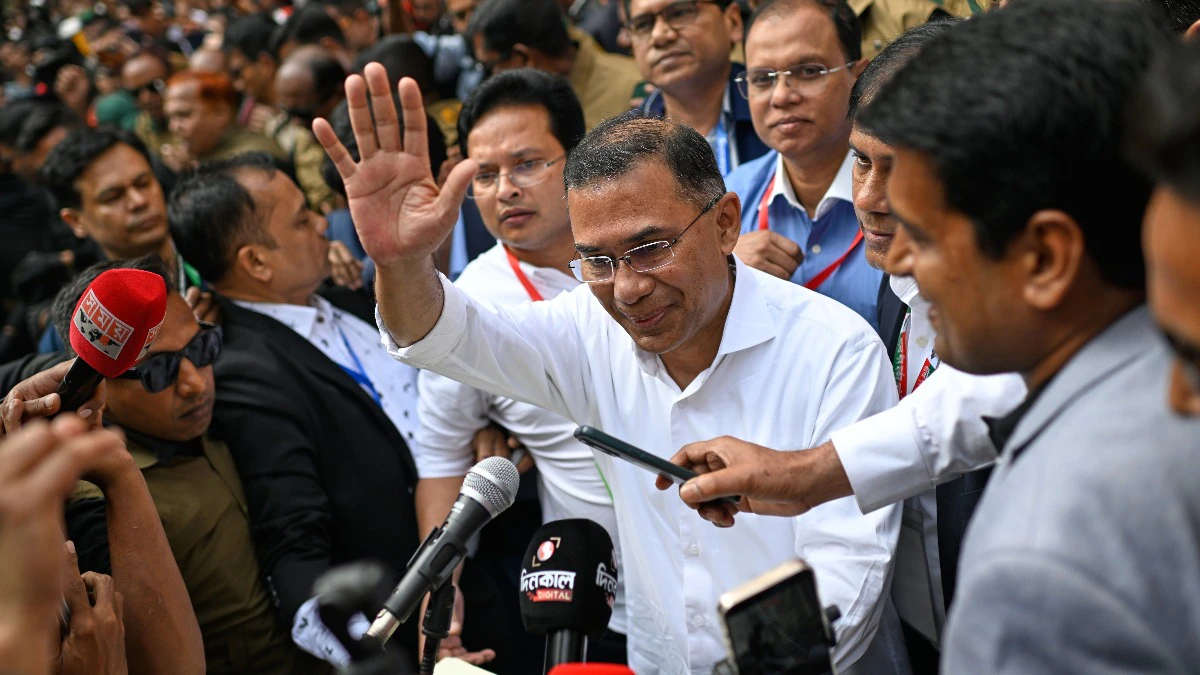
NEWS: the return of the Bangladesh Nationalist Party (BNP) to power in February 2026. This election, the first since the 2024 ouster of Sheikh Hasina, signals a “reset” for the India–Bangladesh partnership.
What are the immediate diplomatic implications of Tarique Rahman’s victory?
The victory of the BNP, led by Tarique Rahman, marks a departure from the 15-year “Golden Era” of ties under Sheikh Hasina. Prime Minister Narendra Modi was among the first to congratulate Rahman, signaling New Delhi’s “pragmatic recalibration”, a move to engage with the democratically elected government regardless of past ideological friction.
Key Diplomatic Shifts:
- The BNP’s manifesto emphasizes a “Bangladesh Before All” policy. While it seeks cooperative ties, it also stresses national sovereignty and non-interference in internal matters.
- Unlike the anti-India rhetoric of the early 2000s, both the BNP and Jamaat-e-Islami (which saw a significant rise in seats) have adopted a more inclusive and peaceful tone toward India.
- While the BNP is strengthening ties with the “Muslim World,” its leadership has expressed a desire to maintain balanced relations between India, China, and the US.
Strained Ties During 2001–2006
- Relations between India and Bangladesh were tense during the BNP-Jamaat coalition government (2001–2006).
- India raised concerns over insurgent and terror groups operating from Bangladeshi soil, allegedly with protection from Jamaat leaders, posing security challenges for India’s Northeast.
- When Sheikh Hasina returned to power in 2008, her government launched a crackdown on insurgent groups, strengthening counter-terror cooperation with India.
- While New Delhi welcomed the improved security environment, Hasina also used anti-terror measures to target political opponents, including BNP and Jamaat leaders.
What are the challenges for India in the post-Hasina era?
The current transition introduces several high-stakes challenges:
- The Hasina Extradition Issue: Sheikh Hasina remains in India. The BNP leadership, facing domestic pressure, may formally request her extradition following her death sentence in absentia by a special tribunal for crimes against humanity. This puts India in a tough spot: honoring an extradition treaty vs. protecting a long-term ally.
- Security and Insurgency: A major concern is whether the BNP-led government will revert to the 2001–2006 era, where Indian insurgent groups (like ULFA) reportedly found safe haven. India’s priority is ensuring that Bangladeshi soil is not used for anti-India activities.
- The Ganga Water Treaty: The 1996 Ganga Water Sharing Treaty expires in December 2026. Water sharing remains a highly emotive and political issue that will test the new government’s ability to negotiate with Delhi.
How can India preserve economic and connectivity interests?
Bangladesh is India’s largest trading partner in South Asia, and the relationship is anchored in physical connectivity.
- Connectivity Projects: India has extended over $8 billion in Lines of Credit (LoC) for roads, railways, and ports. Key projects like the Akhaura–Agartala rail link and the use of Chittagong and Mongla ports are vital for India’s landlocked Northeast.
- Energy Security: The India–Bangladesh Friendship Pipeline and cross-border electricity trade (including trilateral trade with Nepal) must remain functional to prevent an economic crisis in Bangladesh.
- Trade Dependence: India supplies nearly 82% of Bangladesh’s yarn imports, which is the backbone of its multi-billion dollar RMG (Ready-Made Garment) sector. Disrupting this trade would be “economic self-sabotage” for Dhaka.
Opportunities for the Future
The current transition offers an opportunity for India to build a relationship with a broader base of the Bangladeshi people, rather than being tied to a single political party. By expanding people-to-people ties through streamlined medical and tourism visas and managing migration issues sensitively, India can ensure that its “Neighborhood First” policy remains effective even in a changing political landscape.