PM RAHAT Scheme Latest News
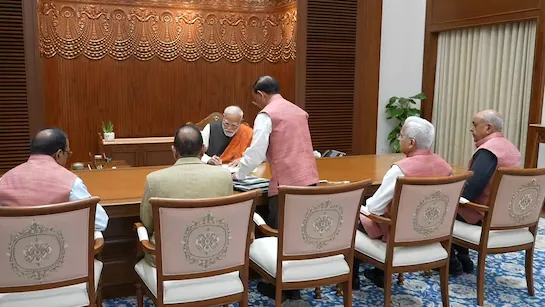
Recently, the government of India launched the PM RAHAT (Road Accident Victim Hospitalization and Assured Treatment) Scheme. This initiative is designed to ensure that no life is lost due to financial constraints following a road accident.
What are the core life-saving features of the PM RAHAT Scheme?
The scheme marks a shift toward a rights-based trauma-care system in India. It focuses on the “Golden Hour”, the first 60 minutes after an accident, where medical intervention has the highest chance of preventing death.
Key Features :
- Cashless Treatment Limit: Every eligible victim is entitled to cashless medical treatment up to ₹1.5 lakh.
- Time Window: This coverage is available for up to 7 days from the date of the accident.
- Stabilization Protocols: 24 hours for non-life-threatening cases.
- 48 hours for life-threatening cases.
- All hospitals, including private ones, are mandated to provide this initial stabilization.
- Integration with 112 (ERSS): Victims or “Rah-Veers” (Good Samaritans) can dial 112 to locate the nearest designated hospital and request immediate ambulance support.
How does the technology and funding framework ensure “Assured Treatment”?
To prevent delays and ensure hospitals are paid on time, the government has integrated two major digital platforms:
- Digital Backbone: The scheme amalgamates the eDAR (Electronic Detailed Accident Report) of the Ministry of Road Transport with the TMS 2.0 (Transaction Management System) of the National Health Authority. This allows for real-time digital tracking from the accident spot to the hospital bed.
- The Funding Pool (MVAF): Reimbursement is managed through the Motor Vehicle Accident Fund (MVAF):
- Insured Vehicles: Costs are recovered from General Insurance Companies.
- Uninsured/Hit-and-Run: Costs are covered by the Government of India through specific budgetary allocations.
- Mandatory Timelines: To ensure “financial certainty” for hospitals, claims must be paid within 10 days of approval by the State Health Agency.
What are the strategic implications for governance and public health?
PM RAHAT operationalizes the Right to Life (Article 21). It addresses the “Three Bottlenecks” of Indian trauma care: hospital hesitation over payment, Good Samaritans fear of legal trouble, and poor coordination between police and ambulances.
- Accountability: The scheme requires police authentication within 24–48 hours, ensuring the system isn’t misused while maintaining a digital paper trail for every accident.
- Grievance Redressal: A dedicated Grievance Redressal Officer at the district level, chaired by the District Collector/Magistrate, ensures that any denial of treatment or delay in payment is addressed locally.