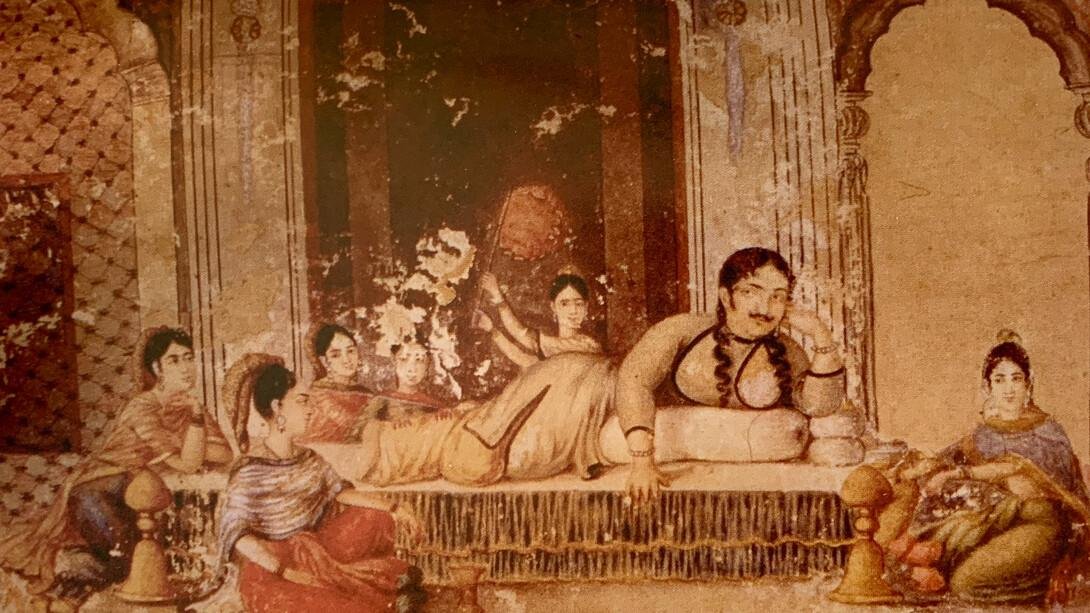
- Wajid Ali Shah (1822–1887) was the ruler of the princely state of Awadh (Oudh) in present-day Uttar Pradesh. He became the tenth & last Nawab of Awadh in 1847 after succeeding his father, Nawab Amjad Ali Shah.
- He was known as a generous and compassionate ruler and was considered an able administrator who paid close attention to state affairs.
- Secular Outlook: He was known for his inclusive attitude & appreciation of Hindu traditions and culture.
- He initiated the construction of the grand Qaiser Bagh palace complex soon after ascending the throne, and it was built between 1848 and 1850.
- After ruling for about nine years, his kingdom was annexed by the British in 1856 on the grounds of alleged misgovernance. This became one of the key triggers for the Revolt of 1857.
- His wife, Begum Hazrat Mahal, emerged as a prominent freedom fighter and actively participated in the uprising against British rule during the Revolt of 1857–58.
- He spent the rest of his life in Garden Reach at Metiabruz, then a suburb of Kolkata.
- A recently translated biography written by his great-grandson states that Wajid Ali Shah was not forcibly exiled to Calcutta; instead, he had travelled there intending to sail to London to present a petition, but his departure was prevented and he remained in the city.
- His reign was marked by strong encouragement of arts and culture, and he was widely admired for his artistic interests. Literary and Artistic Talents:
- He was a poet, playwright, dancer, and patron of music and literature.
- He wrote poems, prose works, ragas, plays, and ghazals under the pen name “Qaisar.”
- His work Ishqnamah (Book of Love) is an autobiographical account written in Urdu verse.
He played a significant role in the revival and development of the classical dance form Kathak.