| Important questions for UPSC Pre/ Mains/ Interview:
1. What does the Constitution provide for removal of the Lok Sabha Speaker? 2. When does the Speaker vacate office? (Article 94) 3. What is the procedure to move a removal motion? 4. What are the content restrictions under Rule 200A? 5. What happens if the motion is admitted? 6. Have such motions been moved earlier? 7. Why is the threshold for removal kept high? 8. What are the institutional and political implications of such a motion? 9. What are the associated Benefits and Risks of such a mechanism? 10.What are the safeguards that can be taken against the misuse? |
Context
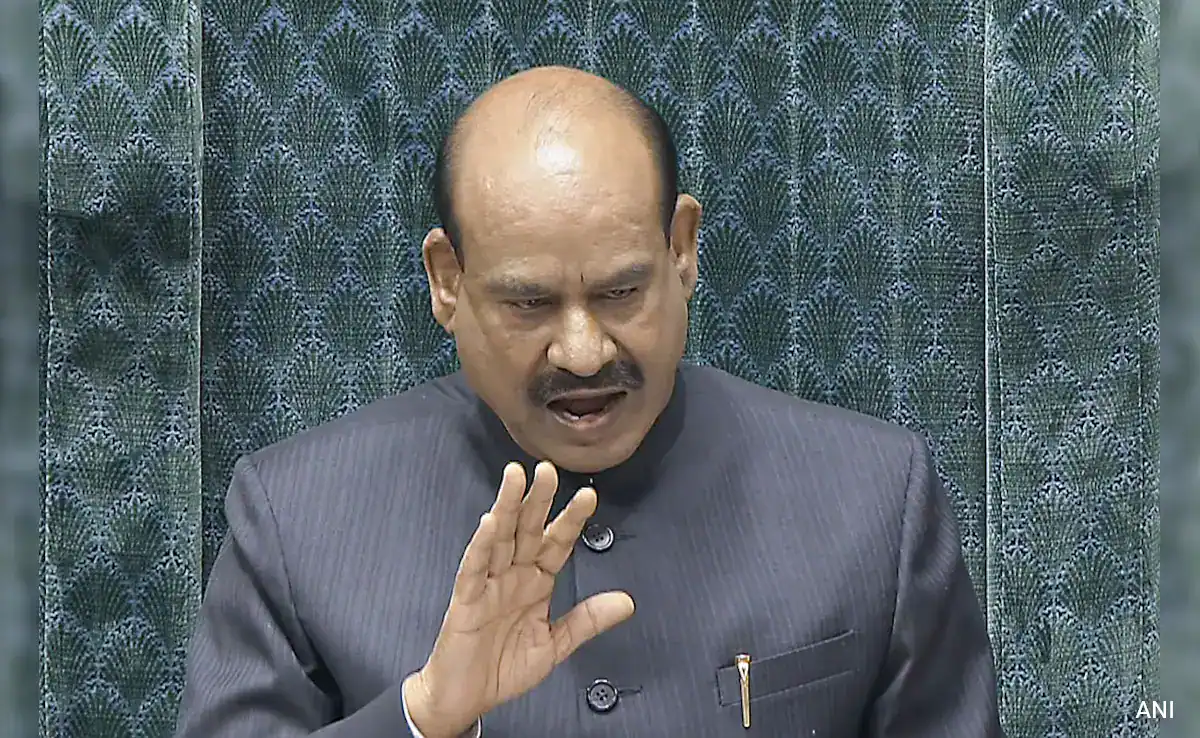
The Opposition has moved a no-confidence motion against Om Birla, following disputes over procedural rulings in the Lok Sabha. The motion will now be processed under constitutional and procedural provisions governing the removal of the Speaker.
Q1. What does the Constitution provide for removal of the Lok Sabha Speaker?
- Governed by Article 94(c) of the Constitution.
- The Speaker can be removed by a resolution passed by a majority of all the then members of the Lok Sabha (absolute majority).
- Applies only to the Lok Sabha (not the Rajya Sabha).
- Reflects a high threshold to ensure institutional stability.
Q2. When does the Speaker vacate office? (Article 94)
Under Article 94, the Speaker vacates office in three situations:
- Cessation of membership (Article 94(a)): Automatically vacates office if he/she ceases to be an MP.
- Resignation (Article 94(b)): Written resignation to the Deputy Speaker.
- Removal by Resolution (Article 94(c)): Through House resolution passed by absolute majority.
Q3. What is the procedure to move a removal motion?
Procedure governed by the Rules of Procedure and Conduct of Business in Lok Sabha (Rules 200–203).
Step-wise process:
- Written notice submitted to the Secretary-General.
- At least 14 days’ notice is mandatory.
- Listed in the List of Business after notice period.
- On the day of consideration:
- At least 50 Members must rise in support.
- If fewer than 50 rise → motion lapses.
If admitted:
- Debate scheduled within 10 days.
- Discussion confined strictly to charges mentioned.
Q4. What are the content restrictions under Rule 200A?
- Resolution must be:
- Specific in charges.
- Clearly worded.
- Free of defamatory, ironic, or argumentative language.
- Member submitting the motion:
- Cannot make a speech at the stage of leave being sought.
- Debate must remain confined to charges.
- This ensures procedural discipline and prevents political abuse.
Q5. What happens if the motion is admitted?
- Motion listed for discussion.
- Members debate only on stated charges.
- Speaker:
- Continues in office.
- May participate as a Member.
- Can vote in the first instance.
- Cannot exercise casting vote in case of tie.
- Final outcome determined by absolute majority of total membership.
Q6. Have such motions been moved earlier?
Yes, on three occasions:
- 1954 – Against G V Mavalankar
- 1966 – Against Hukam Singh
- 1987 – Against Balram Jakhar
In all cases:
- Motions failed.
- No Speaker has ever been removed through such a resolution.
Q7. Why is the threshold for removal kept high?
Constitutional Logic:
- The Speaker acts as custodian of House neutrality.
- Must function above party politics.
- Stability of parliamentary functioning depends on presiding authority.
- Prevents frequent political targeting.
Q8. What are the institutional and political implications of such a motion?
- Institutional Dimension:
- Tests perception of impartiality.
- May affect House decorum.
- Impacts trust between Treasury and Opposition benches.
- Political Dimension:
- Often symbolic if numbers are insufficient.
- Reflects parliamentary friction.
- Signals procedural grievances rather than imminent removal.
Q9. What are the associated Benefits and Risks of such a mechanism?
- Benefits:
- Provides accountability mechanisms.
- Preserves parliamentary sovereignty.
- Enables institutional correction if neutrality is compromised.
- Risks:
- Potential politicisation of presiding office.
- Disruption of House functioning.
- Erosion of conventions of neutrality.
Q10. What are the safeguards that can be taken against the misuse?
- 14-day mandatory notice.
- Requirement of 50-member support.
- Absolute majority threshold.
- Strict wording restrictions.
- Debate confined to specific charges.
These ensure only serious motions proceed.
Conclusion
A no-confidence motion against the Lok Sabha Speaker is constitutionally permissible but procedurally rigorous. Designed as a safeguard against arbitrariness, it simultaneously protects institutional stability through high thresholds. Its real significance often lies less in numerical outcome and more in signalling parliamentary dissent within the framework of constitutional accountability.