| Important questions for UPSC Pre/ Mains/ Interview:
1. What is the Punatsangchhu-II Hydroelectric Project? 2. What are the key technical features of Punatsangchhu-II? 3. Why is Punatsangchhu-II significant for Bhutan’s power sector? 4. What is the Punatsangchhu-I Hydroelectric Project? 5. What are the funding and technical features of Punatsangchhu-I? 6. Why are India and Bhutan focusing on optimisation and early commissioning? 7. What is the broader strategic significance of Punatsangchhu projects? 8. What challenges have surrounded these hydropower projects? 9. What should be the way forward in India–Bhutan hydropower cooperation? |
Context
India and Bhutan recently discussed optimising power output from the Punatsangchhu-II project and expediting commissioning of Punatsangchhu-I, reinforcing bilateral cooperation in clean energy and hydropower development.
Q1. What is the Punatsangchhu-II Hydroelectric Project?
- Punatsangchhu-II is a 1020 MW run-of-the-river hydropower project.
- It is located in Wangdue Phodrang district, Bhutan, on the right bank of the Punatsangchhu River.
- The project is implemented by the Punatsangchhu-II Hydroelectric Project Authority under an Inter-Governmental Agreement between India and Bhutan.
- It is fully financed by the Government of India with a 30% grant and 70% loan
- The loan carries 10% annual interest, repayable over 30 semi-annual instalments.
Q2. What are the key technical features of Punatsangchhu-II?
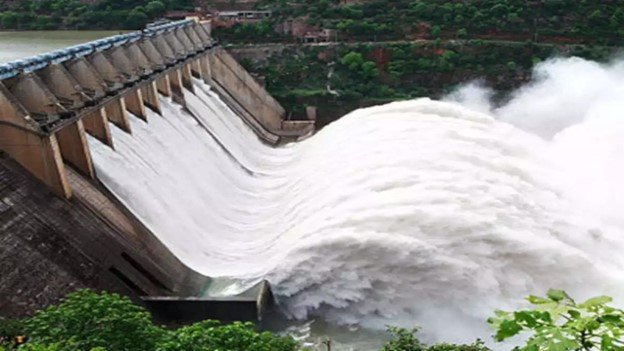
- Construction of a 91-metre-high, 223.8-metre-long concrete gravity dam.
- A diversion tunnel with a discharge capacity of 1118 cubic metres per second.
- An upper cofferdam (168.75 m long, 22 m high) and a downstream cofferdam (102.02 m long, 13.5 m high).
- An underground powerhouse equipped with six Francis turbines, each of 170 MW
- The run-of-the-river design minimises large reservoir creation while allowing efficient hydropower generation.
Q3. Why is Punatsangchhu-II significant for Bhutan’s power sector?
- With its completion, Bhutan’s installed power generation capacity has increased by about 40%, crossing 3500 MW.
- Hydropower remains Bhutan’s primary economic asset, contributing substantially to revenue, exports, and employment.
- Power generated is largely exported to India, strengthening Bhutan’s foreign exchange earnings.
- The project enhances Bhutan’s ability to meet rising domestic demand while maintaining export commitments.
Q4. What is the Punatsangchhu-I Hydroelectric Project?
- Punatsangchhu-I is a 1200 MW (1.2 GW) run-of-the-river hydropower project.
- It is located in Wangdue Phodrang district, on the left bank of the Punatsangchhu River.
- The project is developed by the Punatsangchhu-I Hydroelectric Project Authority, created under a bilateral agreement signed in 2007 between India and Bhutan.
- It is the largest hydropower project undertaken in Bhutan in partnership with India.
Q5. What are the funding and technical features of Punatsangchhu-I?
- Funded by the Government of India through 40% grant and 60% loan.
- Loan terms include 10% annual interest, repayable over 30 semi-annual instalments.
- The project involves a 130-metre-high, 239-metre-long concrete gravity dam.
- Construction of two diversion tunnels for river management.
- An underground powerhouse housing six turbines of 200 MW each, totalling 1200 MW capacity.
Q6. Why are India and Bhutan focusing on optimisation and early commissioning?
- Commercial optimisation ensures maximum power generation and efficient utilisation of installed capacity.
- Early commissioning of Punatsangchhu-I will:
- Enhance Bhutan’s export revenues from electricity.
- Strengthen India’s access to clean and reliable hydropower.
- Timely completion reduces cost overruns and interest burdens.
- It reflects mutual interest in accelerating renewable energy cooperation.
Q7. What is the broader strategic significance of Punatsangchhu projects?
- Hydropower cooperation is a cornerstone of India–Bhutan relations, symbolising trust and long-term partnership.
- For India:
- Access to clean, low-carbon electricity.
- Support for regional energy security and grid stability.
- For Bhutan:
- Hydropower-led development model with assured market access.
- Technology transfer and infrastructure development.
- The projects contribute to climate-friendly growth in the Himalayan region.
Q8. What challenges have surrounded these hydropower projects?
- Geological and hydrological complexities in the Himalayan terrain.
- Construction delays and cost escalations in the past.
- Environmental concerns related to river ecology and downstream impacts.
- Financial risks due to high interest loans and delayed returns.
Q9. What should be the way forward in India–Bhutan hydropower cooperation?
- Ensure timely commissioning and commercial optimisation of existing projects.
- Strengthen geological risk assessment and disaster-resilient design.
- Balance hydropower expansion with environmental safeguards.
- Explore diversification into solar and hybrid renewable projects.
- Maintain transparent financing and long-term power purchase frameworks.
Conclusion
Punatsangchhu-I and II exemplify deep India–Bhutan energy cooperation. Optimised output and early commissioning can boost clean power generation, economic returns, and regional energy security while reinforcing a trusted bilateral partnership.