| Important questions for UPSC Pre/ Mains/ Interview:
1. What is the Jal Jeevan Mission and what does it seek to achieve? 2. How far has rural tap water coverage expanded under JJM? 3. Why is functionality more important than mere tap coverage? 4. What regional disparities does the survey highlight? 5. What financial and implementation challenges affect JJM? 6. How effective is the institutional and monitoring framework? 7. What are the key challenges emerging from JJM’s current phase? 8. What should be the way forward for sustainable rural water supply? |
Context
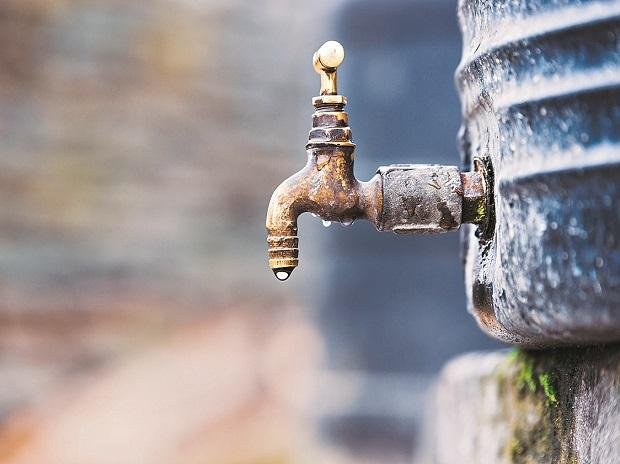
A 2024 government-commissioned survey shows that despite near-universal rural tap connections under the Jal Jeevan Mission, only about three-fourths of households receive regular and safe water supply.
Q1. What is the Jal Jeevan Mission and what does it seek to achieve?
- The Jal Jeevan Mission, launched in 2019, aims to provide Functional Household Tap Connections (FHTCs) to all rural households.
- It envisages supply of 55 litres of potable water per person per day, on a regular basis.
- The mission emphasises:
- Water quality and safety
- Source sustainability
- Community participation through village-level institutions
- Unlike earlier programmes focused mainly on infrastructure creation, JJM adopts a service delivery approach, where functionality and regular supply are the key outcomes.
- It is implemented through Centre–State partnership, with shared funding responsibilities.
Q2. How far has rural tap water coverage expanded under JJM?
- Rural tap water coverage has expanded at an unprecedented pace since 2019.
- Coverage increased from less than 20% in 2019 to nearly universal connectivity by 2024–25.
- States such as Goa, Gujarat, Andhra Pradesh, and several Union Territories report over 97% tap availability.
- More than 7 lakh villages have been declared “Har Ghar Jal” villages, indicating complete tap coverage in households and public institutions.
- However, these certifications are largely infrastructure-based and may not reflect actual water delivery.
Q3. Why is functionality more important than mere tap coverage?
- The core objective of JJM is functional and safe water supply, not just installation of taps.
- The Functionality Assessment of Household Tap Connections (2024) reveals gaps between infrastructure and service delivery.
- Availability: Only 83% of households received tap water at least once in the previous seven days.
- Quantity: Only 80% consistently received the mandated 55 litres per capita per day.
- Quality: Just 76% of households received water meeting basic safety norms (E. coli, faecal coliform, pH).
- When availability, quantity, and quality are considered together, only about three-fourths of households benefit from JJM as intended.
Q4. What regional disparities does the survey highlight?
- There are sharp inter-State variations in performance.
- Coastal and relatively better-off States show higher functionality and reliability.
- States such as Bihar, Uttar Pradesh, Nagaland, and Sikkim lag significantly.
- Bihar reported water flow in only around 61% of households.
- Sikkim showed particularly low compliance with per capita water supply norms.
- These differences reflect variations in:
- Source sustainability
- Groundwater availability
- Terrain and climate conditions
- Institutional and administrative capacity at State and district levels.
Q5. What financial and implementation challenges affect JJM?
- JJM is one of India’s most resource-intensive welfare programmes.
- Since 2019, over ₹3.6 lakh crore has been spent on rural water infrastructure.
- Recent budget trends show underutilisation of allocated funds in some years.
- The original target of 100% functional coverage by 2024 has been extended to 2028, recognising:
- Last-mile delivery challenges
- Operation and maintenance (O&M) issues
- Source sustainability constraints
- Achieving full functionality for remaining households may require nearly ₹4 lakh crore in additional investment.
Q6. How effective is the institutional and monitoring framework?
- JJM uses multiple monitoring mechanisms:
- Third-party surveys
- Village-level water and sanitation committees
- Real-time dashboards
- The 2024 functionality survey covered over 2.3 lakh households in certified Har Ghar Jal villages.
- It provides a more realistic picture beyond official coverage figures.
- However, methodological changes limit direct comparison with earlier assessments, complicating trend analysis.
Q7. What are the key challenges emerging from JJM’s current phase?
- Shift from infrastructure expansion to service sustainability remains incomplete.
- Weak local capacity for operation and maintenance.
- Inadequate water source recharge and climate resilience, especially in water-stressed regions.
- Persistent water quality surveillance gaps.
- Over-reliance on certification metrics rather than household-level outcomes.
Q8. What should be the way forward for sustainable rural water supply?
- Strengthen local O&M systems and technical capacity at village level.
- Improve source sustainability through groundwater recharge and watershed management.
- Enhance water quality monitoring and rapid response mechanisms.
- Empower Panchayats and user committees for ownership and accountability.
- Integrate JJM with:
- Sanitation programmes
- Groundwater management
- Public health and nutrition initiatives
- Adopt climate-resilient water planning, especially in arid and semi-arid regions.
Conclusion
Jal Jeevan Mission has transformed rural water infrastructure, but functionality gaps persist. Translating tap coverage into real welfare gains requires sustained focus on quality, regularity, and local system sustainability.