| Important Questions for UPSC Prelims / Mains / Interview:
1. Why has the United States proposed a “Board of Peace” for Gaza, and what strategic objectives does it seek to achieve in the post-war regional order? 2. What is the structure, mandate, and governance model of the proposed Board of Peace for Gaza? 3. How does the Board of Peace reflect a shift away from UN-centric multilateralism toward U.S.-led ad hoc governance mechanisms? 4. Why has the exclusion of Palestinians from the top decision-making tier raised concerns of legitimacy and sustainability? 5. What is India’s position on the Board of Peace, and how does it align with India’s long-standing West Asia policy principles? 6. Why has Israel objected to certain members of the Board of Peace despite the initiative being U.S.-led? 7. What are the implications of the proposed International Stabilisation Force (ISF) for Gaza’s sovereignty and security architecture? 8. What risks does the Board of Peace pose to the existing UN-led international order and collective security framework? 9. What strategic options does India have in responding to the invitation without compromising its commitment to multilateralism? |
Context
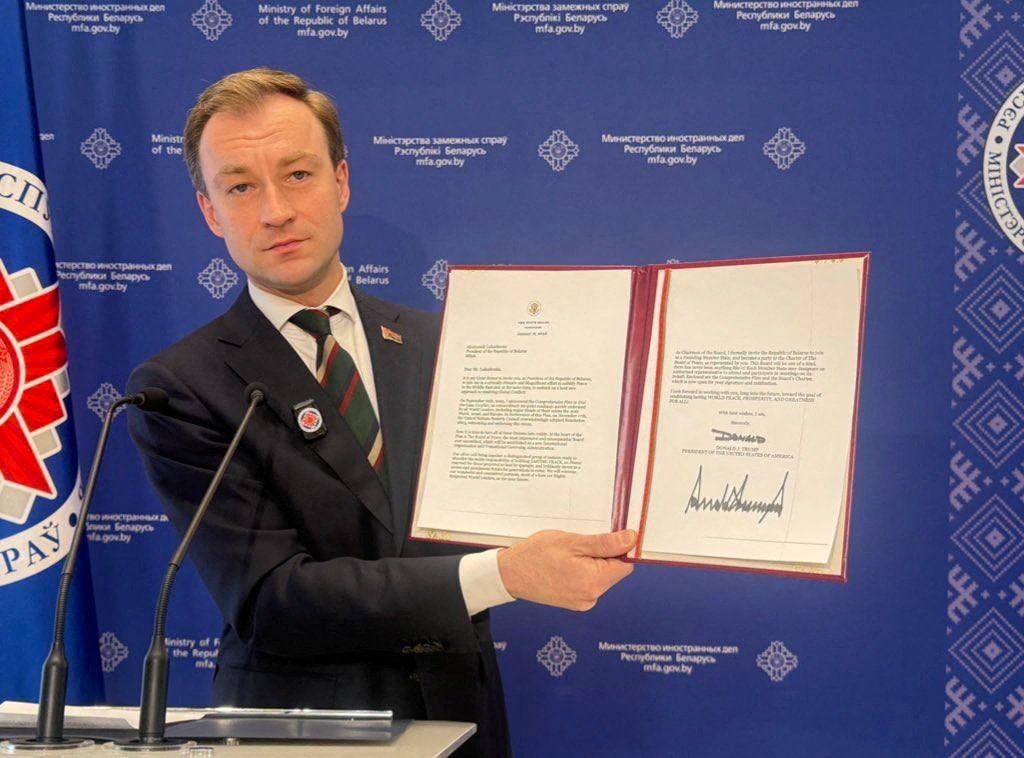
The United States, under President Donald Trump, has invited India to join the proposed Board of Peace for Gaza, a new governance and conflict-management mechanism intended to oversee Gaza’s post-war transition after prolonged conflict and humanitarian devastation.
The proposal is part of Trump’s 20-point Comprehensive Peace Plan, which has received endorsement through United Nations Security Council Resolution 2803, authorising a transitional framework until 2027. However, the initiative has sparked a wider debate on the future of global governance, the authority of the UNSC, and the rise of power-driven arrangements outside the UN system.
Q1. Why has the United States proposed a “Board of Peace” for Gaza, and what strategic objectives does it seek to achieve in the post-war regional order?
- The proposal aims to manage the governance vacuum in Gaza following the destruction of administrative institutions.
- Strategic objectives include:
- Preventing Hamas from returning to power
- Avoiding full Israeli re-occupation
- Internationalising reconstruction costs
- Retaining decisive U.S. strategic oversight
- The Board allows the U.S. to shape the political end-state of Gaza rather than limiting its role to ceasefire mediation.
- It reflects Washington’s view that traditional multilateral mechanisms are slow, divided, and ineffective in high-intensity conflicts.
Q2. What is the structure, mandate, and governance model of the proposed Board of Peace for Gaza?
- The Board is designed to function as both an international organisation and a transitional governing authority.
- Mandate includes:
- Supervising Gaza’s transitional administration
- Coordinating reconstruction and investment
- Restoring civil institutions
- Ensuring accountability during the transition
- Membership is invitation-only, not based on universal representation.
- Final authority rests with the S. President, making it a highly centralised governance model unlike UN trusteeships.
Q3. How does the Board of Peace reflect a shift away from UN-centric multilateralism toward U.S.-led ad hoc governance mechanisms?
- The initiative represents a shift toward selective multilateralism, led by a dominant power.
- Key features of this shift:
- Bypassing UNSC consensus-based decision-making
- Concentration of authority in an executive council
- Reduced role for universal institutions
- It aligns with Trump’s long-standing scepticism toward multilateral bodies such as WHO and UNESCO.
- The approach reflects a belief that speed and control matter more than broad legitimacy.
Q4. Why has the exclusion of Palestinians from the top decision-making tier raised concerns of legitimacy and sustainability?
- Palestinians are absent from the Founding Executive Council, which controls strategy and funding.
- Concerns include:
- Lack of local ownership
- Perception of imposed governance
- Weak public trust in institutions
- Political theory suggests that peace without representation risks instability.
- The Palestinian-led NCAG occupies the lowest tier, raising doubts about its real authority.
Q5. What is India’s position on the Board of Peace, and how does it align with India’s long-standing West Asia policy principles?
- India has received the invitation but has not formally accepted
- India’s stated principles:
- Consistent support for a Two-State Solution
- Emphasis on humanitarian assistance
- Respect for UN-mandated peacekeeping
- India welcomed the first phase of Trump’s plan, especially hostage release and aid delivery.
- India has ruled out troop participation, as the ISF is not a UN mission.
Q6. Why has Israel objected to certain members of the Board of Peace despite the initiative being U.S.-led?
- Israel has objected particularly to the inclusion of Turkey and Qatar.
- Israeli concerns include:
- Turkey’s perceived proximity to the Muslim Brotherhood
- Qatar’s previous engagement with Hamas
- Fear of dilution of Israeli security priorities
- These objections reveal internal fractures even among close allies.
- They underline competing visions for Gaza’s post-war future.
Q7. What are the implications of the proposed International Stabilisation Force (ISF) for Gaza’s sovereignty and security architecture?
- The ISF is mandated to ensure permanent disarmament.
- Implications include:
- Long-term external military presence
- Reduced local security autonomy
- Risk of resistance due to legitimacy deficit
- Historical experience shows externally imposed security structures face sustainability challenges.
- India’s refusal reflects its commitment to UN peacekeeping norms.
Q8. What risks does the Board of Peace pose to the existing UN-led international order and collective security framework?
- It risks eroding the centrality of the UN.
- Systemic risks include:
- Weakening collective security norms
- Normalising power-driven governance
- Marginalising Global South voices
- Success of such models could divert legitimacy and resources away from the UN.
- It may undermine long-standing calls for UNSC reform.
Q9. What strategic options does India have in responding to the invitation without compromising its commitment to multilateralism?
- Calibrated engagement: Participate diplomatically without endorsing UN bypass.
- Defend multilateralism: Emphasise UN-authorised mechanisms.
- Strategic autonomy: Balance U.S. ties with principled positions.
- Push UN reform: Use the crisis to highlight reform urgency, not replacement.
Conclusion
The invitation to India to join the Board of Peace for Gaza places New Delhi at a critical crossroads. While the initiative promises decisiveness, it also challenges the UN-led multilateral order that India has long defended. India’s response will test its ability to balance principle with pragmatism, ensuring that flexibility in diplomacy does not undermine legitimacy in global governance. In a rapidly changing world order, India’s choices today will shape its credibility as a defender of inclusive, rules-based international cooperation.