Context
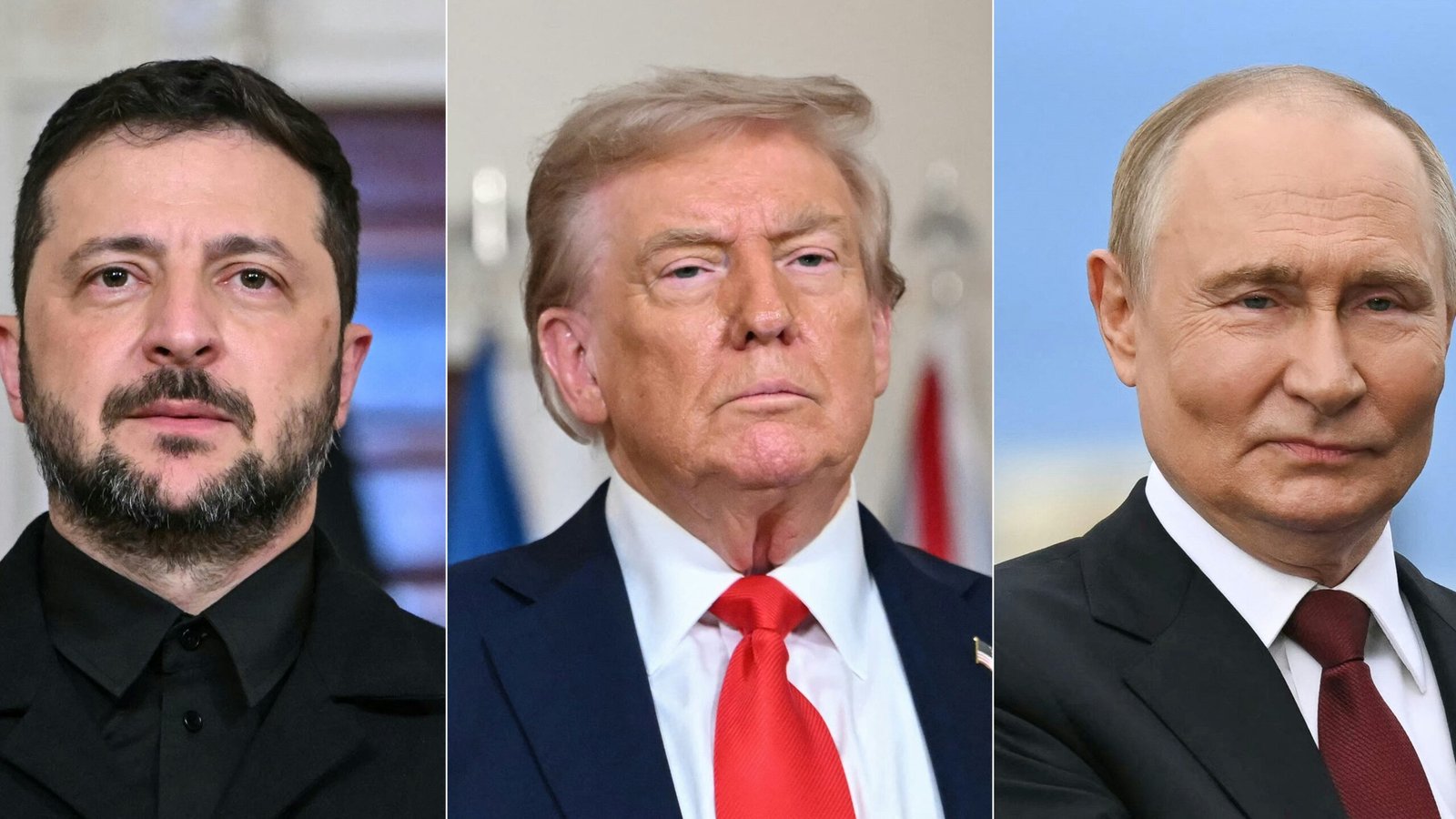
- India is tracking global developments as the Trump administration circulates a 28-point peace plan for the Ukraine–Russia war.
- The proposal could reshape European security, NATO’s strategy, and global geopolitics.
- Ukraine faces battlefield setbacks, domestic political instability, and shrinking Western support, increasing pressure on President Zelenskyy.
Background of the Conflict
- The war began on 24 February 2022, when Russia launched a large-scale invasion of Ukraine.
- Russia’s goals included preventing Ukraine from joining NATO, ensuring control over Crimea (annexed in 2014), and expanding influence over Donbas (Donetsk & Luhansk).
- The conflict rapidly became the largest European war after World War II.
Early Peace Attempts (2022)
Shortly after the invasion:
Belarus Talks (Feb 2022)
- First round of direct talks between Russia and Ukraine.
- Military situation uncertain, Russian troops near Kyiv and Kharkiv.
Istanbul Talks (March 2022)
Turkiye mediated a framework where both sides tentatively agreed:
- Russia would withdraw to pre-war positions (keeping Crimea and parts of Donbas).
- Ukraine would abandon NATO membership and receive strong security guarantees from major powers.
- The process collapsed mainly due to:
- Western reluctance to offer guarantees.
- Ukraine’s confidence after Russian retreat from Kyiv.
- Reports of the UK encouraging Ukraine to keep fighting.
- After this, both sides prepared for prolonged war.
How the War Evolved (2022–2024)
- Russia’s initial setbacks
- Forced to withdraw from Kyiv, Kharkiv, and Kherson.
- Shifted strategy to long-term attrition, deeper mobilisation, and stronger defence lines.
- Ukraine’s counteroffensive failures
- Ukraine’s 2023 offensive failed to break Russian lines.
- Russia reinforced key regions, used drones, artillery, and electronic warfare effectively.
- Russian territorial gains
- By 2025, Russia captured strategic towns like Pokrovsk in Donetsk and advanced in Kharkiv.
- Russia now controls:
- All of Crimea
- All of Luhansk
- Most of Donetsk
- Large parts of Kherson & Zaporizhzhia
- Ukraine’s domestic challenges
- Economy dependent on Western aid.
- Energy infrastructure repeatedly hit by Russian strikes.
- High-level corruption scandals damaged political stability.
- President Zelenskyy continues under martial law after his term expired.
Changing Western Strategy
- Under Biden (2022–2024)
- S. & Europe united: “Support Ukraine as long as it takes.”
- Ukraine received advanced weapons:
- F-16 jets
- Patriot missiles
- Tanks & artillery
- Drones & ammunition
- Goal: weaken Russia through sanctions + long war pressure.
- Under Trump (2025 onwards)
- S. shifted stance:
- Views war as unwinnable.
- Pressures Europe to take bigger responsibility.
- S. shifted stance:
- Wants quick ceasefire through negotiations.
- Open to re-engaging Russia economically (a “Reverse Kissinger” idea to pull Russia away from China).
- This shift massively weakens Ukraine’s bargaining position.
Trump’s 28-Point Peace Plan (Key Features)
- Territorial Provisions
- Crimea, Luhansk, Donetsk recognised as de-facto Russian.
- Ukraine must withdraw from remaining parts of Donetsk.
- Lines in Kherson and Zaporizhzhia frozen, giving Russia permanent control over current positions.
- Security Provisions
- Ukraine must legally commit never to join NATO.
- NATO must guarantee it will not expand to include Ukraine.
- Ukraine may join the EU, but without NATO military cover.
- Military Restrictions
- Ukrainian armed forces capped at 600,000 troops.
- Economic Incentives for Russia
- Sanctions gradually lifted.
- Russia re-admitted into G8.
- S.–Russia economic cooperation restored.
- Security Guarantees Draft (3-point proposal)
- Ukraine receives NATO-style security assurances for 10 years, renewable.
- A major Russian attack on Ukraine treated as a threat to transatlantic peace.
- Requires approval from:
- U.S., Russia, Ukraine, NATO, EU.
- This is the closest current framework to reviving negotiations.
Why Zelenskyy Faces a Dilemma?
If Ukraine accepts the deal:
- Must surrender 20%+ of territory.
- Abandons NATO.
- Russia gains major geopolitical victory.
- Zelenskyy may face political backlash at home.
If Ukraine refuses:
- War continues with Ukraine in a weak position.
- S. support may decline further.
- Europe alone cannot match U.S. support levels.
- Russia may capture more territory.
Ukraine is stuck between military reality and political survival.
Wider Geopolitical Implications
- For Europe
- European security enters a new era.
- NATO credibility tested.
- EU may have to build independent defence capabilities.
- For Russia
- Gains strategic depth, territorial buffer, and restored global legitimacy.
- For U.S.–Russia–China Triangle
- Trump may attempt a “Reverse Kissinger”: Pull Russia away from China to isolate Beijing.
- For Global Security
- Sets a dangerous precedent: territorial conquest rewarded through negotiations.
- For India
- Must carefully manage relations with Russia, U.S. and Europe.
- War influences energy supplies, defence imports, and Indo-Pacific balances.
Conclusion
Russia–Ukraine war has reached a stage where battlefield momentum, shifting U.S. policy, and Ukraine’s weakened position are collectively pushing towards a negotiated settlement. Any future peace will reshape the European security order and global geopolitics for years.
| EnsureIAS Mains Question
Q. Examine the geopolitical, security and domestic factors shaping the current peace negotiations between Russia and Ukraine. How do the proposed settlement terms alter the European security architecture? (250 Words) |
| EnsureIAS Mains Question
Q. With reference to the Ukraine–Russia conflict, consider the following statements: 1. The 2022 Istanbul framework required Russia to withdraw to its pre-war positions while Ukraine renounced NATO membership. 2. The Trump peace plan proposes constitutional prohibition on Ukraine joining NATO. 3. Under the Trump plan, Russia must withdraw entirely from Donetsk and Luhansk. 4. Under the proposed security guarantees, any major Russian attack would be treated as a threat to transatlantic security. Which of the statements above are correct? Answer: (a) 1, 2 and 4 only Explanation: Statement 1 is correct: The Istanbul talks proposed Russia withdrawing to pre-war lines (keeping Crimea and parts of Donbas) and Ukraine renouncing NATO membership in exchange for guarantees. Statement 2 is correct: The Trump plan requires Ukraine to constitutionally reject NATO membership and NATO to declare Ukraine will never be admitted. Statement 3 is incorrect: The Trump plan legalises Russian control of Crimean, Luhansk and Donetsk areas; Ukraine must withdraw from remaining parts of Donetsk, not Russia. Statement 4 is correct: The 3-point security draft says a major Russian attack would be considered a threat to the transatlantic community, aligning with NATO-style assurances. |