Context
Chhattisgarh is preparing the 5th Century archaeological site of Sirpur for nomination to the UNESCO World Heritage List. The government and ASI have begun major conservation and tourism development efforts to enhance accessibility, visitor experience, and heritage protection.
What is a UNESCO World Heritage Site?
- A UNESCO World Heritage Site is a cultural or natural location of “outstanding universal value”, recognised as important for all humanity.
- Benefits of UNESCO status:
- Enhances global recognition & tourism
- Helps raise funds for conservation & management
- Strengthens protection against encroachment and damage
About Sirpur: Historical and Cultural Significance
- Sirpur (Shripur / Sripura) is located near Raipur, Chhattisgarh, on the banks of River Mahanadi.
- It is a multi-religious urban centre (5th-12th Century AD) with 34 major monuments.
- Excavations revealed:
- 22 Shiva temples, 5 Vishnu temples
- 10 Buddhist viharas, 3 Jain viharas
- Ruins of markets, palaces, stupas, meditation halls, ancient water systems
- It flourished as the capital of Dakshina Kosala under the Panduvanshi and Somavamshi
- UNESCO relevance: showcases religious harmony, urban planning, sacred river landscape, and architectural excellence.
Key Structures
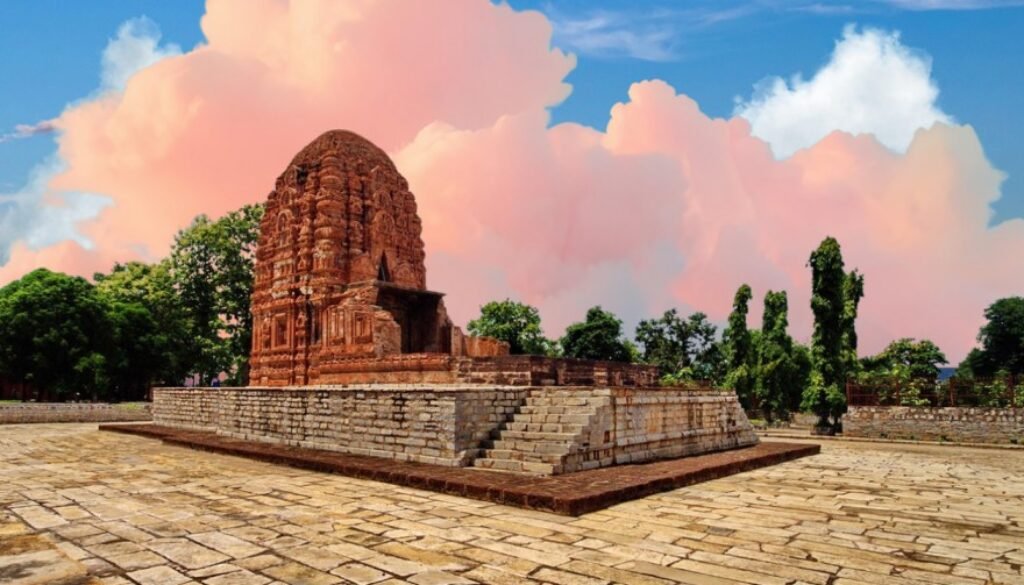
- Lakshmana Temple (7th century) – one of India’s finest brick temples
- Surang Tila complex – elevated terrace, steep steps, panchayatana style shrines
- Tivaradeva Mahavihara – important Buddhist monastery
Current Challenges
- Poor approach roads & scattered site layout make movement difficult and time-consuming
- Limited visitor facilities and interpretation tools
- Need for unified land management & further excavation
- Low global visibility despite high heritage value
What Changes the Government is Planning
- Development and Accessibility Upgrades
- Battery-operated golf carts & paved heritage pathways to reduce travel time
- Primary and secondary pedestrian corridors linking all monuments
- Transfer of 30 hectares to ASI for management & conservation zones
- Tourist and Interpretation Facilities
- Digital Interpretation Centre with 3D exhibits, immersive storytelling, reconstructed history
- QR-based audio guides, multilingual signage, shaded rest areas, drinking water points
- Eco-friendly landscaping, cultural performance zones, craft promotion spaces
- Thematic Zone Planning
- Site divided into four heritage clusters:
- Buddhist Monastic Cluster
- Hindu Temple Cluster
- Site divided into four heritage clusters:
- Civic-Administrative Zone
- Riverine Sacred Landscape
Expected Benefits
- Boost to heritage tourism and local employment
- Strong cultural identity and community involvement
- Better site protection, monitoring and management
- Strengthening India’s global cultural diplomacy
Challenges and Way Forward
| Challenges | Way Forward |
| Need for sustainable tourism without damaging heritage | Strict carrying-capacity limits, regulation of commercial activity |
| Land acquisition & coordination between agencies | Unified heritage management authority with clear roles |
| Community acceptance & livelihood integration | Train local youth as guides, strengthen local crafts & cultural economy |
| Need for global visibility for UNESCO approval | Strong international outreach, research publications & cultural events |
Conclusion
Sirpur represents a rare intersection of Hindu, Buddhist, and Jain traditions, early medieval urban planning, and a sacred river landscape. If developed sensitively, the site can emerge as a global heritage destination while empowering local communities and strengthening India’s cultural soft power. The UNESCO tag would help preserve this unique archaeological heritage for future generations.
| Ensure IAS Mains Question
Q. Sirpur represents an outstanding example of India’s multi-religious and urban heritage. Discuss its historical significance and examine the steps being taken to secure UNESCO World Heritage status. (250 words) |
| Ensure IAS Prelims Question
Q. Consider the following statements about Sirpur archaeological site: 1. Sirpur contains Hindu, Jain, and Buddhist monuments dating back to the 5th-12th centuries. 2. It was the capital of Dakshina Kosala under the Panduvanshi and Somavamshi rulers. 3. The Lakshmana Temple located here is among India’s finest early brick temples. Which of the statements given above is/are correct? a) 1 only b) 1 and 2 only c) 1, 2 and 3 d) 2 and 3 only Answer: c) 1, 2 and 3 Explanation: Statement 1 is correct: Excavations at Sirpur have uncovered 22 Shiva temples, 5 Vishnu temples, 10 Buddhist viharas and 3 Jain viharas, proving it was a multi-religious urban centre with structures built primarily between the 5th and 12th Century AD. Statement 2 is correct: Historical records show that Sirpur served as the political and cultural capital of Dakshina Kosala, flourishing under the Panduvanshi dynasty and later under the Somavamshi kings. Statement 3 is correct: The 7th Century Lakshmana Temple, dedicated to Vishnu, is recognised as one of the finest early brick temple structures in India and is a major architectural highlight of Sirpur. |