Why in the News?
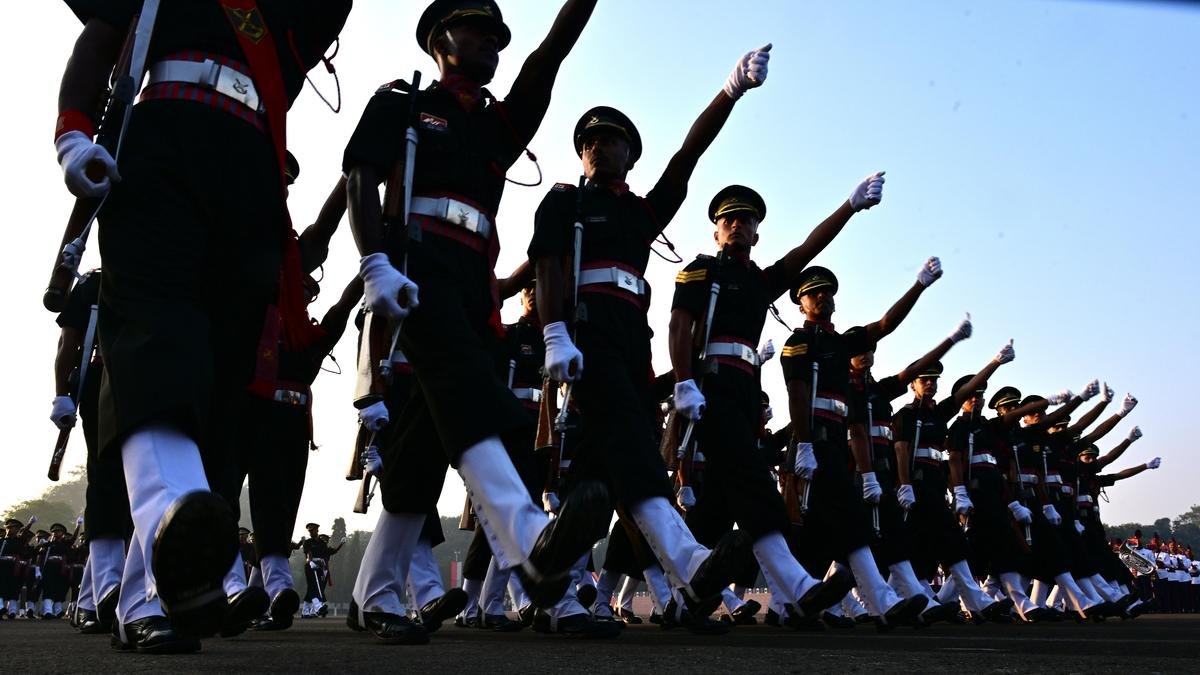
- Lieutenant Samuel Kamalesan was dismissed from the Indian Army for refusing to enter the sanctum of a temple/gurdwara during mandatory parades due to his religious beliefs.
- The Delhi High Court upheld the dismissal and the Supreme Court declined to interfere, raising wider questions about religious freedom, military discipline and proportionality.
Ethical Issues Involved
- Conflict Between Conscience and Institutional Discipline
- The officer’s refusal was rooted in sincere Protestant Christian belief — raising the issue of moral autonomy.
- Military commands, though lawful, must also pass the ethical test of proportionality.
- Kantian ethics emphasises acting according to one’s moral duty and conscience, not merely conforming to authority.
- Balancing Cohesion with Respect for Diversity
- Rituals in fixed-class regiments contribute to morale, but forced participation can dilute genuine unity.
- John Rawls’ idea of “reasonableness” suggests institutions must accommodate sincere, non-disruptive differences.
- The Indian Army’s long tradition of pluralism demands sensitivity to minority faiths.
- Authority–Obedience Dilemma in Hierarchical Organisations
- Blind deference can create ethical blind spots, as seen in historical cases like the Dreyfus Affair.
- Army discipline is essential, yet over-rigidity can erode trust within ranks.
- Max Weber’s concept of legitimate authority emphasises fairness, not unquestioned obedience.
- Moral Responsibility of Leadership
- Senior commanders failed to resolve a minor issue through conversation or flexible directives.
- Ethical leadership requires empathy, listening, and preventive conflict management.
- Examples such as Sreedharan and T.N. Seshan show how leaders blend firmness with moral judgment.
- Justice, Tolerance and Constitutional Morality
- Article 25 guarantees freedom of conscience; Article 33 allows reasonable restrictions for armed forces but not complete erosion of rights.
- The principle in Bijoe Emmanuel case—standing respectfully satisfies constitutional morality—could have guided this case.
- Gandhi’s concept of sarva-dharma-sambhava and Indian ethical traditions emphasise coexistence over uniformity.
Course of Action
- Adopt Proportional and Context-Sensitive Decision-Making
- Minor, non-disruptive objections should be resolved without career-ending consequences.
- Commands must be reviewed through a reasonableness lens when they intersect with personal faith.
- A graded response system can prevent disproportionate punishments.
- Strengthen Ethical Leadership Training in the Armed Forces
- Introduce modules on pluralism, tolerance, conflict resolution and conscience-based dilemmas.
- Encourage officers to use dialogue before discipline.
- Use case studies like Kamalesan, Bijoe Emmanuel, and global military practices to sensitise leadership.
- Institutionalize Reasonable Religious Accommodations
- Create clear guidelines allowing respectful participation without entering sanctums during ritual worship.
- Ensure that accommodations do not disrupt operational requirements or troop morale.
- Build precedents that protect minority faith soldiers from feeling excluded.
- Establish Internal Review Mechanisms for Sensitive Ethical Conflicts
- A small committee of senior officers and chaplains/religious advisors can examine conscience-based objections.
- Promote mediation before escalation to courts or disciplinary authorities.
- Encourage transparency and confidentiality to maintain unit cohesion.
- Promote an Inclusive Ethos Rooted in Constitutional and Ethical Values
- Reinforce that diversity is an operational strength, not a hurdle.
- Adopt practices reflecting constitutional morality, aligning with thinkers like Ambedkar who emphasised justice, liberty, equality, fraternity.
- Highlight positive examples such as Col Sofiya Qureshi’s leadership, showcasing inclusive military culture.
Conclusion
The Kamalesan case highlights a delicate clash between conscience and cohesion. Ethical leadership demands sensitivity, proportionality and flexibility. Institutions strengthen unity not by forcing uniformity, but by respecting sincere beliefs while safeguarding discipline and national duty.
| EnsureIAS Mains Question
Q. “When institutional discipline collides with individual conscience, the ethical challenge lies not in choosing one over the other but in finding a workable balance.” Discuss in light of the Lieutenant Samuel Kamalesan case. (250 Words) |