Context
Tamil Nadu’s public-health approach for transgender persons is receiving attention as a potential model for inclusive Universal Health Coverage and the Sustainable Development Goals’ pledge to “leave no one behind.”
What exactly has Tamil Nadu done to make healthcare more inclusive for transgender persons?
- Clinical services and institutions
- Since 2008, Rajiv Gandhi Government General Hospital (Chennai) has offered gender-affirming surgeries; Tamil Nadu also created India’s first Transgender Welfare Board.
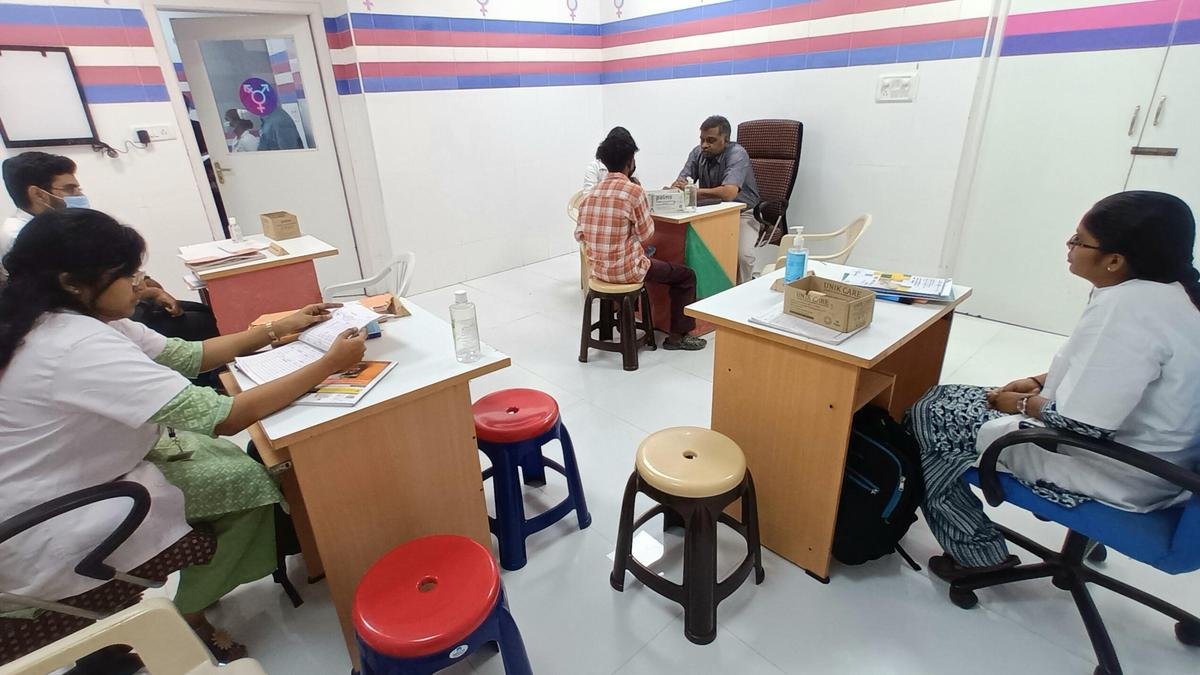
- The National Health Mission (TN) established Gender Guidance Clinics (GGCs) in 2018 to provide multidisciplinary care under one roof. By 2025, 8 districts have GGCs.
- From April 2019 to March 2024, 7,644 transgender individuals accessed GGC services.
- Insurance and financing
- In 2022, Tamil Nadu integrated gender-affirming surgeries and hormone therapy into the Chief Minister’s Comprehensive Health Insurance Scheme (CMCHIS-PMJAY) under a five-year policy (2022–27) with United India Insurance Company.
- The Centre’s PMJAY-Ayushman Bharat TG Plus (2022) offers over 50 free procedures, but Tamil Nadu’s implementation is more advanced.
- The State removed the ₹72,000 annual income cap and waived the need for a ration card in the transgender person’s name to enrol in CMCHIS-PMJAY, addressing non-income barriers such as stigma and family rejection.
- As of October 2025, over 5,200 transgender persons are enrolled in the scheme; >600 received surgeries or hormone therapy across 12 empanelled public and private hospitals.
- Legal and policy groundwork
- The Transgender Persons (Protection of Rights) Act, 2019 (Section 15) mandates comprehensive healthcare.
- The Madras High Court has issued rulings strengthening transgender rights (marriage recognition, banning conversion therapy and certain intersex surgeries, curbing police harassment, curriculum reform, etc.).
- Tamil Nadu adopted the 2019 Mental Health Care Policy and a 2025 State Policy for Transgender Persons to support health, education, and property rights.
- Capacity building
- In October 2024, NHM trained GGC doctors on WPATH Standards of Care, Version 8, raising clinical competency.
Why does transgender-inclusive healthcare matter for public health and social rights?
- Equity and SDG commitments: It operationalises the SDG principle of leaving no one behind by explicitly addressing a marginalised group’s access to health services.
- Comprehensive health needs: Transgender health extends beyond gender-affirming procedures to primary, preventive, mental-health, chronic-disease and sexual-health care across the life course; Tamil Nadu’s model acknowledges this breadth.
- Social inclusion and dignity: Inclusive health services reduce stigma, improve social participation, and strengthen legal and social rights.
- Policy replication potential: Tamil Nadu provides an actionable template for other states and South Asian countries seeking to include transgender care in Universal Health Coverage.
- System resilience: Integrating services into insurance schemes and public hospitals can make care affordable and sustainable, reducing dependence on NGO or ad-hoc funding.
How does Tamil Nadu implement transgender-inclusive healthcare in practice?
- Service delivery model
- Gender Guidance Clinics (GGCs) offer multidisciplinary teams (endocrinology, psychiatry/mental health, surgery, counselling, social work) under one roof to reduce fragmentation.
- GGCs coordinate referrals to empanelled hospitals for surgeries and long-term follow-up (hormone monitoring, mental-health support).
- Insurance and enrolment mechanics
- CMCHIS-PMJAY inclusion means approved procedures are claimable under a five-year contract (2022–27) with United India Insurance.
- Administrative barriers were lowered by removing income caps and ration-card name requirements to improve enrolment access.
- Empanelment of 12 hospitals (public and private) enables distributed service provision; claims and quality monitoring are routed through the insurer and NHM mechanisms.
- Identification and rights protections
- Legal frameworks (2019 Act, 2025 State Policy) and High Court directions reduce police harassment and structural discrimination, creating safer pathways to care.
- Capacity building and standards
- Training of clinicians (NHM, Oct 2024) on WPATH SOC-8 increases adherence to global clinical standards.
- Monitoring and uptake
- Measured outcomes: 7,644 GGC users (2019–24); >5,200 enrolled in CMCHIS-PMJAY (Oct 2025); >600 persons received surgeries or hormones (2022–25) in empanelled hospitals.
- Community engagement
- The State involved transgender organisations in advocacy and service demand; continued community engagement is identified as essential for legitimacy and uptake.
What are the broader implications of Tamil Nadu’s model for governance, health systems and society?
- Governance: Demonstrates how state policy, judicial backing, and NHM institutional mechanisms can converge to deliver targeted, rights-based services.
- Health systems: Integrating specialised services into public health and insurance systems strengthens continuity of care and financial protection.
- Legal precedent: Madras HC rulings and state policy create jurisprudence and administrative norms that other states can mirror.
- Social impact: Improved access may reduce marginalisation, enhance employability and reduce mental-health burdens among transgender persons.
- Regional leadership: By embedding transgender care in UHC, Tamil Nadu positions India as a potential leader in South Asia for inclusive health policy.
Challenges and Way Forward
| Challenges | Way Forward |
| Limited geographic coverage: GGCs present in 8 districts only | Scale GGCs to all districts; phase expansion based on need-mapping and referral networks |
| Service scope gaps: GGCs focus on gender-affirming care but comprehensive primary-to-tertiary services (chronic disease, reproductive health, geriatric care) remain uneven | Broaden GGC mandate to include life-course primary care, chronic disease management, sexual and reproductive health, and geriatric services |
| Workforce competency and accountability: Need for regular upskilling and clinical governance | Institutionalise continuous medical education on WPATH SOC-8, create clinical protocols/manual, and set accreditation standards for empanelled hospitals |
| Quality and regulation of empanelled hospitals | Implement routine audits, standardized outcome reporting, grievance redressal and penalties for non-compliance |
| Mental health under-integration: Limited mental-health benefits in packages despite high need | Include explicit, reimbursable mental-health services in benefit packages and fund community psychosocial programmes |
| Data, research and monitoring gaps: Few published manuals, limited outcome data and research | Create a dedicated health manual, invest in operational research, publish disaggregated monitoring indicators (utilisation, outcomes, adverse events) |
| Societal stigma and discrimination: Persistent social bias limits care-seeking | Run cross-sectoral anti-stigma campaigns, incorporate transgender sensitisation into school/university curricula and police training |
| Community participation and ownership: Risk of top-down implementation | Mandate transgender community representation in governance, monitoring bodies and hospital patient-grievance panels |
| Financial sustainability and scale: Reliance on short contracts and limited empanelment | Secure long-term budget lines, financial modelling for scale-up, and public–private partnership frameworks with quality safeguards |
Conclusion
Tamil Nadu shows that a combination of legal safeguards, targeted public clinics, insurance inclusion, clinician training and community engagement can materially improve transgender persons’ access to affordable, quality care. With sustained political will and system reforms, this model can be replicated nationally and regionally to make Universal Health Coverage genuinely inclusive.
| EnsureIAS Mains Question
Q. Tamil Nadu’s transgender-inclusive healthcare framework demonstrates how legal reforms, public health systems, and insurance mechanisms can converge to advance social justice. Discuss the key components of this model, its significance and the major challenges that must be addressed to ensure long-term equity for transgender persons. (250 words) |
| EnsureIAS Prelims Question
Q. With reference to transgender-inclusive healthcare in India, consider the following statements: 1. Under the Transgender Persons (Protection of Rights) Act, 2019, every State must provide at least one government hospital offering gender-affirming healthcare. 2. Tamil Nadu has included gender-affirming surgeries and hormone therapy under the Chief Minister’s Comprehensive Health Insurance Scheme (CMCHIS-PMJAY). 3. Enrolment under CMCHIS-PMJAY in Tamil Nadu for transgender persons is restricted by an annual income cap. Which of the statements given above is/are correct? a. 1 and 2 only Answer: (a) 1 and 2 only Explanation: Statement 1: Correct: Section 15 of the Transgender Persons (Protection of Rights) Act, 2019 requires States to provide gender-affirming healthcare in at least one government hospital. Statement 2: Correct: Tamil Nadu integrated gender-affirming surgeries and hormonal therapy into CMCHIS-PMJAY in 2022, under a five-year contract (2022–27). Statement 3: Incorrect: Tamil Nadu removed the ₹72,000 annual income cap for transgender persons to enrol in CMCHIS-PMJAY. |