Context
- A new fund called the Tropical Forest Forever Facility (TFFF) was launched during the COP30 Climate Summit in Belém, Brazil, in November 2025.
- It aims to raise and invest $125 billion to financially reward developing countries for conserving their tropical forests.
- Brazil’s President Luiz Inácio Lula da Silva called it an “unprecedented initiative”, emphasizing that Global South nations will now play a leading role in forest conservation efforts.
What is the TFFF?
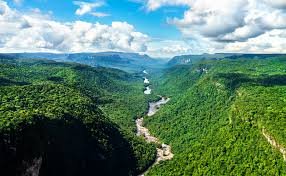
- The Tropical Forest Forever Facility (TFFF) is a permanent, self-financing investment fund created to incentivize the protection of the world’s tropical forests.
- It will:
- Support up to 74 developing tropical forest nations.
- Provide annual payments to countries that successfully conserve their old-growth forests.
- Use satellite remote sensing data to monitor forest canopy cover, ensuring transparency and low-cost verification.
- Funding Structure:
- $25 billion from wealthy governments and philanthropists.
- $100 billion from private investors.
- The funds will be invested in a diversified portfolio (public and corporate bonds), and returns will be distributed to countries that maintain forest cover.
- Contributions Announced So Far: Brazil ($1 billion), Indonesia ($1 billion), Colombia ($250 million), Norway ($3 billion – over a decade), Netherlands ($5 million) and Portugal (€1 million).
Why was the TFFF launched?
- Tropical forests are often worth more dead than alive.
- Land cleared for agriculture or mining brings short-term economic gains, while standing forests’ ecosystem services (like carbon storage, biodiversity, and cooling) are undervalued.
- The TFFF seeks to reverse this economic logic by creating financial value for forest conservation.
- It aims to:
- Reward countries for keeping forests intact.
- Encourage sustainable development instead of deforestation.
- Provide a long-term global mechanism to protect forests while benefiting the people who depend on them.
- As Brazil’s Environment Minister Marina Silva said, the TFFF marks a “turning point” by recognizing the economic value of forest ecosystem services and offering permanent incentives for preservation.
How will it function?
- Capital Mobilization: Raise $125 billion globally.
- Investment: Allocate funds into bonds and financial assets.
- Returns Distribution: Annual profits from investments will be distributed to forest nations that show verified forest conservation results.
- Monitoring: Forest health and canopy cover will be tracked through satellite-based data for transparency and accountability.
Implications
- Could become a new model for climate finance, linking environmental conservation with investment returns.
- Empowers Global South nations with leadership in global forest governance.
- Encourages private capital participation in sustainability efforts.
- Could reduce pressure on forests and slow global deforestation rates.
- Promotes innovative, market-based solutions for global environmental challenges.
Challenges and Way Forward
| Challenges | Way Forward |
| 1. Market volatility: Returns depend on financial markets that can fluctuate during crises, affecting payouts. | Create risk mitigation funds and diversify investment portfolios to ensure stability of returns. |
| 2. Not under the UNFCCC framework: May weaken the legal responsibility of developed nations to provide climate finance. | Align TFFF mechanisms with UNFCCC principles or establish coordination to complement existing frameworks. |
| 3. Risk of inequitable benefit sharing: Some countries may benefit more depending on data accuracy or size of forest cover. | Establish clear, transparent criteria and ensure fair participation for smaller nations. |
| 4. Overreliance on private investment: Could make conservation subject to profit motives rather than long-term sustainability. | Encourage public-private balance and embed strong environmental safeguards. |
| 5. Implementation capacity: Developing countries may lack institutional capacity to manage or absorb funds effectively. | Strengthen national monitoring systems, governance structures, and capacity building for fund utilization. |
Conclusion
The Tropical Forest Forever Facility (TFFF) represents a novel and ambitious financial model for rewarding countries that protect their tropical forests. By giving the Global South a central role, it reshapes global environmental cooperation. However, for it to succeed, the fund must ensure financial stability, transparency, and complementarity with existing UN mechanisms. If implemented effectively, the TFFF could mark a new era of sustainable and equitable forest conservation worldwide.
| Ensure IAS Mains Question
Q. The Tropical Forest Forever Facility (TFFF) marks a new model of global climate finance. Discuss its potential benefits and challenges for sustainable forest conservation, especially for the Global South. (150 words) |
| Ensure IAS Prelims Question
Q. Consider the following statements about the Tropical Forest Forever Facility (TFFF): 1. The TFFF is a permanent, self-financing investment fund launched during COP30 in Brazil. 2. It will provide annual payments to tropical forest countries based on verified conservation results using satellite data. 3. The TFFF operates under the UN Framework Convention on Climate Change (UNFCCC) as part of its official financial mechanism. Which of the statements given above is/are correct? a) 1 and 2 only b) 2 and 3 only c) 1 and 3 only d) 1, 2 and 3 Answer: (a) 1 and 2 only Explanation: Statement 1 is correct: The TFFF was launched during COP30 in Belém, Brazil, as a permanent, self-financing investment fund to protect tropical forests. Statement 2 is correct: It rewards up to 74 developing tropical countries annually, based on satellite-tracked forest conservation. Statement 3 is incorrect: The TFFF is not part of the UNFCCC mechanism; hence, it lacks the same legal obligations imposed on developed countries under that framework. |