Context
A global nutritional transformation is underway, led by functional foods and smart proteins that promote health and sustainability. The plant-based foods market is projected to reach $85-240 billion by 2030, reflecting this growing shift.
What is Nutritional Transformation?
Nutritional transformation refers to the evolving shift in how societies approach food, nutrition, and health – driven by science, technology, and changing lifestyles.
What are functional foods?
- These are foods enhanced to offer health benefits beyond basic nutrition.
- These foods aim to prevent disease or improve health outcomes.
- Examples: vitamin-enriched rice, omega-3-fortified milk, Probiotic yogurts, etc.
- Several technologies used to make them include:
- Nutrigenomics: It refers to the study of how nutrition interacts with genes.
- Bio-fortification: It is the process of increasing the nutritional value of food crops (more vitamins and minerals) during their growth, helping people get better nutrition from everyday foods without needing supplements or special fortified products.
- 3D food printing: A technology that creates customized food by layering edible ingredients, allowing precise control over shape, texture, and nutrition, ideal for healthcare, space, and special diets.
- Bioprocessing: The use of natural organisms or enzymes to improve food quality, safety, and nutrition, commonly seen in fermentation, enzyme treatments, and probiotic production.
What are smart proteins?
- Smart proteins are proteins made using biotechnology to reduce dependence on traditional animal farming. They include:
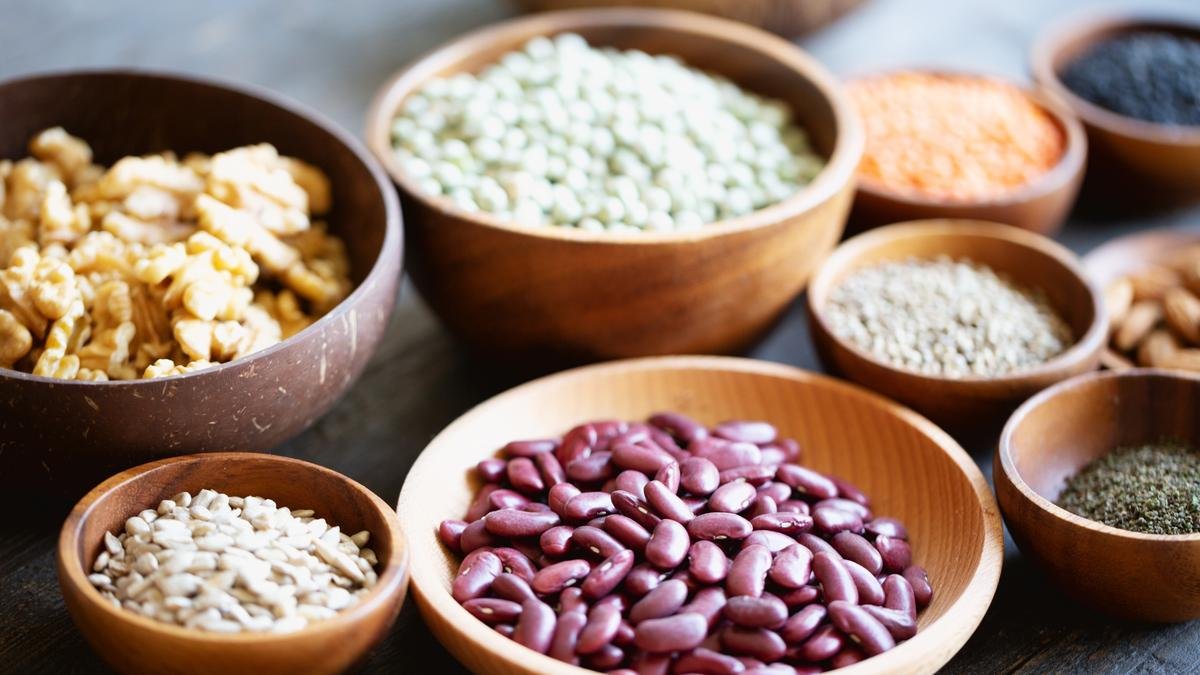
- Plant-based proteins: Extracts from legumes, cereals, or oilseeds reshaped to mimic meat and dairy.
- Fermentation-derived proteins: Made by microbes to produce protein-rich food ingredients.
- Cultivated meat: Real animal cells grown in labs without slaughter, offering ethical and sustainable meat alternatives.
Why does India need them?
- Uneven Nutritional Landscape: More than one-third of Indian children are stunted, and the urban-rural divide in nutrition remains despite improved adult protein intake.
- Rising Food Expectations: With growing incomes, people now expect food to be nourishing and health-enhancing, not just filling.
- Need for Nutritional Security: India must shift focus from food security to nutritional security by promoting foods rich in proteins, antioxidants, and vitamins.
India’s Current Status in Functional Foods and Smart Proteins
- Policy Recognition: Functional foods and smart proteins are key focus areas under India’s BioE3 (Biotechnology for Economy, Environment, and Employment)
- Government Initiatives: The Department of Biotechnology (DBT) and its public-sector arm BIRAC (Biotechnology Industry Research Assistance Council) have started funding programmes to promote innovation in these fields.
- Functional Foods Development:
- Scientists are developing bio-fortified crops to fight malnutrition:
- Zinc-enriched rice – developed at IIRR, Hyderabad.
- Iron-rich pearl millet – developed at ICRISAT.
- Private companies like Tata Consumer Products, ITC, and Marico are investing in fortified staples and health-oriented food products.
- Scientists are developing bio-fortified crops to fight malnutrition:
- Smart Protein Growth:
- India’s smart protein ecosystem is expanding rapidly.
- By 2023, India had around 377 smart protein products (like plant-based meat, eggs, and dairy) offered by over 70 brands.
- Startups such as GoodDot, Blue Tribe Foods, and Evo Foods are leading the way in plant-based meat and egg substitutes.
- The Centre for Cellular and Molecular Biology (CCMB) received a ₹4.5 crore grant from DBT for research on cultivated (lab-grown) meat.
How Other Countries Are Progressing in Functional Foods and Smart Proteins?
- Japan – Pioneer in Functional Foods: In the 1980s, Japan was the first country to introduce the concept of functional foods. It also developed a regulatory framework to govern their safety and claims.
- Singapore – Leader in Smart Proteins: In 2020, Singapore became the first country in the world to approve the commercial sale of cultivated chicken. It is seen as a global frontrunner in supporting lab-grown and alternative protein innovations.
- China – Focus on Food Security and Innovation: China has included alternative proteins (like plant-based and cultivated meat) as part of its national food security and innovation strategy. This aims to reduce reliance on traditional livestock and improve sustainability.
- European Union – Sustainable Protein Push: The EU is investing heavily in sustainable protein research and production. Its “Farm to Fork” strategy promotes environment-friendly, nutritious, and innovative food systems, including alternative proteins.
Challenges and Way Forward
| Challenges | Way Forward |
| 1. Lack of clear regulations: The Food Safety and Standards Authority of India (FSSAI) has not yet issued specific guidelines for novel foods like cultivated meat or precision-fermented proteins. | Formulate a national regulatory framework under FSSAI with clear definitions, safety standards, and labelling norms for novel foods. |
| 2. Risk of Unverified/Mislabelled Products: Absence of regulation may lead to unsafe or falsely marketed products. | Ensure strict quality checks and certification systems to maintain consumer trust and product authenticity. |
| 3. Limited Public Awareness: Consumers may distrust “lab-made” or biotech-based foods. | Promote public education and transparent communication to build confidence in functional and smart protein foods. |
| 4. Skill and Employment Gap: Transition to biomanufacturing needs skilled workers; traditional agricultural workforce may be left out. | Focus on workforce upskilling and training, integrating farmers and rural workers into new biotechnology-based value chains. |
| 5. Market Concentration Risk: Without safeguards, large corporations may dominate the sector. | Encourage inclusive growth through MSME participation, public–private partnerships, and support for startups. |
| 6. Innovation Gap: India may lag behind global leaders like Singapore or the EU in smart protein R&D. | Strengthen R&D funding, university- industry linkages, and inter-ministerial coordination to accelerate innovation. |
| 7. Infrastructure Deficit: Limited biomanufacturing and fermentation facilities hinder large-scale production. | Invest in biomanufacturing infrastructure and promote domestic innovation in precision fermentation through PPPs. |
| 8. Nutritional and Economic Opportunity at Stake: Without action, India could miss out on global market share and jobs. | Leverage India’s strong agricultural and biotech base to become a global supplier, creating jobs in agriculture, manufacturing, and logistics. |
| 9. Sustainability challenge: Scaling up functional foods and smart proteins could increase resource use, emissions (worsening climate change), or biodiversity loss if not planned carefully. | Adopt climate-smart production and sustainable sourcing: set environmental standards (water, land, emissions, biodiversity), promote low-impact practices (precision agriculture, circular bioeconomy, etc.), and require environmental impact assessments for large projects. |
Conclusion
India’s nutritional transformation through functional foods and smart proteins holds the potential to address both malnutrition and sustainability challenges simultaneously. With strong policy support, innovation funding, and private participation, India can move from ensuring mere food security to achieving nutritional and environmental security. However, success will depend on creating a robust regulatory framework, promoting public awareness, and investing in skills and infrastructure.
| Ensure IAS Mains Question
Q. Discuss the significance of functional foods and smart proteins in achieving India’s nutritional and environmental security. Highlight the key challenges and suggest measures to ensure sustainable nutritional transformation. (250 words) |
| Ensure IAS Prelims Question
Q. Consider the following statements regarding Smart Proteins: 1. They are derived solely from animal sources through advanced breeding techniques. 2. Cultivated meat, produced from real animal cells without slaughter, is one form of smart protein. 3. Fermentation-derived proteins are made by microbes to produce protein-rich food ingredients. Which of the statements given above is/are correct? a) 1 and 2 only b) 2 and 3 only c) 1 and 3 only d) 1, 2 and 3 Answer: b) 2 and 3 only Explanation: Statement 1 is incorrect: Smart proteins are not derived from animal sources. They are made using biotechnology through plant-based, fermentation, or cell-cultivation methods to reduce animal dependence. Statement 2 is correct: Cultivated meat is produced from real animal cells grown in laboratories without slaughter, making it an ethical and sustainable form of smart protein. Statement 3 is correct: Fermentation-derived proteins are created by microbes that produce protein-rich ingredients, widely used in making alternative dairy, meat, and nutritional supplements. |