Context
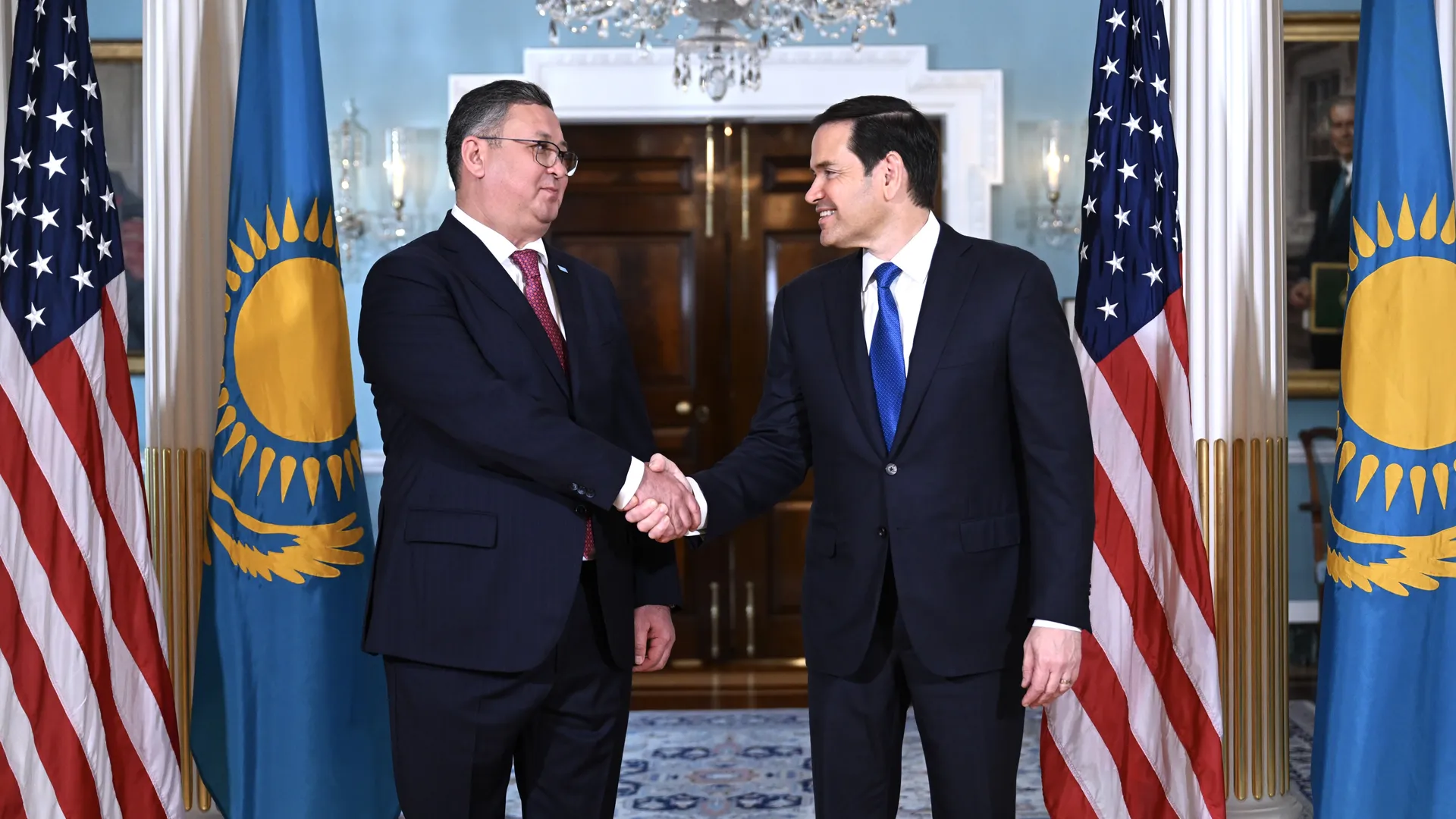
U.S. President Donald Trump announced that Kazakhstan will join the Abraham Accords, normalizing relations with Israel. This marks a major diplomatic development as the U.S. seeks to expand the Accords in Central Asia.
What are the Abraham Accords?
- The Abraham Accords are a series of peace agreements between Israel and several Arab and Muslim-majority nations, brokered by the United States in 2020.
- They aim to normalize diplomatic, economic, and cultural relations between Israel and its regional neighbors, promoting peace and cooperation in West Asia.
Mechanism (How the Abraham Accords Work)
- Normalization of Relations: Countries formally recognize Israel and establish embassies and ambassadors.
- Economic & Technological Cooperation: Signatories collaborate in trade, energy, health, defence, and innovation.
- Cultural & Religious Access: The Accords enable access for Muslims to visit Jerusalem’s Al-Aqsa Mosque.
- S. Mediation & Support: The U.S. acts as the primary facilitator, offering diplomatic and strategic incentives to signatories.
- Regional Dialogue Platform: It creates a framework for peace talks and collective development across West Asia.
Benefits and Relevance of the Abraham Accords
- For West Asia
- Reduces hostility and encourages dialogue between Israel and Arab nations.
- Fosters regional cooperation on energy, trade, and security.
- Promotes interfaith understanding and tolerance.
- For the United States
- Strengthens its diplomatic influence in West Asia.
- Counters China’s and Russia’s growing regional presence.
- Reinforces its alliance system in the Middle East.
- For Kazakhstan
- Enhances its international profile as a moderate Muslim-majority country.
- Promotes investment, technology exchange, and trade diversification.
- Supports its foreign policy of regional peace and stability.
- For India
- Helps India balance ties with both Israel and Arab nations.
- Opens new avenues for trilateral cooperation in technology, energy, and defence.
- Reduces regional tensions, supporting India’s interests in West Asia.
Recent Trends
- The first Abraham Accords were signed in September 2020 between Israel, UAE, and Bahrain, followed by Sudan and Morocco.
- Kazakhstan already has formal diplomatic ties with Israel, but joining the Accords will upgrade cooperation and symbolism.
- The U.S. hopes Kazakhstan’s entry will revive momentum in the Accords, stalled due to the Israel-Hamas conflict.
- Saudi Arabia has not yet joined, citing the need for a roadmap toward Palestinian statehood.
Challenges and Way Forward (From India’s Perspective)
| Challenges for India | Way Forward |
| Balancing Relations: India must maintain a fine balance between Israel and Arab nations, as deepening ties with one may strain relations with the other. | Continue India’s neutral and issue–based diplomacy focusing on peace, trade, and stability in West Asia. |
| Energy Security Concerns: Many Arab nations are key energy suppliers to India; any regional instability could affect oil imports. | Diversify energy sources and strengthen strategic oil reserves to reduce vulnerability to Middle East tensions. |
| Palestine Issue Sensitivity: India supports a two-state solution; overt endorsement of the Accords could be seen as ignoring Palestinian aspirations. | Maintain consistent support for the Palestinian cause while promoting dialogue and peace through diplomacy. |
| Strategic Competition: Growing U.S. and Chinese influence in the region may limit India’s strategic space. | Deepen multilateral cooperation with Israel, Gulf nations, and Central Asia through platforms like I2U2 and SCO. |
| Limited Economic Leverage: India’s trade and investment footprint in West Asia remains smaller compared to Western powers. | Expand economic diplomacy, promote joint ventures in technology, defence, and renewable energy sectors. |
| Regional Instability: Ongoing Israel-Hamas tensions and Iran-Israel rivalry can disrupt India’s diaspora and trade routes. | Strengthen maritime security cooperation and maintain active engagement with all regional stakeholders. |
Conclusion
Kazakhstan’s decision to join the Abraham Accords reflects a growing trend of Muslim-majority nations seeking pragmatic engagement with Israel. While challenges persist, especially around the Palestinian issue, such diplomatic realignments mark a new chapter in Middle Eastern and Central Asian geopolitics, promoting cooperation over confrontation.
| Ensure IAS Mains Question
Q. “The expansion of the Abraham Accords marks a shift from ideological rigidity to pragmatic diplomacy in West Asia.” Discuss its implications for India and the broader region. (250 words) |
| Ensure IAS Prelims Question
Q. With reference to the Abraham Accords, consider the following statements: 1. They were signed in 2020 to normalize relations between Israel and several Arab nations. 2. The United Nations acts as the chief mediator in these agreements. 3. The accords promote cooperation in technology, trade, and religious tourism. Which of the statements given above is/are correct? a) 1 and 3 only b) 2 only c) 1 only d) 1, 2 and 3 Answer: a) 1 and 3 only Explanation: Statement 1 is correct: The accords were signed in 2020 between Israel and Arab nations. Statement 2 is incorrect: They were mediated by the United States, not the UN. Statement 3 is correct: They promote cooperation in multiple sectors including trade, technology, and religious access. |