Context
The Ministry of Panchayati Raj, in collaboration with the Ministries of Education and Tribal Affairs, launched the Model Youth Gram Sabha (2025) to engage students in simulated village-level democratic processes and promote grassroots participation.
About Gram Sabha
- Constitutional Basis: Article 243A, introduced by the 73rd Constitutional Amendment Act (1992), defines the Gram Sabha as the foundation of the Panchayati Raj System.
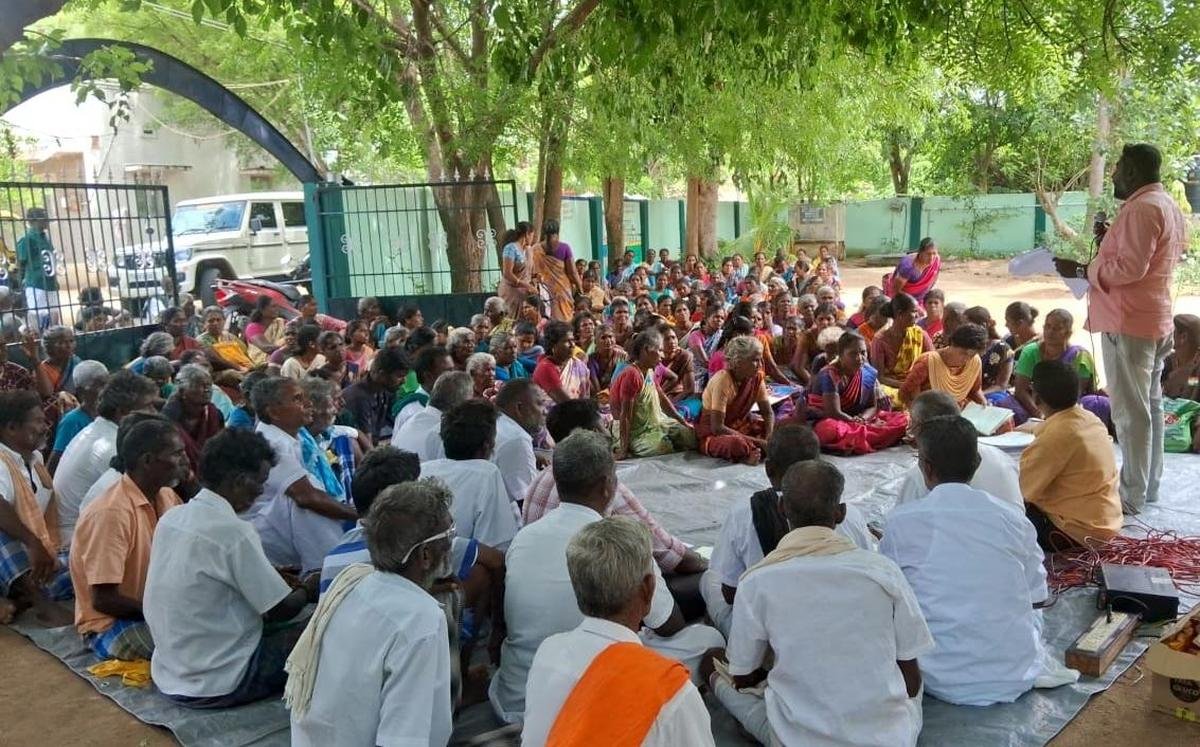
- Composition: Includes all registered voters in a village.
- Functions: Discusses and approves budgets, development plans, and local priorities, ensuring accountability and transparency in governance.
- Significance: It is a form of direct democracy: people directly participate in decision-making rather than through representatives.
- However, youth participation and awareness remain low due to limited representation in educational curricula and weak civic engagement mechanisms.
About Model Youth Gram Sabha
- Objective: To make the Gram Sabha aspirational and integrate local governance education into school and college curricula.
- Initiating Ministries: Ministry of Panchayati Raj, Ministry of Education, Ministry of Tribal Affairs, and Aspirational Bharat Collaborative.
- Concept: Students simulate village meetings, taking up roles like Sarpanch, ward members, and health officers. They also deliberate on budgets, welfare schemes, and development plans.
- Phase 1 Implementation: Conducted in 1,000+ schools across 28 States and 8 UTs. Includes 600+ Jawahar Navodaya Vidyalayas, 200 Eklavya Model Schools, and Zilla Parishad schools. 126 master trainers trained over 1,200 teachers across India.
- Future Plan (Phase 2): Expansion to all state-run schools and colleges
Why was this initiative needed? (Rationale)
- Low Youth Awareness: School curricula emphasize national institutions (Lok Sabha, UN) but ignore Gram Sabhas, limiting local governance knowledge.
- Lack of Aspirational Value:Most young people aspire to become MPs, MLAs, or IAS officers, but not local leaders like Sarpanch or Panchayat members. This is because the Gram Sabha is often viewed as a routine administrative meeting, not as a vibrant democratic platform where real decision-making happens.
- Need for Civic Skill Building: Practical exposure helps students learn debate, consensus-building, and decision-making, vital for participatory citizenship.
Significance
- Grassroots Empowerment: Encourages youth to take part in village decision-making, making local democracy more active and inclusive.
- Educational Value: Converts civics lessons into real-life practice through role play and simulations.
- Nation-Building: Supports Viksit Bharat and Aatmanirbhar Bharat by promoting civic responsibility and community participation.
- Leadership Development: Trains future leaders and administrators who understand governance from the ground level.
Challenges and Way Forward
| Challenges | Way Forward |
| Limited Reach | Expand the programme to all government and private schools nationwide. |
| Lack of Teacher Training | Conduct continuous teacher orientation through Panchayati Raj Training Institutes (PRTIs). |
| Curriculum Overload | Integrate activities as practical civics modules, not extra subjects. |
| Sustained Engagement | Hold annual Gram Sabha weeks in schools to institutionalize participation. |
| Urban Disconnect | Introduce Model Ward Sabhas for city schools to promote urban civic learning. |
Conclusion
The Model Youth Gram Sabha is a transformative initiative to make democracy a lived experience for India’s youth, turning classrooms into nurseries of local leadership, civic responsibility, and participatory governance.
| Ensure IAS Mains Question
Q. “The Model Youth Gram Sabha initiative has the potential to transform India’s civic education into a training ground for participatory democracy.” Discuss. (250 words) |
| Ensure IAS Prelims Question
Q. With reference to the Model Youth Gram Sabha, consider the following statements: 1. It is an initiative of the Ministry of Education alone. 2. It aims to simulate real Gram Sabha processes for school students. 3. It is being implemented only in urban schools. Which of the above statements is/are correct? a) 1 and 2 only b) 2 only c) 1 and 3 only d) 2 and 3 only Answer: b) 2 only Explanation: Statement 1 is incorrect: The Model Youth Gram Sabha is a joint initiative of the Ministries of Panchayati Raj, Education, and Tribal Affairs. Statement 2 is correct: It replicates actual Gram Sabha discussions, allowing students to play roles like Sarpanch and deliberate on development plans. Statement 3 is incorrect: The programme mainly targets rural and semi-rural schools such as Navodaya Vidyalayas and Eklavya Model Residential Schools. |