Context
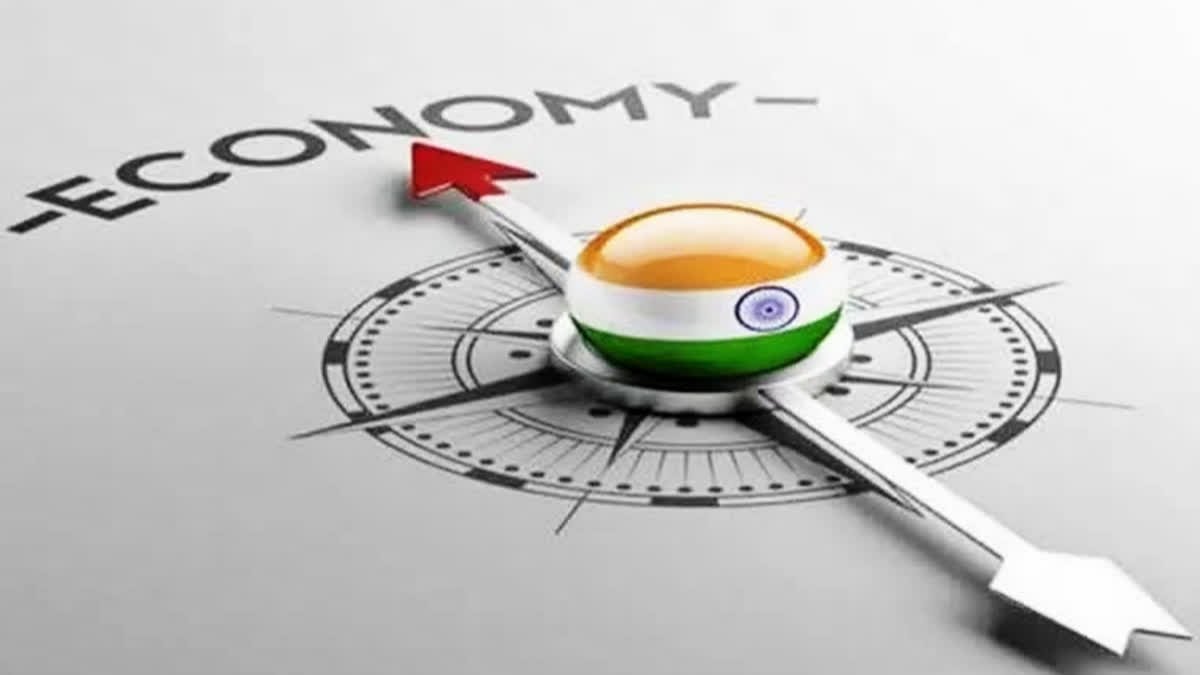
- At the Berlin Global Dialogue (October 2025), Commerce and Industry Minister Piyush Goyal said that India aims to become a $30 trillion economy in the next 20-25 years.
- He explained that India negotiates trade agreements at its own pace, focusing on long-term national interest, not external pressure.
- This statement reflects India’s growing confidence in its economic strength and its vision for sustained, inclusive growth over the next two decades.
Understanding GDP and Economic Size
- GDP (Gross Domestic Product) is the total value of all goods and services produced in a country in one year.
- It shows the economic size, productivity, and global standing of a nation.
- In FY 2024, India’s nominal GDP was about $3.9 trillion, while the US GDP was around $29.2 trillion.
- For comparison, California alone had a GDP of $4.1 trillion, slightly above India’s.
- A larger GDP means more production, consumption, jobs, and global influence.
How is GDP Measured?
- GDP is measured in rupees domestically and converted to US dollars for global comparison.
- Example: ₹330 trillion ÷ ₹84 (exchange rate) = $3.9 trillion.
- Even if the rupee GDP grows, a weaker rupee reduces the GDP’s dollar value.
- Nominal GDP → includes inflation (shows growth at current prices).
- Real GDP → excludes inflation (shows actual production growth).
Basis of the $30 Trillion Projection
| Parameter | 2000-2024 (25 years) | 2014-2025 (11 years) |
| Nominal GDP CAGR | 11.9% | 10.3% |
| Rupee Depreciation CAGR | 2.7% | 3.08% |
| Estimated Year to Reach $30 Trillion | 2048 | 2055 |
- If India maintains its 25-year trend, it can reach $30 trillion by 2048.
- If growth remains slower like the post-2014 period, it may reach only by 2055.
- This shows that sustained high growth and stable exchange rates are crucial.
Significance
- Reflects India’s confidence in becoming a global economic powerhouse.
- Encourages foreign investors and builds credibility in trade talks.
- Acts as a motivating long-term vision for reforms and inclusive growth.
Challenges and Way Forward
| Challenges | Way Forward |
| Slower GDP and investment growth | Strengthen manufacturing, exports, and private sector participation via PLI schemes and Make in India 2.0. |
| Depreciating Rupee | Improve export competitiveness, attract FDI, and build strong foreign exchange reserves. |
| Jobless growth and inequality | Promote labour-intensive industries, MSMEs, and skill development programs. |
| Infrastructure gaps | Accelerate PM Gati Shakti, National Infrastructure Pipeline, and logistics connectivity. |
| Global economic uncertainty | Diversify trade partners and build resilient supply chains. |
| Climate change concerns | Push for green growth, renewable energy, and sustainable industries. |
Conclusion
India’s goal of becoming a $30 trillion economy by 2050 is ambitious but possible with strong reforms, stable growth, and sustainable policies. Consistency, innovation, and inclusivity will decide how fast India gets there.
| Ensure IAS Mains Question
Q. “India’s vision of becoming a $30 trillion economy by 2050 reflects ambition and optimism but demands deep structural reforms.” Discuss the key areas where reforms are essential to sustain high long-term growth. (150 words) |
| Ensure IAS Prelims Question
Q. Which of the following statements correctly differentiates between Nominal GDP and Real GDP? 1. Nominal GDP measures output at current prices, while Real GDP measures output at constant prices. 2. Real GDP includes inflation, while Nominal GDP excludes it. Select the correct option from the codes given below: a) 1 only b) 2 only c) Both 1 and 2 d) Neither 1 nor 2 Answer: a) 1 only Explanation: Statement 1 is correct: Nominal GDP measures output at current prices, while Real GDP measures output at constant prices (base year). Hence, Real GDP reflects actual growth excluding inflation. Statement 2 is incorrect: It wrongly reverses the concept. In reality, Nominal GDP includes inflation as it uses current prices, while Real GDP excludes inflation by using constant (base-year) prices. |