Why in the News?
- India’s electricity demand is steadily growing at ~5% annual rate. It is believed to accelerate because of large-scale rollouts of data centres, electric vehicles, green hydrogen projects and 5G/IoT applications.
- Rapid build-out of AI-capable data centres and the search for reliable, low-carbon baseload power has brought Small Modular Reactors (SMRs) and new energy strategies to the forefront of national planning.
What is a Data Centre?
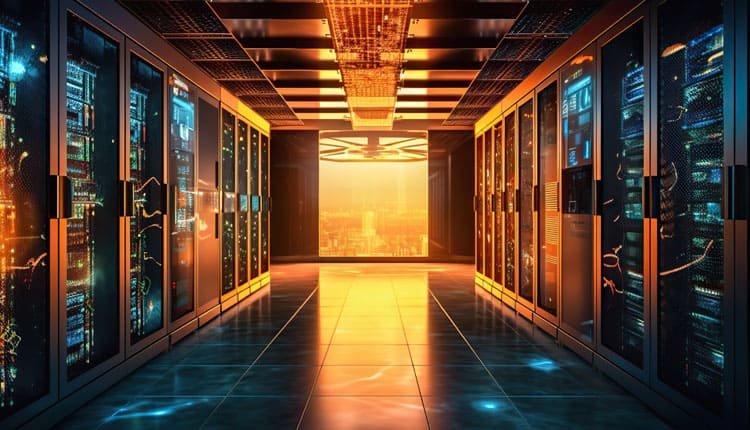
- A data centre is a facility that houses computer systems and associated components such as storage, networking and power systems.
- It provides centralized infrastructure for processing, storing and distributing digital information and services.
- Their location decisions are influenced by latency, connectivity, power availability and regulatory factors.
Why does India need data centres?
- India needs local data centres because the government’s Digital India push and data-localisation rules require storing and processing data inside the country.
- More people using the internet, mobile apps and cloud services, plus upcoming 5G speeds, will generate huge amounts of data that must be hosted close to users for speed and security.
- India currently has far fewer large-scale data centre resources than demand suggests.
- As AI and other data-intensive services grow, more domestic capacity is needed to avoid bottlenecks and to meet regulatory and performance requirements.
How much power is required?
- Modern AI data centres are far more power-hungry than traditional server farms because they run energy-intensive hardware like GPUs that draw tens to hundreds of kilowatts per rack.
- AI workloads require continuous computing and cooling, causing very large electricity consumption per facility.
- Global trends show data centre energy demand rising steeply; examples from other countries show power needs can grow much faster than earlier forecasts.
- Therefore, India’s planned data centre growth will significantly raise national and local electricity demand unless accompanied by careful planning.
Where are data centres being built?
- Globally, major data centre clusters are concentrated in a few regions; in India, coastal and metropolitan hubs are preferred for connectivity and power access.
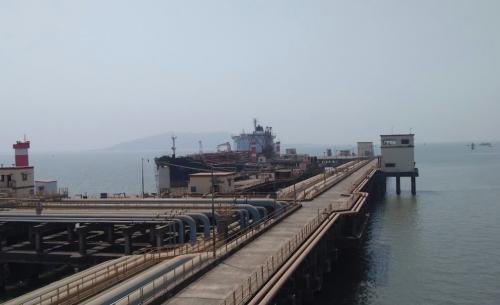
- Large tech players and domestic firms are selecting sites near ports, industrial zones and major cities to build GW-scale facilities.
- The pattern follows availability of land, connectivity, proximity to users and readiness of local power infrastructure.
What are the power sources?
- Data centre operators seek low-carbon and reliable power to meet sustainability goals and secure constant operation.
- Renewable energy (solar, wind) is a major option but is intermittent; therefore storage, hybrid solutions, and firming power sources (like gas, hydrogen, or nuclear) are considered.
- Emerging alternatives include on-site generation, advanced storage, and low-carbon firm power such as SMRs that can offer 24/7 baseload with smaller footprints.
- Operators therefore pursue diverse energy mixes to combine decarbonisation targets with high reliability.
What is a Small Modular Reactor (SMR)?
- An SMR is a small-sized nuclear power plant that produces electricity using nuclear energy, just like big reactors — but on a smaller scale.
- It is called “modular” because its parts are built in factories and then transported to the site for quick assembly.
- Each SMR can generate a few megawatts to a few hundred megawatts of power — enough to supply a city or an industrial area.
- SMRs are safer because they use modern designs that cool themselves automatically (called passive safety) even if there is no human action.
- They need less land, less water, and fewer workers, making them easier to build in remote or special-purpose areas like near factories or data centres.
- Since they produce steady power without emitting carbon, SMRs can work together with solar and wind energy to provide reliable, clean electricity all day.
How can India capitalise on SMRs?
- SMRs are attractive because they are smaller, factory-built reactors that can be sited closer to demand centres and manufactured at scale.
- To succeed, India needs legal reforms, international technology partnerships, regulatory updates, workforce re-skilling and local manufacturing linkages.
- Collaboration between SMR vendors, data-centre companies and renewables firms can create integrated, low-carbon electricity solutions for high-demand consumers.
How do SMRs enhance safety?
- SMR designs include passive safety systems that reduce dependence on external power and human intervention, lowering the risk of severe accidents.
- Their smaller core size and reduced radioactive inventory limit potential consequences, and simplified systems can shorten emergency planning requirements.
- Modern fuels and containment strategies improve thermal and structural tolerance, giving operators more time to respond to incidents.
- These design features aim to make SMRs inherently safer than many legacy reactor types.
What about SMR regulation?
- Existing nuclear licensing frameworks were mainly designed for large reactors and may not fit SMR technology and factory-based approaches.
- Countries are reforming rules to allow technology-neutral standards, streamlined licensing, fleet approvals and harmonised international recognition.
- India will need regulatory modernization, capacity building for regulators, and coordination with international agencies to accelerate safe deployment.
- Clear, predictable regulations are critical to attract private capital and vendors.
What are the concerns related to transportation and waste of SMRs?
- Factory fabrication and transportation of fuel-loaded modules raise security and accident-liability concerns; regulation must address these risks specifically.
- New fuel types (e.g., HALEU) and coolant choices may change the nature of radioactive waste streams, requiring fresh disposal and interim-storage strategies.
- On-site interim storage is a common vendor plan, but long-term national waste pathways must be established.
- Transportation, safeguards, and waste management rules must evolve with technology to ensure safety and public confidence.
Key Terms
- HALEU (High-Assay Low-Enriched Uranium)
- HALEU refers to uranium fuel enriched to higher levels (e.g., 5–20% U-235) than traditional low-enriched uranium but well below weapons grade.
- HALEU can improve reactor efficiency and enable advanced reactor designs, including many SMRs.
- Its production requires specialized enrichment capability and raises non-proliferation and supply-chain considerations.
- Regulatory, transport and safeguards frameworks must account for HALEU’s physical and radiological properties.
- Availability of HALEU is a strategic enabler for many next-generation nuclear projects.
- Green Hydrogen
- Green hydrogen is hydrogen produced by electrolysis using renewable electricity, with near-zero lifecycle carbon emissions.
- It can be used as an energy carrier, industrial feedstock, or fuel for flexible power generation.
- Green hydrogen can help decarbonise hard-to-electrify sectors and provide seasonal energy storage.
- Cost reductions in electrolysers and cheap renewable power are key to scalability.
- It can be co-located with data centres or SMRs for sector coupling and flexibility services.
- Digital India
- Digital India is a government initiative to expand digital infrastructure, deliver services electronically and increase digital literacy.
- It aims to make government services accessible, foster online economic activity and connect citizens across regions.
- The program drives demand for data, cloud services and secure digital platforms.
- It intersects with infrastructure policy, cybersecurity and digital governance frameworks.
- For planners, Digital India highlights the need for resilient data and power infrastructure to support public services.
Implications
- Grid stress and planning needs: Rapid data-centre build-out will increase base and peak electricity demand, requiring grid reinforcement, local generation and strategic planning with utilities.
- Energy mix transformation: To decarbonise data centres at scale, India must accelerate storage, renewables integration, and consider firm low-carbon sources like SMRs and green hydrogen.
- Local economic opportunity: Data centres and SMR deployments can spur investments, jobs, manufacturing and regional development if aligned with local industrial strategies.
- Regulatory and legal reform imperative: Licensing, liability, safeguards and transport regulations must be updated to enable safe, timely deployment of SMRs and new fuel cycles.
- Environmental and social safeguards: Waste management, transport security and equitable energy access need robust policies to prevent adverse environmental and societal impacts.
Challenges and Way Forward
| Challenge | Way Forward |
| Rapidly rising electricity demand from AI-scale data centres stressing local grids. | Integrated planning between data centre developers, state utilities and central agencies; targeted grid upgrades and dedicated evacuation plans. |
| Intermittency of renewables making 24/7 reliable power difficult for high-availability data centres. | Hybrid energy strategies combining renewables + storage + firm low-carbon sources (SMRs, gas with CCS, green hydrogen) and demand-side scheduling. |
| High capital and operational costs of SMR deployment and regulatory uncertainty. | Streamline licensing, offer fiscal incentives, enable public-private partnerships, and adopt technology-neutral regulatory frameworks to attract investment. |
| Safety, transport and waste management issues for modular nuclear units and new fuel types. | Develop specific transport, liability and waste regulations; mandate robust security protocols; plan interim and long-term waste storage pathways. |
| Limited domestic ecosystem for SMR manufacturing and skilled workforce. | Promote technology transfer, local manufacturing incentives, vocational training and skilling programs tied to SMR value chains. |
| Land, environmental clearances and social acceptance challenges near proposed sites. | Early stakeholder engagement, transparent environmental assessments, community benefit-sharing and reuse of decommissioned coal-site land. |
Conclusion
India stands at an energy inflection point: exploding data demand and AI workloads will sharply increase power needs, while decarbonisation targets push for low-carbon baseload options. A combination of smarter grid planning, hybrid energy portfolios and carefully governed SMR deployment can meet this demand safely and sustainably. Coordinated policy, regulatory reform and stakeholder engagement are essential to convert risks into opportunities.
| EnsureIAS Mains Question
Q. Analyse the challenges posed by the rapid expansion of AI-scale data centres to India’s power system. Suggest an integrated policy approach that addresses energy security, climate targets, regulatory readiness and social acceptance. (250 Words) |
| EnsureIAS Prelims Question
Q. Which of the following statements are correct? Choose the correct option: Answer: C (1, 2 and 4 only). Explanation: Statement 2 is correct: SMRs are specifically designed for modular, factory-based fabrication and smaller capacities, which allows siting closer to demand centres and reduces the need for large transmission build-out. This characteristic is a core advantage cited for SMR deployment in industrial and data-centre contexts. Statement 3 is incorrect: Intermittent renewables (solar and wind) cannot guarantee continuous 24/7 baseload by themselves without storage, complementary firm power, or demand management. High-availability consumers like AI data centres require dispatchable or stored energy to maintain uptime and service-level agreements. Statement 4 is correct: Use of HALEU (high-assay low-enriched uranium) or alternative coolants/fuels can change the types and radioactivity levels of waste produced. Consequently, transport, interim storage, and disposal regulations need revision to safely handle new waste streams and logistical risks. |