Significance: GS III; Environment; Climate Change;
Why in the News?
Recently, a Himalayan Yala Glacier was declared dead in Langtang (Nepal), making it among Nepal’s first likely to be declared dead.
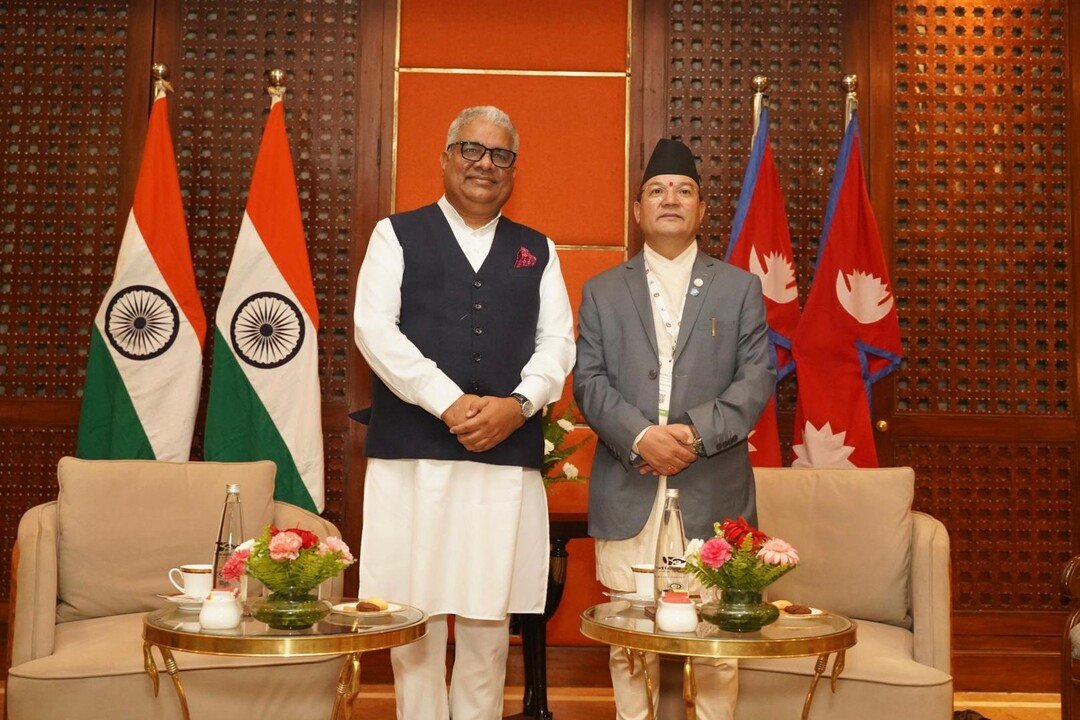
- India at the first ‘Sagarmatha Sambaad’—a global dialogue held in Kathmandu, Nepal has emerged as a vocal advocate for the protection of mountain ecosystems, under the theme ‘Climate Change, Mountains, and the Future of Humanity’.
What is the significance of the Himalayas?
The Himalayas, often referred to as the “Third Pole,” are vital for the ecological and economic well-being of nearly 1.3 billion people across Asia. These mountains:
- Provide forest cover that supports unique biodiversity.
- Feed perennial rivers like the Ganges, Brahmaputra, and Indus, which are lifelines for millions.
- Act as natural barriers, influencing weather patterns and climate.
- Serve as a reservoir for freshwater through glaciers and snowfields.
- Support the livelihoods of diverse communities through agriculture, tourism, and traditional practices.
However, the Himalayas face numerous threats: climate change, glacial retreat, deforestation, unsustainable tourism, and increasing natural disasters.
What are the consequences of Glacial Loss?
- Increased Global warming: Reduced Glaciers will have less albedo effect and therefore will increase heat absorption.
- Rising sea levels: According to a Nature study, melting glaciers have caused nearly 2 cm to global sea level rise since 2001.
- Disrupted water cycles: Nearly three-quarters of Earth’s freshwater is stored in glaciers. Their rapid melting threatens water security and endangers biodiversity.
- Natural disasters: It increases risks of Glacial Lake Outburst Floods (GLOFs) and avalanches.
What is the ‘Sagarmatha Sambad’?
- Named after the ‘Mount Everest’, the Sagarmatha Sambaad is a biennial, multi-stakeholder global dialogue forum initiated by the Government of Nepal.
- The Sambaad serves as a platform for deliberation on pressing global, regional, and national issues, with a focus on fostering collective wellbeing and the common good of humanity.
- The inaugural edition was held in May 2025, under the theme “Climate Change, Mountains, and the Future of Humanity”.
|
What were the India’s Five-Point Call for Global Action at ‘Sagamatha Sambad’?
|
What were the major outcomes of the ‘Sagarmatha Sambad’ – call for Action?
- It recognized climate change as an unprecedented challenge threatening present and future generations.
- It reaffirmed the commitments to international frameworks such as the UNFCCC, Paris Agreement, and the 2030 Agenda for Sustainable Development.
- It called for limiting global temperature rise to 1.5°C above pre-industrial levels
- It urged accelerated emission reductions, enhanced adaptation, addressing loss and damage, and fair financial support for vulnerable nations.
- The summit emphasized climate justice, especially for mountain communities that contribute little to global emissions but suffer disproportionately.
- It advocated for the inclusion of local, indigenous, women, youth, and marginalized voices in climate action.
- Sambad proposed the establishment of a dedicated climate fund for Himalayan nations and the development of payment mechanisms for ecosystem services.
- It stressed on the importance of early warning systems for natural disasters and the promotion of green technologies.
What are the present key Initiatives taken by the Indian Government?
- National Mission on Sustaining Himalayan Ecosystem (NMSHE): It is part of the National Action Plan on Climate Change (NAPCC) that focuses on understanding and responding to climate change impacts on the Himalayas, conserving biodiversity, and promoting sustainable development.
- SECURE Himalaya Project: It is part of the Global Wildlife Program. It aims to – Wildlife conservation, habitat protection, and prevention of wildlife crime in the Himalayan region. It is implemented under the Ministry of Environment, Forest and Climate Change (MoEFCC), in partnership with UNDP, and Global Environment Facility (GEF).
- International Centre for Integrated Mountain Development (ICIMOD): It is an intergovernmental knowledge and learning center serving the Hindu Kush Himalaya (HKH) region. It facilitates research, policy dialogue, and capacity building for sustainable mountain development.
Global Initiatives:
- Living Himalayas Initiative by WWF for Nature: The Living Himalayas Initiative (LHI) is one of WWF’s 13 Global Initiatives, launched in 2009.
- It aims to achieve transformational conservation impact in the Eastern Himalayas—specifically across Bhutan, India (Northeast), and Nepal.
- It fosters cross-border cooperation to manage and conserve landscapes that span national boundaries, such as the Terai Arc and the Kangchenjunga Landscape.
- It conducts studies to identify threats to major river basins like the Ganges and Brahmaputra, which are critical for one in five people on Earth.
- UN Initiatives:
-
- 2025 designated as the International Year of Glaciers’ Preservation.
- March 21 to be observed annually as World Day for Glaciers.
- UNESCO Intergovernmental Hydrological Programme (IHP): It is the only intergovernmental cooperation programme within the UN system dedicated specifically to water research, management, education, and capacity development.
- Established in 1975 following the International Hydrological Decade (1965–1974), it is a unique global platform for addressing water-related challenges at national, regional, and global levels.
-
- IHP-IX (2022–2029) – 9th phase of IHP (IHP-IX) focuses on five transformative tools to address:
-
-
- Water security for sustainable development and human settlements.
- Science-based adaptation to climate change.
- Early warning systems for water-related disasters.
- Water data management and scientific assessment.
- Strengthening institutional and technical capacities.
-
Conclusion: India’s proactive stance at the ‘Sagarmatha Sambad’ underscores the global significance of mountain ecosystems and the urgent need for collective action. Protecting the Himalayas and other mountain regions is not just a regional imperative but a global responsibility—one that is crucial for the future of humanity and the planet. The Five-Point Call for Action provides a comprehensive roadmap for international cooperation and policy integration.