Why in the News?
- India’s demand for lithium batteries is expected to rise from 4 GWh in 2023 to 139 GWh by 2035.
- It is mainly due to the rapid adoption of electric vehicles (EVs) and battery energy storage systems (BESS) for renewable energy.
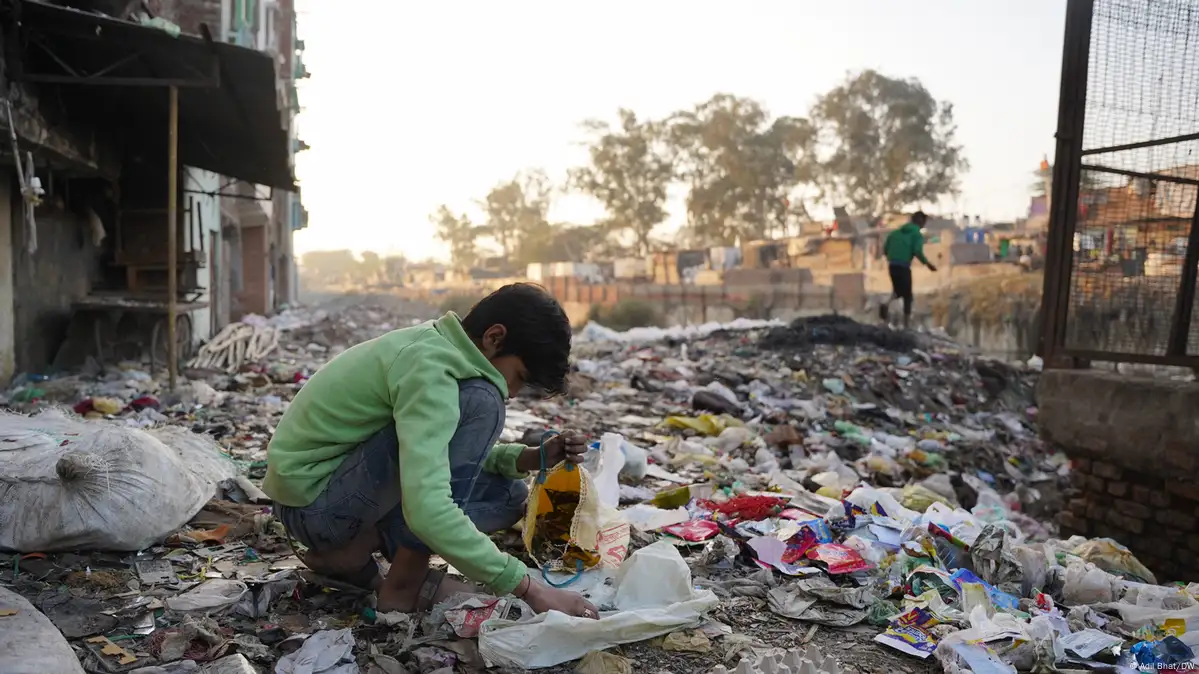
- With increasing battery usage, battery waste is also rising, contributing to 7,00,000 metric tonnes of India’s 6 million metric tonnes of e-waste in 2022.
- Improper disposal poses serious ecological and public health risks.
- The government introduced the Battery Waste Management Rules (BWMR), 2022, including Extended Producer Responsibility (EPR).
- But there are critical challenges in its implementation, especially around EPR floor pricing.
Key Highlights
- Battery Waste Growth and Composition
- The EV boom and BESS adoption have led to a surge in lithium-ion battery usage.
- These batteries contain hazardous materials (e.g., lithium, cobalt, nickel) which can leak into soil and water if not disposed of properly.
- Lithium batteries alone made up nearly 44% of total e-waste in 2022.
- Battery Waste Management Rules (BWMR), 2022
- Introduced Extended Producer Responsibility (EPR) to shift recycling duties to producers.
- Producers must obtain EPR certificates from certified recyclers to validate compliance.
- The system is designed to close the battery value chain loop for a circular economy.
- EPR Floor Price Mechanism
- The EPR floor price is a minimum payment made by producers to recyclers for recycling services.
- It helps recyclers cover costs like infrastructure, technology, labour, and transport.
- However, the current price is too low, making formal recycling economically unsustainable.
- Illegitimate Recycling and Market Distortions
- Informal recyclers often issue fake EPR certificates or illegally dump waste.
- This practice undermines the system, just as seen earlier in plastic waste management.
- Non-compliance by large electronics manufacturers also worsens the problem, especially in developing countries.
- Need for Global Benchmarking and Fair Pricing
- The UK charges ~₹600/kg for EV battery recycling, while India considers less than one-fourth of that.
- Even after accounting for purchasing power, this is not viable for building a strong ecosystem.
- Experts argue that OEMs (Original Equipment Manufacturers) can absorb these costs without raising consumer prices.
| Extended Producer Responsibility (EPR)
1. Definition and Objective: a. It is an environmental policy approach that assigns responsibility to producers for managing the entire lifecycle of their products, including post-consumer waste. b. The aim is to minimise environmental harm by encouraging the design of products that are easier to recycle or dispose of sustainably. 2. EPR Framework in India: a. India has implemented EPR policies across several waste categories such as plastic waste, electronic waste (e-waste), batteries, and used tyres. b. These policies are overseen by the Central Pollution Control Board (CPCB), which requires producers to obtain formal EPR authorisation. 3. Strengthening the Circular Economy: a. The Plastic Waste Management (Amendment) Rules, 2022 have further reinforced India’s commitment to a circular economy, placing more stringent obligations on producers to manage plastic waste responsibly. 4. Mandate for Producers and Brand Owners: a. In a major step towards environmental accountability, the government now requires producers, importers, and brand owners (PIBOs) to actively manage the waste generated from their products at the end of their useful life. 5. Broader Goals of EPR Policy: This policy shift is designed to: a. Hold manufacturers accountable for their ecological impact, b. Promote the adoption of sustainable product designs, c. Ensure that environmental costs are internalised into product pricing, and d. Support the development of efficient waste management systems. |
Implications
- Environmental and Public Health Hazards
- Improper disposal can lead to toxic chemical leakage, damaging ecosystems and water sources.
- Fire and explosion risks from battery mishandling also pose threats to public safety.
- Economic Losses and Import Dependence
- India could face foreign exchange losses of over $1 billion by 2030 due to lost materials.
- Inefficient recycling increases dependency on imported rare earth metals like lithium and cobalt.
- Weak Circular Economy Development
- Without effective implementation, India’s circular economy goals will remain unfulfilled.
- Informal practices and fake compliance certificates disrupt accountability and sustainability.
- Global Reputational Risks
- Double standards by multinational corporations between developed and developing countries risk tarnishing India’s green transition image.
- Weak enforcement may signal India as a soft spot for environmental dumping.
- Potential for Green Industry Growth
- If corrected, the sector could create green jobs, spur clean-tech innovation, and position India as a recycling hub for the Global South.
- Transparent pricing and enforcement would ensure industry-wide trust and investment.
Challenges and Way Forward
| Challenges | Way Forward |
| Low EPR floor price making formal recycling unsustainable | Recalculate EPR price based on real recycling costs and global benchmarks |
| Flourishing informal sector with poor practices and fake certifications | Integrate informal recyclers into the formal sector via training and incentives |
| Weak monitoring and audits under BWMR | Implement digital tracking of EPR certificates, conduct regular third-party audits |
| Non-compliance by large producers and manufacturers | Enforce stringent penalties, harmonise rules across developed and developing markets |
| Lack of consumer awareness and OEM transparency | Mandate corporate disclosure and run public awareness campaigns |
Conclusion
India’s growing reliance on lithium batteries for its green transition necessitates a robust, fair, and enforceable battery waste management system. The current gap in EPR floor pricing, informal practices, and weak enforcement threatens not only the environment but also economic sustainability and strategic autonomy. A collaborative, policy-driven approach involving fair pricing, better regulation, and inclusive industry practices can transform this challenge into an opportunity for green growth and circular economy leadership.
| Ensure IAS Mains Question
Q. India’s push towards electric mobility and renewable energy must be matched with a robust battery waste management framework. Discuss the key challenges in implementing the Battery Waste Management Rules, 2022, and suggest measures to ensure a sustainable circular economy. (250 words) |
| Ensure IAS Prelims Question
Q. With reference to the Extended Producer Responsibility (EPR) under India’s Battery Waste Management Rules, 2022, consider the following statements: 1. EPR mandates that producers are responsible for the collection and recycling of battery waste. 2. The EPR floor price is paid by recyclers to producers to obtain compliance certificates. 3. EPR is aimed at promoting a circular economy in the battery sector. Which of the statements given above is/are correct? a) 1 and 2 only b) 2 and 3 only c) 1 and 3 only d) 1, 2 and 3 Answer: c) 1 and 3 only Explanation: Statement 1 is correct: Under the Battery Waste Management Rules, 2022, the principle of Extended Producer Responsibility (EPR) is applied. It legally binds producers (such as EV manufacturers or battery importers) to ensure collection, proper disposal, and recycling of the batteries they sell. The idea is to make the producer accountable for the entire lifecycle of the battery — from production to disposal. Statement 2 is incorrect: This statement reverses the direction of payment. In reality, the producers pay the recyclers a floor price in exchange for EPR certificates, which confirm that the recyclers have processed a certain quantity of battery waste. This price helps cover recyclers’ costs for collecting, transporting, and processing battery waste, including investment in safe handling, infrastructure, and technology. Statement 3 is correct: One of the main goals of EPR is to establish a circular economy, where resources like lithium, cobalt, and nickel are recovered and reused instead of being discarded. By doing so, EPR reduces environmental damage and lowers dependency on virgin imports of critical minerals. |