Why in the News?
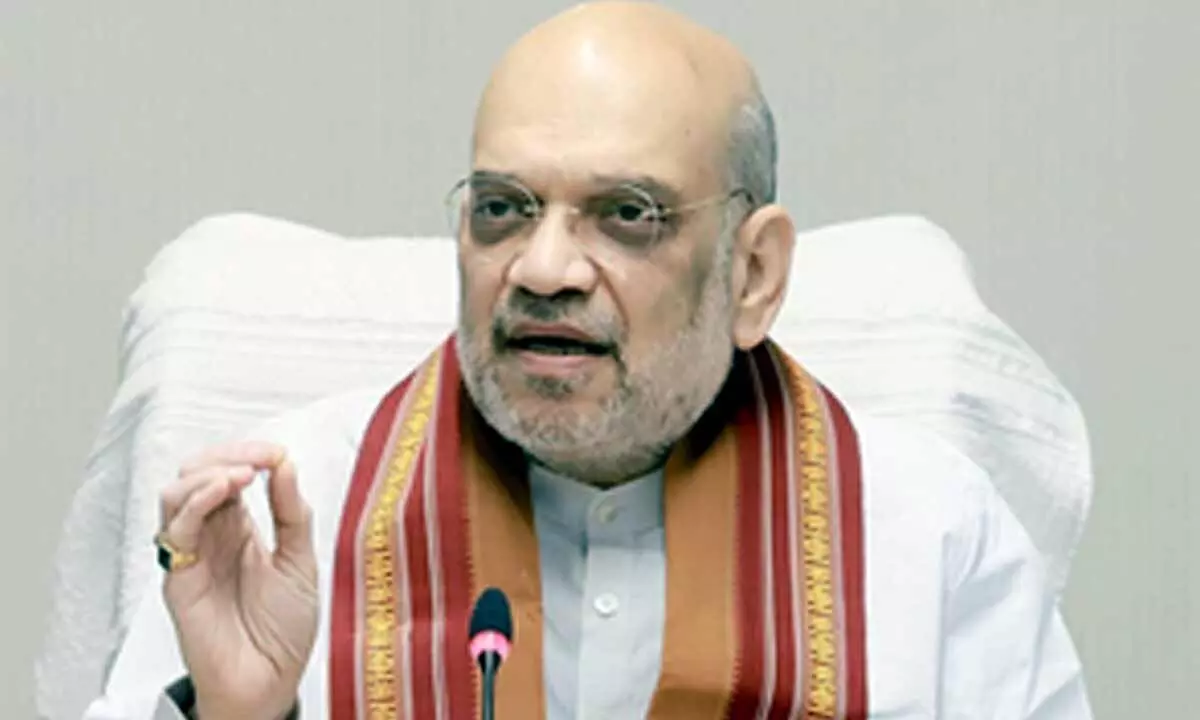
- Union Home Minister highlighted the transformation of zonal councils from mere discussion platforms to effective engines of cooperation.
- The central government is using Zonal Council platforms to address regional challenges more actively and ensure faster decision-making.
- The recent developments in 27th Eastern Zonal Council Meeting reflect a strategic push towards cooperative federalism and conflict resolution through structured institutional mechanisms.
Key Highlights
- Meeting Details
- Event: 27th Eastern Zonal Council Meeting
- Location: Ranchi, Jharkhand
- Attendees: Chief Ministers and officials from Jharkhand, Bihar, Odisha, and West Bengal
- Shift in Role of Zonal Councils
- Zonal Councils have evolved from being just discussion platforms to active decision-making bodies.
- They now focus on practical problem-solving and inter-state cooperation.
- 83% of the issues raised in meetings have been resolved, showing their growing effectiveness.
- This reflects better coordination between the Centre and states, and among the states themselves.
- The councils are helping in faster dispute resolution and implementation of joint initiatives.
- Focus on Long-Pending Issues
- Zonal Councils are addressing long-pending issues that were unresolved for years.
- One key issue is the division of assets and liabilities of Public Sector Undertakings (PSUs) between newly formed states.
- For example, after the creation of Jharkhand from Bihar in 2000, disputes over the sharing of PSUs like coal companies and industrial units remained unresolved.
- These matters are now being taken up and settled through mutual consent between the concerned states.
- Rising Engagement
- Number of Zonal Council meetings rose to 63 between 2014–2025, from only 25 during 2004–2014
- Internal Security & Development
- States like Bihar, Jharkhand, and Odisha have seen a decline in Naxalism.
- Shift in Centre’s focus toward development and law & order in backward regions
About Zonal Councils
Key Features
|
Significance of Zonal Councils
- Promote regional cooperation:
- They provide a platform for states and the Centre to discuss common issues.
- Example: Border disputes, river water sharing, inter-state transport, and law & order.
- Support coordinated development planning:
- They help states align economic and social strategies for balanced regional growth.
- Example: Planning of infrastructure projects or agricultural reforms across multiple states.
- Resolve inter-state disputes through dialogue:
- Councils offer a non-judicial space to settle conflicts amicably.
- Example: Interstate water disputes like those between Karnataka and Tamil Nadu.
- Strengthen Centre–State coordination:
- Regular meetings help improve administrative efficiency and joint policy action.
- Example: Coordinating responses to Naxalism or disaster management strategies.
- Address region-specific issues effectively:
- Discussions on challenges like asset sharing after state bifurcation or security threats.
- Example: Tackling extremism in Left-Wing Extremism (LWE)-affected districts.
- Promote cooperative federalism:
- These forums encourage consensus-building among states and the Centre.
- Example: Joint decisions on education policy implementation or digital governance.
Challenges and Way Forward
| Challenges | Way Forward |
| Old issues like sharing of PSU assets between states are still not fully solved. | Time-bound dispute resolution mechanisms. |
| Disparities in development and infrastructure among states. | Increased financial support and targeted regional planning. |
| Some areas still face problems like leftover Naxal violence and lack of development. | Continued security efforts with integrated rural development. |
| Political differences slowing cooperation. | Institutional mechanisms for bipartisan cooperation. |
Conclusion
Zonal Councils have evolved into important platforms for cooperation, moving beyond discussions to resolving key regional issues. They play a vital role in strengthening federal governance by promoting coordination, security, and development. Their continued success will rely on sustained political commitment, balanced regional growth, and effective institutional support.
| Ensure IAS Mains Question
Q. “Zonal Councils have evolved from discussion platforms to engines of regional cooperation and conflict resolution.” Critically examine the role of Zonal Councils in strengthening cooperative federalism in India. (250 words) |
| Ensure IAS Prelims Question
Q. Which of the following statements regarding Zonal Councils is/are correct?
Select the correct answer using the code below: Answer: b. 2 only Explanation: Statement 1 is incorrect: Zonal Councils are statutory bodies, not constitutional bodies. Statement 2 is correct: The Union Home Minister is the ex-officio Chairman of all Zonal Councils. Statement 3 is incorrect: The North Eastern Council is governed under the North Eastern Council Act, 1971, not the States Reorganisation Act. |