Context
Growing US–China trade tensions and supply-chain risks are prompting MNCs to diversify manufacturing beyond China. This has increased India’s opportunity to attract global manufacturing and supply-chain investment.
About China Plus One Strategy
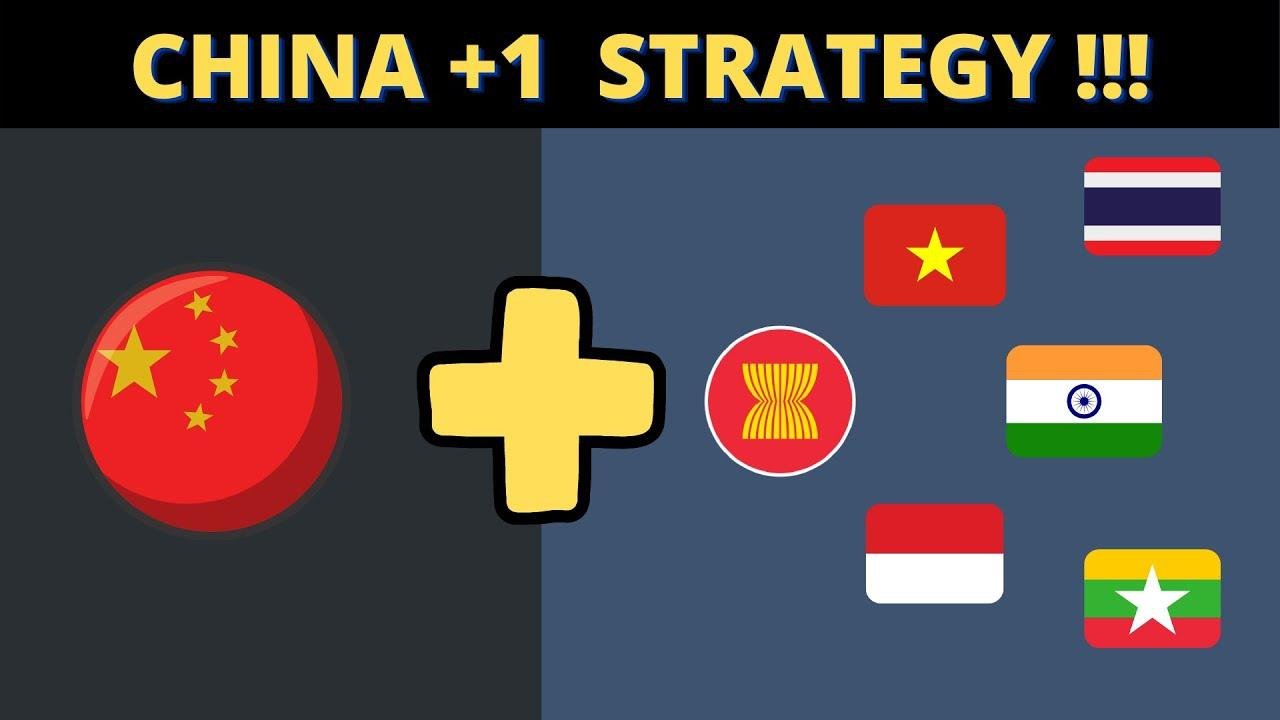
- China Plus One is a strategy in which MNCs retain operations in China while establishing an additional manufacturing or sourcing base in another country.
- It aims to reduce excessive dependence on China without requiring a complete exit from the country.
Recent Developments
- The strategy is increasingly moving towards de-sinification, where companies seek to reduce or eliminate Chinese inputs from critical supply chains.
- Murata Manufacturing, a Japanese electronics-component company, has established a manufacturing presence in Chennai, Tamil Nadu, for multilayer ceramic capacitors (MLCCs), reflecting the diversification of electronics supply chains towards India.
Why China Plus One is Emerging
- US–China trade tensions: Tariffs, export controls and restrictions on sensitive technologies have increased business uncertainty for firms heavily dependent on China.
- Supply-chain resilience: Firms are diversifying production to reduce dependence on a single country.
- Geopolitical risks: Political and strategic uncertainties are influencing investment decisions.
- Cost and market access: Companies seek competitive production costs and access to growing markets.
Key Features
- Diversification, not complete exit: Companies may retain production in China while adding manufacturing capacity in countries such as India, Vietnam, Mexico and Indonesia.
- Economies of scale: Large-scale production lowers average production costs, giving China an advantage through its vast supplier network.
- Industrial ecosystem: Manufacturing depends on suppliers, skilled labour, technology, engineering capabilities, logistics and quality standards, not just factories.
- Ecosystem stickiness: Such networks develop through long-term relationships, trust and repeated interactions, making them difficult to replicate quickly in another country.
- China’s response: China is strengthening domestic capabilities in strategic sectors and expanding overseas investment to reduce the impact of foreign firms diversifying their supply chains.
Implications for India
- Manufacturing investment: India can attract MNCs seeking an additional production base beyond China.
- Electronics and technology: Investments by companies such as Murata can help India move beyond final assembly towards component manufacturing and technology development.
- Jobs and supply chains: New manufacturing facilities can create employment, strengthen domestic suppliers and improve technical capabilities.
- Global Value Chains: A stronger manufacturing ecosystem can increase India’s integration with Global Value Chains (GVCs) and boost exports.
Way Forward
- Strengthen domestic supply chains: Promote production of components, intermediate goods and capital goods to move beyond final assembly.
- Build skilled workforce: Develop skills in Industry 4.0, including automation, robotics, electronics and advanced manufacturing.
- Improve logistics: Further reduce logistics costs and strengthen multimodal connectivity.
- Ensure quality and reliability: Strengthen product standards, testing facilities and delivery systems.
- Build supplier networks: Link MNCs with Indian component suppliers to increase domestic value addition.
- Develop the industrial ecosystem: Create an ecosystem of reliable suppliers, skilled labour, technology and logistics to turn China Plus One investments into sustained manufacturing growth.
FAQs
Q1. What is the China Plus One Strategy?
Ans. It is a business strategy in which companies maintain operations in China while establishing additional manufacturing or sourcing capacity in another country.
Q2. Why are MNCs adopting the China Plus One Strategy?
Ans. US–China tensions, supply-chain risks, geopolitical uncertainty and the need for diversification are key drivers.
Q3. Does China Plus One mean companies are completely leaving China?
Ans. No. China Plus One is primarily diversification, not complete relocation. Many firms continue to use China’s large manufacturing ecosystem while developing additional capacity elsewhere.
Q4. Why is complete de-sinification difficult?
Ans. China’s economies of scale and integrated industrial ecosystem make its supply chains difficult to replicate elsewhere.