Context
- The Special Intensive Revision (SIR) of electoral rolls has raised questions about the accuracy of voter lists, protection against wrongful exclusion and the functioning of the Election Commission of India (ECI).
- An electoral roll is the operative record of electors in a constituency. A Voter ID card by itself does not enable voting if the person’s name is not on the electoral roll.
- SIR began in Bihar in June 2025 and was subsequently extended to other States and Union Territories. The source reports that more than 13 crore names were omitted from draft rolls across 30 States and Union Territories during the wider exercise. These were draft-stage omissions and could be affected by later claims and corrections.
Election Commission of India: Constitutional Framework
- Article 324 vests the ECI with the superintendence, direction and control of elections to Parliament, State Legislatures, and the offices of the President and Vice-President.
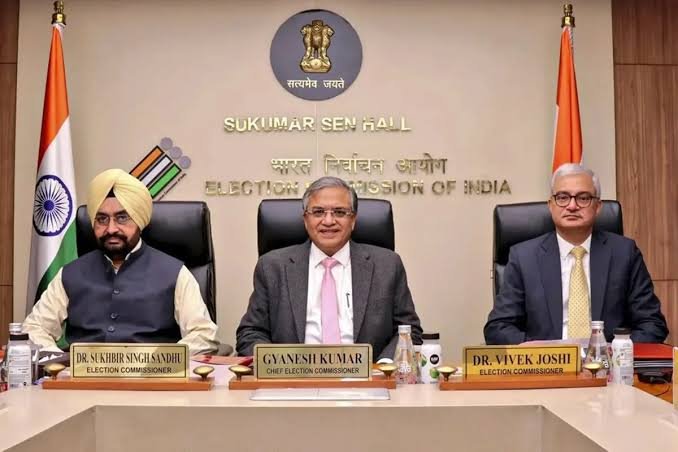
- The ECI was established on 25 January 1950. After initially functioning with a single Chief Election Commissioner, it has operated as a three-member Commission since October 1993.
- Its institutional independence is significant because it administers elections in which governments and political parties are themselves participants.
About Special Intensive Revision
- Electoral rolls need updating because of new voters, deaths, migration, duplicate entries and changes in eligibility. SIR involves more extensive verification than routine revision.
- In Bihar, the ECI referred to the long gap since the 2003 intensive revision, along with urbanisation, migration, unreported deaths and duplicate entries, as reasons for a comprehensive exercise.
- The 2003 electoral roll became an important reference point. Persons appearing in it were treated differently from those absent from it and faced additional verification requirements.
- Before the exercise, Bihar had around 7.89 crore electors. About 65 lakh names were absent from the August 2025 draft roll; after claims and corrections, the September final roll contained about 7.42 crore electors.
Why Electoral-Roll Accuracy Matters
- Electoral-roll revision has to address two risks at the same time:
- retaining deceased, duplicate, permanently shifted or otherwise ineligible entries;
- excluding eligible citizens because of administrative or documentary errors.
- Accurate rolls support one person, one vote and help the ECI discharge its electoral mandate.
- Timely revision is also relevant to internal migration and urbanisation, which can change the demographic profile of constituencies.
Major Concerns
- Timing and Risk of Wrongful Exclusion
- Large verification exercises can affect genuine voters because of documentation gaps, incorrect data, administrative mistakes or migration-related difficulties.
- When revision takes place close to elections, the available time for field verification, correction and appeal becomes limited.
- Goa and Centralised Electoral Data
- In Goa, Electoral Registration Officers identified 97 eligible voters whose names were missing from the electoral roll.
- The episode raised concerns over the inability of local officials to make necessary changes in the centrally managed electoral database.
- It brought into focus the relationship between centralised digital infrastructure and the statutory role of constituency-level electoral authorities.
- Form 6 and Registration of New Electors
- Form 6 is used for first-time voter registration.
- Concerns were raised over questions requiring applicants to indicate whether their own name, or that of their parents or grandparents, appeared in an earlier SIR-related electoral roll.
- Two Election Commissioners reportedly questioned the legal basis of these changes and the clarity provided to applicants about their implications.
- The central issue is whether an individual’s eligibility is being assessed through the conditions applicable to that individual, rather than through the electoral history of relatives.
- Form 7 and Electoral Deletions
- Form 7 is used to object to an electoral entry or seek its deletion.
- Concerns have included repeated or incorrect objections, inadequate notice to affected electors and insufficient procedural safeguards.
- In West Bengal, the source reports that more than one lakh appeals had been examined by tribunals and that over 90% of decided cases resulted in findings that the deletions were inaccurate. A substantial number of appeals remained pending.
- Historical Records and Transparency
- Verification becomes more difficult when earlier electoral rolls are not available in machine-readable form.
- Searchable historical records can help establish whether an earlier entry existed and facilitate examination of disputed exclusions.
- The source also identifies concerns over inadequate publication of data needed to assess whether large-scale deletions correspond to demographic factors such as migration.
Supreme Court on Bihar SIR
- In Association for Democratic Reforms v. Election Commission of India, decided on 27 May 2026, the Supreme Court upheld the legality of Bihar’s SIR.
- The Court held that the ECI’s authority to conduct the exercise flowed from Article 324 read with Section 21(3) of the Representation of the People Act, 1950.
- It accepted improvement of electoral-roll accuracy as a legitimate objective and examined the exercise through the principle of proportionality.
- The Court also recognised the ECI’s authority to undertake a limited inquiry into citizenship for electoral-roll purposes, while distinguishing this from final adjudication of citizenship.
- During the proceedings, safeguards were also emphasised for excluded electors. Aadhaar could be accepted as an additional identity document, but it was not treated as proof of citizenship.
Functioning of the ECI
- The SIR exercise has generated questions about the functioning of the three-member Commission.
- The source reports that two Election Commissioners raised objections concerning voter registration, deletion and restoration of names, Form 6, electoral data and appeal-related matters.
- Another concern relates to increasing reliance on centralised information-technology systems and their effect on the responsibilities of local electoral authorities.
- The governing framework provides for collective functioning, with majority decision-making where members differ. The institutional issue is whether this framework is being followed in practice.
Appointment of Election Commissioners
- Article 324(2) provides for appointment of the CEC and other Election Commissioners by the President, subject to legislation by Parliament.
- In Anoop Baranwal v. Union of India (2023), the Supreme Court prescribed an interim selection mechanism comprising the Prime Minister, Leader of Opposition in the Lok Sabha and Chief Justice of India, until Parliament enacted a law.
- Parliament later enacted the Chief Election Commissioner and Other Election Commissioners (Appointment, Conditions of Service and Term of Office) Act, 2023.
- Under the statutory framework, the Chief Justice of India was replaced by a Union Cabinet Minister nominated by the Prime Minister in the Selection Committee.
- The appointment arrangement has been challenged on constitutional grounds concerning the institutional independence of the ECI. The source records that the substantive challenge remained unresolved as of September 2026.
Way Forward
- Clarify responsibilities among the ECI, Electoral Registration Officers and local institutions.
- Use digital systems for deduplication, verification and record management, with human oversight and legal accountability.
- Make historical electoral rolls available in machine-readable formats.
- Publish relevant data to facilitate scrutiny of significant additions and deletions.
- Provide timely notice, verification and appeal before a deletion becomes final.
- Strengthen appellate capacity so disputes are resolved within the electoral cycle.
- Ensure that the ECI follows the collective decision-making framework prescribed by law.
Conclusion
- The SIR experience illustrates that electoral administration is not limited to preparing a voter list. It also involves designing reliable verification, correction and review mechanisms.
- The wider objective is to ensure that electoral databases remain accurate while the legal and administrative process gives genuine electors a fair opportunity to establish and retain their eligibility.
UPSC-Oriented FAQs
- How is SIR different from ordinary electoral-roll revision?
Routine revision updates electoral records periodically. SIR involves broader verification intended to address accumulated changes such as migration, deaths, duplicate entries and altered eligibility.
- What does the proportionality principle add to judicial review of SIR?
It requires the Court to examine whether the electoral measure serves a legitimate objective and uses means appropriately connected to that objective without being excessive.
- Why must electoral eligibility be distinguished from citizenship adjudication?
The ECI may examine citizenship to the extent necessary for deciding electoral eligibility, but such scrutiny is different from a final legal determination of citizenship.
- What does the Goa episode reveal about electoral governance?
It shows the importance of ensuring that centralised digital infrastructure does not prevent statutory field authorities from carrying out necessary corrections in electoral records.
- Why is an independent Election Commission important for electoral democracy?
The ECI administers elections involving governments, candidates and political parties. Its institutional independence and adherence to legally prescribed procedures are therefore important for public confidence in the electoral process.