Key Facts
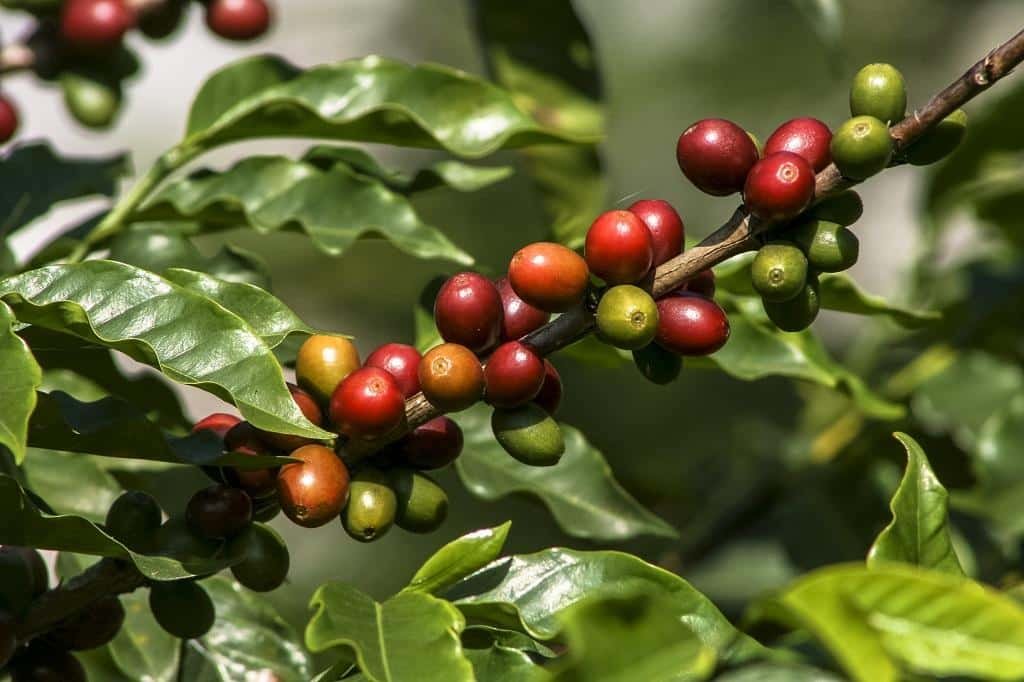
- Crop: Coffee is a tropical plantation crop usually grown under shade trees.
- Varieties: India mainly cultivates Arabica and Robusta.
- Global Position: India is the 7th-largest coffee producer, contributing about 5% of global production.
- Leading Producer: Karnataka contributes over 70% of India’s coffee production.
- Major States: Other coffee-growing states include Kerala, Tamil Nadu, Andhra Pradesh and Odisha. Karnataka, Kerala and Tamil Nadu together account for about 96% of national production.
- Exports: Nearly 70% of India’s coffee production is exported to 128 countries.
- Export Markets: Major markets include Europe, the Middle East, South Korea and Japan; important European destinations include Belgium, Italy and Germany.
Regulatory Body
- Coffee Board of India: It is a statutory body under the Ministry of Commerce and Industry, established under the Coffee Act, 1942.
- Headquarters: Bengaluru, Karnataka.
- Functions: It supports coffee research, crop forecasting, market intelligence, quality improvement and export promotion.
Agro-Climatic Conditions
- Temperature: Requires a warm and humid climate with temperatures of about 15°C–28°C.
- Rainfall: Requires around 150–250 cm of well-distributed rainfall.
- Altitude: Generally grown on hill slopes at 600–1,600 m above sea level.
- Soil: Requires well-drained, loamy soil rich in humus, iron and calcium.
- Ripening: A relatively dry period during berry ripening is favourable for coffee production.
Araku Valley Arabica Coffee
- Location: Cultivated in the Araku Valley of the Eastern Ghats.
- Variety: It is a type of Arabica coffee, generally grown at 900–1,100 m elevation.
- Cultivation: Produced through organic and shade-based farming, with cultivation under the forest canopy.
- Farmers: Cultivated by tribal farmers through community-based farming.
- GI Tag: Araku Valley Arabica Coffee received a Geographical Indication (GI) tag in 2019.
FAQs
Q1. Which are the two major varieties of coffee grown in India?
Ans. The two major commercial varieties are Arabica and Robusta.
Q2. Which Indian state produces the most coffee?
Ans. Karnataka is the largest coffee-producing state in India, contributing more than 70% of national production.
Q3. What are the suitable climatic conditions for coffee cultivation?
Ans. Coffee prefers a warm and humid climate, temperatures of about 15°C–28°C, and 150–250 cm rainfall. A dry period during berry ripening is beneficial.
Q4. Which states apart from Karnataka are important coffee producers?
Ans. Important producing states include Kerala, Tamil Nadu, Andhra Pradesh and Odisha.