Context
- Archaeologists have unearthed a monumental Etruscan tomb dating to the late 7th century BCE at Vulci, an important ancient city north of Rome.
- Discovered in the Polledrara necropolis, the three-chambered tomb contained weapons, jewellery, chariot fittings, local pottery and imported Greek ceramics.
- The discovery provides new evidence about Etruscan elite society, funerary practices and Mediterranean trade connections.
About the Etruscan Civilization
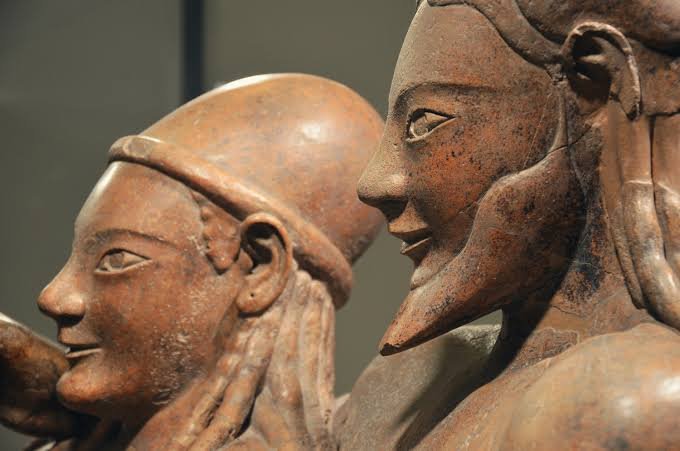
- Period: The Etruscans were a major pre-Roman civilization that flourished in central Italy, especially between the 8th and 3rd centuries BCE.
- Region: Their homeland, known as Etruria, broadly covered present-day Tuscany, western Umbria and northern Lazio.
- Tyrrhenians: Ancient Greeks referred to the Etruscans as Tyrrhenians, a name preserved in the Tyrrhenian Sea west of Italy.
- Political organisation: Etruria consisted of independent city-states, traditionally associated with a league of twelve major cities rather than a unified territorial state.
- Economy: Agriculture, rich metal resources, skilled craftsmanship and maritime trade formed important foundations of Etruscan prosperity.
- Mediterranean connections: Their trade networks connected them with Greek, Phoenician and other Mediterranean societies.
Key Features of Etruscan Society
- Funerary culture: Elaborate tombs containing paintings and grave goods provide valuable evidence about Etruscan beliefs, occupations and social hierarchy.
- Status of women: Women appear to have enjoyed relatively greater social visibility and participation than in several contemporary Mediterranean societies.
- Religion: Etruscan religion gave considerable importance to divination and interpretation of divine signs, practices that later influenced Rome.
- Urban development: Etruscans developed sophisticated town planning, drainage systems, temples and defensive structures.
- Architecture: They contributed to the development and wider use of architectural techniques such as the arch and vault in ancient Italy.
Significance of the Vulci Discovery
- Elite life: Jewellery, weapons, chariot fittings and banquet vessels reflect the wealth and social status of Vulci’s aristocracy.
- Trade networks: Imported Attic and Corinthian ceramics show Vulci’s participation in wider Mediterranean exchange networks.
- Material culture: Local bucchero pottery, bronze objects and other artefacts provide evidence of Etruscan craftsmanship and consumption patterns.
- Funerary practices: The monumental tomb helps reconstruct Etruscan ideas concerning status, burial and the afterlife.
Etruscans and Ancient Rome
- Etruscan civilization significantly influenced early Roman religion, architecture, urban development and symbols of political authority.
- Etruscan political power began weakening from around the 5th century BCE due to military pressures and the expansion of neighbouring powers.
- Their territories were gradually absorbed into the expanding Roman Republic, but elements of Etruscan culture continued within Roman civilization.
FAQs
Q1. Where was Etruria located?
It was centred in central Italy, particularly present-day Tuscany, western Umbria and northern Lazio.
Q2. Who were the Tyrrhenians?
Tyrrhenians was an ancient Greek name for the Etruscans.
Q3. What was Vulci?
Vulci was an important Etruscan city and commercial centre.
Q4. How was Etruria politically organised?
It consisted mainly of independent city-states, traditionally associated with a league of twelve major cities.
Q5. Why is the Vulci tomb significant?
Its grave goods reveal important information about Etruscan elite society, funerary culture and Mediterranean trade.