Context
India has witnessed the sudden vacancy of the Prime Minister’s office on three occasions: the death of Jawaharlal Nehru in 1964, the death of Lal Bahadur Shastri in 1966, and the assassination of Indira Gandhi in 1984.
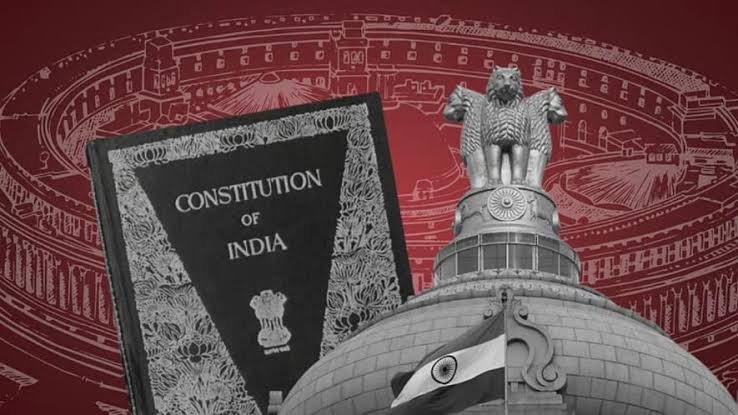
The Constitution does not prescribe a fixed line of succession for the Prime Minister. It also does not establish a separate constitutional office of an Acting Prime Minister.
Constitutional Framework
- Under Article 75(1), the President appoints the Prime Minister. The provision does not designate a successor on the basis of ministerial seniority or Cabinet position. In practice, the appointment is connected with the proposed Prime Minister’s ability to command the confidence of the Lok Sabha.
- Article 74 provides for a Council of Ministers headed by the Prime Minister to aid and advise the President.
- The constitutional framework therefore leaves the identification of a successor to the formal appointment process operating within the prevailing parliamentary circumstances, rather than providing for automatic replacement.
Historical Precedents
- 1964: Succession after Jawaharlal Nehru
- Jawaharlal Nehru died on 27 May 1964 after suffering a stroke. He had served as Prime Minister for nearly 17 years.
- Gulzarilal Nanda, then Home Minister and regarded by convention as the senior-most Cabinet member, was sworn in as Prime Minister on the same day. He is commonly described as the Acting Prime Minister, although the Constitution does not create such a separate office.
- The subsequent leadership choice was worked out within the Congress Party. Kamaraj and other senior leaders consulted Members of Parliament and State-level leaders before a consensus emerged. Lal Bahadur Shastri assumed office on 9 June 1964.
- 1966: Succession after Lal Bahadur Shastri
- Lal Bahadur Shastri died on 11 January 1966 in Tashkent, Soviet Union, shortly after signing the Tashkent Declaration on 10 January.
- Gulzarilal Nanda again assumed the office of Prime Minister as an interim arrangement.
- A contest then took place between Indira Gandhi and Morarji Desai. On 19 January 1966, the Congress Parliamentary Party held a secret-ballot vote. Indira Gandhi received 355 votes, compared with 169 for Morarji Desai, and she became Prime Minister on 24 January 1966.
- 1984: Succession after Indira Gandhi
- Indira Gandhi was assassinated on 31 October 1984.
- Rajiv Gandhi was sworn in as Prime Minister on the same day by President Zail Singh. The Congress Parliamentary Party formally elected him as its leader afterwards. The transition took place amid a serious law-and-order situation.
Role of Political Conventions
- The historical precedents indicate that political conventions have supplemented the constitutional framework where no detailed succession procedure exists.
- The 1964 transition involved consultation and consensus within the ruling party, 1966 involved a formal internal election, while 1984 involved immediate appointment followed by the formal selection of the party leader. These cases show that the mechanism for identifying a successor has varied according to the political circumstances of each transition.
National Security Dimension
- The issue also has implications for nuclear command arrangements. The Nuclear Command Authority (NCA) was established in 2003, with its Political Council headed by the Prime Minister and responsible for authorising the use of nuclear weapons.
- The government has stated that alternative chains of command are available for contingencies, although details of these arrangements have not been made public.
Comparative Perspective
Unlike India, the United States has a written presidential succession order. The Vice-President is first in the statutory sequence, followed by other designated office-holders. India’s parliamentary system does not provide an equivalent statutory succession list for the Prime Minister.
Conclusion
India’s experience shows that Prime Ministerial succession has so far been managed through a combination of constitutional appointment, parliamentary legitimacy and political convention. The historical cases demonstrate workable arrangements under clearly defined political circumstances, but they do not establish a detailed procedure for situations involving a hung Parliament, coalition uncertainty or the absence of an obvious successor.
UPSC-Oriented FAQs
- What does Article 75(1) provide regarding the Prime Minister?
It provides that the President appoints the Prime Minister. The provision does not prescribe a fixed succession sequence.
- Why is Gulzarilal Nanda significant in India’s succession history?
Nanda temporarily assumed the office following the deaths of Nehru in 1964 and Shastri in 1966, providing continuity during both transitions.
- How was the successor chosen after Shastri’s death?
The Congress Parliamentary Party held a secret-ballot vote on 19 January 1966. Indira Gandhi secured 355 votes, while Morarji Desai received 169 votes.
- What was distinctive about the 1984 transition?
Rajiv Gandhi was sworn in on the same day as Indira Gandhi’s assassination, while the formal election of the Congress Parliamentary Party leader followed afterwards.
- What is the significance of the NCA in this context?
The Political Council of the NCA, headed by the Prime Minister, is responsible for authorising the use of nuclear weapons. The government has also stated that alternative command arrangements exist for contingencies.
- What is the principal limitation of the existing succession framework?
The earlier transitions occurred when the governing party had a clear majority and an identifiable successor. They therefore do not establish a detailed procedure for every possible political configuration.