Context
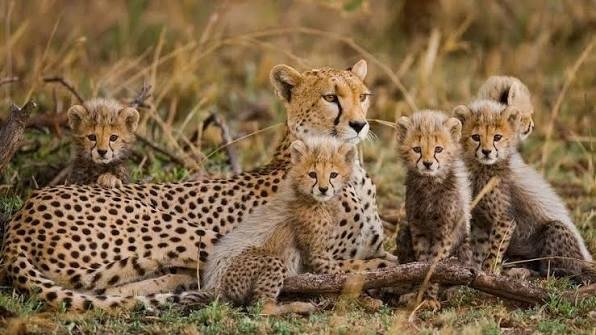
In April 2025, two South African cheetahs, Prabhash and Pavak, were shifted from Kuno National Park to Gandhi Sagar Wildlife Sanctuary, making it the second cheetah reintroduction site in India. The move aims to expand the population across multiple suitable habitats and reduce dependence on a single site.
Background
- The cheetah (Acinonyx jubatus) was historically found across India, especially in grasslands, savannas and open forests.
- Its decline was driven by hunting, habitat loss, agricultural expansion, urbanisation and prey depletion, leading to its extinction in India in 1952.
- Project Cheetah, launched in 2022, aims to restore the species through intercontinental translocation and establish a viable, free-ranging population.
- The first 8 cheetahs from Namibia arrived at Kuno National Park, Madhya Pradesh, on 17 September 2022, followed by 12 cheetahs from South Africa in February 2023.
Implementation and Governance
1. Nodal Ministry: Project Cheetah is implemented by the Ministry of Environment, Forest and Climate Change (MoEFCC) in collaboration with State Forest Departments and wildlife experts.
2. Institutional Framework: The project is implemented under Project Tiger, with the National Tiger Conservation Authority (NTCA) serving as the coordinating agency.
3. Scientific Support: Wildlife Institute of India (WII) and other scientific and veterinary institutions provide technical support for site assessment, translocation, monitoring and population management.
4. Field Management: State Forest Departments manage habitat, prey base, health monitoring, protection and day-to-day management at reintroduction sites.
Key Features of Project Cheetah
- Scientific site selection: Sites are assessed for habitat suitability, prey availability, ecological conditions and human pressure.
- Phased translocation: Cheetahs are brought in batches to minimise ecological and management risks.
- Quarantine and soft release: Newly arrived cheetahs undergo health screening, quarantine and acclimatisation in enclosures before release.
- GPS-based monitoring: GPS/satellite collars track movement, habitat use, hunting and territorial behaviour.
- Adaptive management: Breeding, mortality, prey availability and habitat conditions are regularly monitored to guide management.
- Habitat expansion: Gandhi Sagar Wildlife Sanctuary has been added as the second reintroduction site, expanding the programme beyond Kuno.
Significance
- Species Recovery: Supports the establishment of a viable, self-sustaining free-ranging cheetah population in suitable Indian landscapes.
- Ecosystem Restoration: Reintroducing a top predator helps restore predator–prey interactions and ecological balance.
- Grassland Conservation: Promotes conservation of grasslands, savannas and semi-arid ecosystems, which are often undervalued as wildlife habitats.
- Biodiversity Benefits: Improved habitats and prey availability can support ungulates, birds and small mammals.
- Landscape-level Conservation: Multiple sites such as Kuno and Gandhi Sagar distribute the population across suitable habitats and reduce dependence on a single site.
- Socio-economic Benefits: Conservation and ecotourism can generate local employment and livelihood opportunities.
- Scientific Conservation: Demonstrates the use of translocation, veterinary care, satellite tracking, habitat management and population monitoring in species recovery.
Key Facts about Cheetah
- Fastest land animal: Uses speed and acceleration to catch prey rather than physical strength.
- Habitat: Prefers open grasslands, savannas and semi-arid areas.
- Diet: Mainly preys on small- and medium-sized ungulates.
- Reproduction: Gestation is about 90–95 days; females give birth to multiple cubs.
- Social behaviour: Females are generally solitary, while males may form coalitions, often with brothers.
- Vocalisation: Unlike lions, cheetahs cannot roar and produce sounds such as purring, growling and hissing.
| Feature | African Cheetah | Asiatic Cheetah |
| Scientific name | Acinonyx jubatus jubatus | Acinonyx jubatus venaticus |
| IUCN status | Vulnerable | Critically Endangered |
| Distribution | Mainly East and Southern Africa | Restricted mainly to Iran |
| Population | About 6,500–7,000 | About 40–50 |
| Build | Generally larger and more robust, with longer legs | Smaller and slimmer, with a lighter build |
| Coat | Brighter coat with more prominent spots | Paler fawn coat with relatively sparser spots |
| Genetics | Greater genetic diversity than the Asiatic population | Very low genetic diversity and genetically distinct from African cheetahs |
| India | Reintroduced from Namibia and South Africa under Project Cheetah | Extinct in India; survives mainly in Iran |
| Schedule |
Schedule I, Wildlife (Protection) Act, 1972 |
|
| CITES | Appendix I | |
Additional Information:
| Site | Key Facts |
| Kuno National Park | · Located in Sheopur district, Madhya Pradesh.
· Centred on the Kuno River, a tributary of the Chambal River. · Principal site under the Action Plan for Introduction of Cheetah in India. · Habitat includes tropical dry deciduous forests, grasslands and open areas. · Flora: Over 129 tree species, including Kardai and Salai. · Fauna: Cheetah, leopard, sloth bear, Indian wolf, striped hyena, golden jackal, Bengal fox, dhole and jungle cat. · Supports 120+ bird species. |
| Gandhi Sagar Wildlife Sanctuary | · Located in Mandsaur and Neemuch districts, Madhya Pradesh.
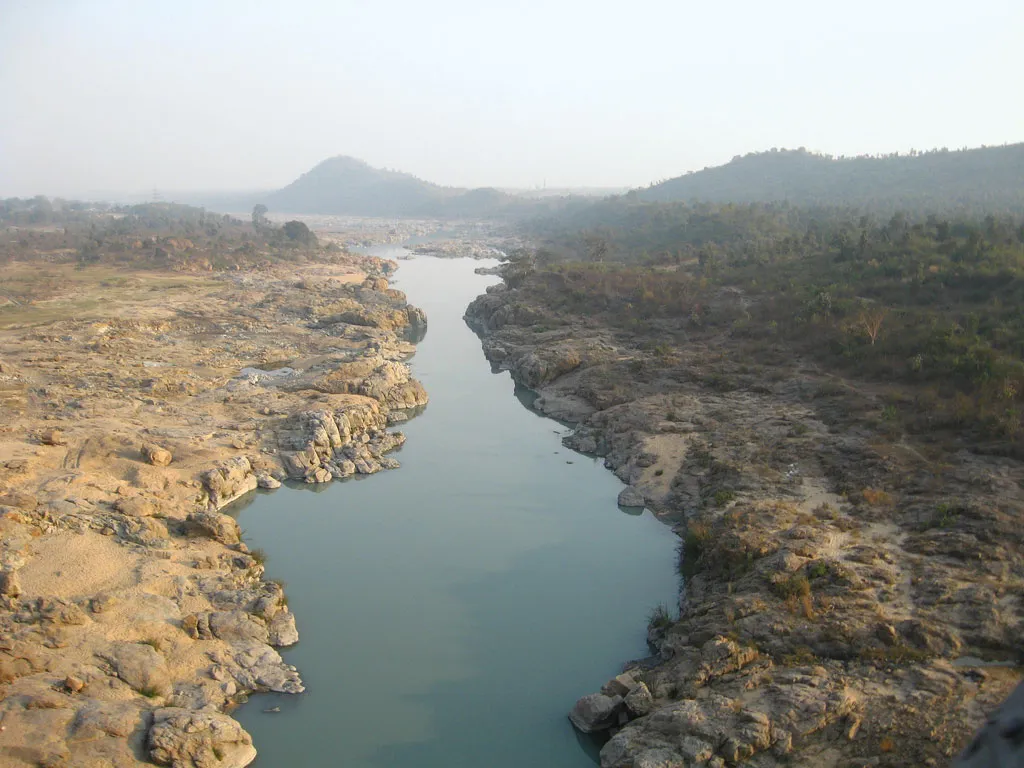
· Situated around the Gandhi Sagar reservoir on the Chambal River. · Became the second cheetah reintroduction site in 2025 after Kuno. · Landscape includes grasslands, open woodland and dry deciduous vegetation. · Has a suitable prey base and open habitat for cheetahs. · Fauna: Chital, sambar, nilgai, chinkara, wild boar and other prey species, along with leopard, sloth bear, striped hyena and other carnivores. |
FAQs
Q1. What is Project Cheetah?
Ans. It is India’s programme to reintroduce cheetahs and establish a viable, free-ranging population through scientific translocation and habitat management.
Q2. When was the cheetah declared extinct in India?
Ans. The cheetah was officially declared extinct in India in 1952, following decades of hunting and habitat and prey-base decline.
Q3. Where were the first cheetahs introduced under Project Cheetah?
Ans. The first batch of eight Namibian cheetahs was brought to Kuno National Park, Madhya Pradesh, in September 2022.
Q4. What is the significance of soft release in Project Cheetah?
Ans. Soft release allows translocated cheetahs to acclimatise gradually to local climate, terrain and prey conditions before entering the larger habitat.