Context
Dermatophyte infections, commonly called ringworm or tinea, are usually superficial fungal infections of the skin, hair and nails.
The public-health concern is increasing because some strains are causing more extensive, recurrent and treatment-resistant infections. Trichophyton indotineae, widespread in parts of South Asia, is especially important because it may show resistance to terbinafine, a commonly used antifungal.
What Are Dermatophytes?
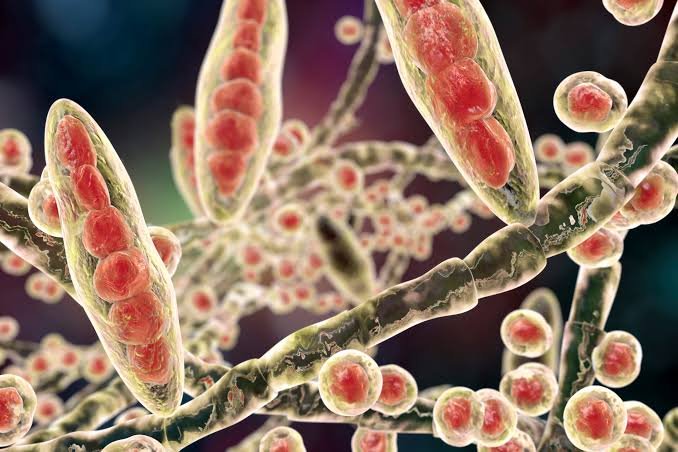
Dermatophytes are fungi that use keratin as a nutrient source.
Keratin is mainly present in:
- outer skin;
- hair;
- nails.
They generally remain confined to keratinised tissues and do not normally invade living tissue.
Major genera include:
- Trichophyton;
- Microsporum;
- Epidermophyton.
Infections caused by them are known as dermatophytosis.
How Do They Spread?
Dermatophytes spread through three major ecological routes:
- Anthropophilic — person to person;
- Zoophilic — animals to humans;
- Geophilic — soil to humans.
Indirect transmission can also occur through fomites such as towels, footwear, combs and clothing.
Why Do They Cause Different Diseases?
The same fungus can affect different keratin-rich body sites.
Common forms include:
- Tinea corporis — body;
- Tinea pedis — feet;
- Tinea capitis — scalp;
- Onychomycosis — nails.
Thus, disease type depends mainly on the site of infection, fungal species and host factors.
Invasive infection is rare but may occur in severely immunocompromised individuals.
Why Do Infections Spread Easily?
- Warm and Humid Climate
Heat and moisture create favourable conditions for fungal growth and persistence.
- Crowding
Close physical contact can increase person-to-person transmission.
- Lifestyle Exposure
Shared showers, gyms, contact sports and prolonged use of occlusive footwear increase exposure to contaminated surfaces and moisture.
Emerging Concern: Antifungal Resistance
Trichophyton indotineae has emerged as an important resistant dermatophyte.
It may cause:
- widespread lesions;
- recurrent infections;
- poor response to standard treatment.
A major driver is the inappropriate use of antifungal medicines and steroid-antifungal combination creams, which can promote treatment failure and selection of resistant strains.
A 2026 global surveillance study reported a three-fold rise in identification of T. indotineae between 2022 and 2025, indicating its growing international spread.
Why Does It Matter for Public Health?
Treatment Difficulty
Resistance can convert a normally manageable superficial infection into a prolonged and recurrent disease.
Community Transmission
Highly contagious infections can spread rapidly within households, schools, hostels and other crowded settings.
Surveillance Challenge
Resistant strains may remain undetected without adequate laboratory diagnosis and fungal surveillance.
Public-Health Response
Priority measures include:
- antifungal stewardship to prevent irrational drug use;
- improved laboratory diagnosis and resistance testing;
- surveillance of emerging resistant strains;
- better hygiene and avoidance of shared contaminated items;
- public awareness against misuse of steroid-antifungal creams.
FAQs
Q1. What are dermatophytes?
Fungi that infect keratin-rich tissues such as skin, hair and nails.
Q2. Which are the major dermatophyte genera?
Trichophyton, Microsporum and Epidermophyton.
Q3. Do dermatophytes usually invade living tissue?
No. They generally remain confined to superficial keratinised tissue.
Q4. What is dermatophytosis?
A fungal infection caused by dermatophytes.
Q5. Why is Trichophyton indotineae important?
It is an emerging dermatophyte associated with recurrent and antifungal-resistant infections.