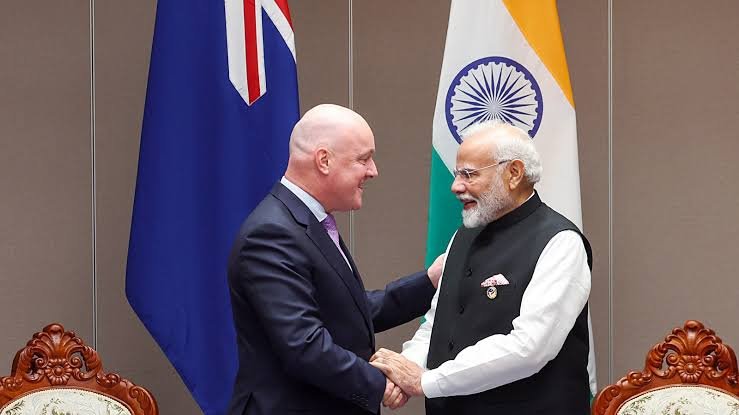
Context
The India–New Zealand FTA, signed in April 2026, will come into force on 20 October 2026 after ratification by both countries. It aims to strengthen bilateral economic ties and double bilateral trade to ₹35,000 crore by 2030.
About the FTA
- The India–New Zealand FTA covers goods and services, investment, rules of origin, customs, MSMEs, intellectual property and economic cooperation.
- Bilateral merchandise trade stood at US$1.3 billion in 2024–25, with India mainly exporting textiles, pharmaceuticals, engineering goods, leather and agricultural products.
- It supports the Strategic Partnership established in 2026, aimed at deepening economic and bilateral ties.
Key Features
- Market Access: New Zealand will remove tariffs on 100% of tariff lines for Indian exports. India has offered concessions on about 70% of tariff lines covering 95% of bilateral trade, while protecting sensitive sectors.
- Export Gains: Indian textiles, apparel, leather, footwear, engineering goods, pharmaceuticals, electronics, chemicals, marine products and agricultural goods will benefit from improved market access.
- Services: New Zealand has opened access in 118 services sectors, including IT, professional services, education, tourism, construction, telecommunications and financial services.
- Investment: New Zealand will facilitate US$20 billion investment in India over 15 years in manufacturing, infrastructure and innovation. A rebalancing mechanism protects India if the commitment is not adequately fulfilled.
- Agricultural Cooperation: The agreement creates Agricultural Productivity Partnerships and Centres of Excellence for apples, kiwifruit and honey to promote technology transfer, productivity and farmer incomes. Imports will be regulated through Tariff Rate Quotas (TRQs) and minimum import prices.
- Sensitive Agriculture: India has excluded/protected dairy, onions, sugar, spices, edible oils and other sensitive agricultural products to safeguard vulnerable producers.
- Mobility: The agreement provides a Temporary Employment Entry visa for 5,000 Indian professionals, up to 1,000 Working Holiday Visas annually, and extended post-study work opportunities for eligible Indian graduates.
- MSMEs and Manufacturing: Cooperation in MSMEs, labour-intensive sectors and global value chains can expand export opportunities and strengthen manufacturing linkages.
Significance
- Export Diversification: Greater access to the New Zealand market can strengthen India’s export base and competitiveness, particularly in labour-intensive industries.
- Investment and Employment: The US$20 billion investment commitment can support manufacturing, infrastructure, innovation and job creation, subject to actual inflows.
- Agricultural Productivity: Cooperation with New Zealand can facilitate technology and knowledge transfer, improving productivity in selected agricultural activities.
- Services Growth: Expanded economic engagement can support India’s services exports and skilled human-capital opportunities.
- Global Value Chains: Deeper economic ties can help Indian firms integrate more effectively with international production and supply networks.
Challenges
- Limited FTA Utilisation: Indian firms may not fully benefit from tariff preferences due to strict standards, certification and sanitary and phytosanitary (SPS) requirements.
- Investment Uncertainty: The US$20 billion commitment extends over 15 years, making timely and sustained investment inflows uncertain.
- Domestic Competition: Lower trade barriers could expose some Indian producers to greater competition from New Zealand imports.
- MSME Capacity Constraints: Smaller firms may lack the scale, certification capacity and market knowledge needed to access the New Zealand market effectively.
Way Forward
- Improve Export Readiness: Strengthen quality standards, certification and trade facilitation to increase India’s FTA utilisation.
- Support MSMEs: Provide targeted assistance to MSMEs and labour-intensive exporters to meet New Zealand’s market requirements.
- Monitor Investment: Track the US$20 billion commitment and promote investment linked to technology transfer, manufacturing and employment.
- Boost Agricultural Productivity: Use technology transfer and Centres of Excellence to improve farm productivity while protecting Indian farmers and sensitive sectors.
FAQs
Q1. What is a Free Trade Agreement (FTA)?
Ans: An FTA is an agreement between countries to reduce or eliminate trade barriers such as tariffs and facilitate trade and investment.
Q2. What is the key market-access provision of the India–New Zealand FTA?
Ans: New Zealand will provide duty-free access on 100% of tariff lines for Indian exports.
Q3. What agricultural sectors has India protected?
Ans: India has retained protection for dairy, onions, sugar, spices, edible oils and other sensitive agricultural products.
Q4. What investment commitment has New Zealand made under the FTA?
Ans: New Zealand has committed to facilitate US$20 billion investment in India over 15 years.