Context
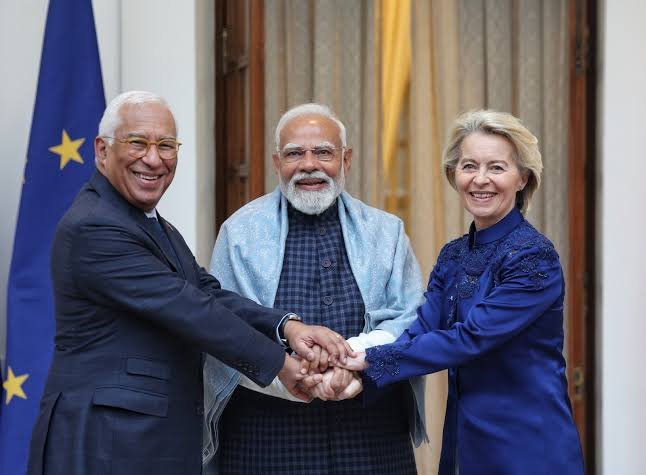
The proposed India-EU Free Trade Agreement (FTA) has raised concerns over the treatment of copyright and intellectual property (IP) and could affect India’s Copyright Act, 1957, particularly provisions relevant to education, research, libraries and digital services.
WCT and National Treatment
- India’s copyright regime operates within international commitments under the WIPO Copyright Treaty (WCT) and the TRIPS Agreement.
- The draft chapter retains references to these treaties but excludes the WCT from the National Treatment obligation under Article 10.8, while retaining specified enforcement-related obligations.
- The WCT provides protection for digital works, including computer programmes and databases, and recognises limitations and exceptions under national law.
- The concern is that the proposed arrangement could reduce the policy space available to India for maintaining certain domestic exceptions applicable to digital works.
Key Concerns
- Copyright Exceptions
- Article 10.21 proposes a three-step test for limitations and exceptions to copyright.
- A stricter standard could create greater scope for challenges to fair dealing and other exceptions under Section 52 of the Copyright Act.
- It also covers certain incidental and transient reproductions associated with electronic transmission, potentially creating additional legal uncertainty.
- Technological Protection Measures
- Section 65A addresses the bypassing of technological protection measures (TPMs), which are digital mechanisms used to control access to copyrighted works.
- Indian law provides specified safeguards for lawful circumvention, including certain activities connected with education and research.
- A stronger anti-circumvention obligation under the proposed FTA could narrow these existing safeguards.
- Education and Research
- Changes to copyright exceptions could affect activities such as interoperability testing, vulnerability research and digital preservation.
- The DU Photocopy Case (2016) is relevant because the Delhi High Court examined educational use of copyrighted material within the statutory framework of Section 52.
- Any narrowing of these exceptions could consequently affect the legal space available for legitimate educational and research activities.
Internet Service Providers
- Indian law provides protection for certain transient copies generated during electronic transmission.
- Relevant provisions include Sections 52(1)(b) and 52(1)(c) of the Copyright Act and Rule 75 of the Copyright Rules, 2013.
- The proposed FTA provisions on reproduction rights could create uncertainty regarding temporary copies generated during routine network operations.
- This raises questions about their interaction with the Agreed Statements to Articles 8 and 10 of the WCT, which address transient network reproductions.
Digital Sovereignty
- The copyright debate also concerns India’s ability to retain domestic regulatory flexibility over digital technologies and access to knowledge.
- Commitments made through trade agreements can influence the scope available to Parliament and policymakers when designing future digital and copyright regulations.
- The issue therefore has implications beyond the immediate FTA, particularly for India’s approach to future trade agreements involving digital and IP rules.
Way Forward
- India should seek clear alignment between the FTA and its existing public-interest copyright framework.
- The final text should clarify the relationship between WCT obligations, National Treatment and India’s statutory exceptions.
- Provisions concerning Section 52, TPMs, transient copies and intermediary liability should be examined for their practical effects before commitments are finalised.
- Negotiations should preserve adequate domestic flexibility for lawful educational, research and technological activities while maintaining effective protection for copyright holders.
Conclusion
- The India-EU FTA copyright debate highlights the need to carefully structure international IP commitments so that they remain compatible with India’s domestic legal framework.
- The outcome could shape the balance between copyright protection and domestic regulatory flexibility in subsequent trade negotiations
FAQs
Q1. What is National Treatment in international IP law?
Ans. It is the principle under which qualifying foreign rightsholders receive treatment comparable to that provided to domestic rightsholders, subject to applicable treaty provisions.
Q2. What are technological protection measures?
Ans. TPMs are technological tools used by copyright owners to control access to or use of protected digital content.
Q3. What does Section 65A deal with?
Ans. Section 65A concerns the circumvention of technological protection measures and provides specified safeguards for certain lawful activities.
Q4. What is the significance of the three-step test?
Ans. It establishes conditions governing limitations and exceptions to copyright. A stricter formulation could affect the scope of existing domestic exceptions.
Q5. Why are transient copies relevant to digital networks?
Ans. Temporary reproductions can occur automatically while digital information is transmitted. Their legal treatment can affect the copyright position of ISPs and other intermediaries.
Q6. What broader issue does the FTA raise for India?
Ans. It raises the question of how India can undertake international IP commitments while retaining sufficient domestic regulatory flexibility for digital technologies and public-interest uses