Context
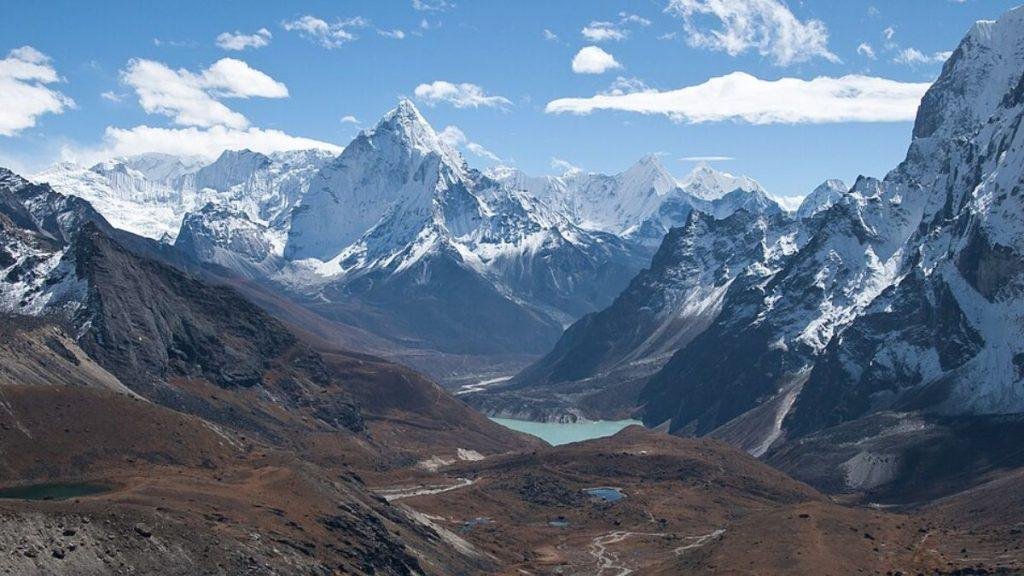
Rapid Himalayan glacier melt, expanding glacial lakes and monitoring gaps are increasing the risk of Glacial Lake Outburst Floods (GLOFs). These changes threaten India’s water security, infrastructure and economic activities, including agriculture, hydropower and tourism.
Key Findings
- Rapid Melt: Himalayan glaciers are melting about 65% faster than during 1975–1980.
- Monitoring Gap: The Himalayan–Karakoram region has nearly 40,000 glacial lakes, but only a limited number are monitored.
- High-Risk Lakes: Of 189 assessed lakes, the Government of India has classified 56 as very high-risk.
- Monitoring Expansion: Around 2,485 glacial lakes larger than 10 hectares are proposed for monitoring.
- Recent GLOFs: The 2023 South Lhonak Lake outburst (Sikkim) and 2021 Chamoli disaster (Uttarakhand) highlight the risk.
Implications for India
- Economic
- Fiscal & Growth Risks: Recurrent disasters raise spending on relief and reconstruction, while long-term glacier loss threatens water security, productivity and regional growth.
- Cascading Risks: Disruptions across water, agriculture, energy, transport and tourism can magnify economic losses.
- Water & Food Security: Himalayan glaciers feed the Ganga and Brahmaputra, supporting irrigation and agriculture in the Indo-Gangetic plains. Changing flows can affect crop yields, farm incomes and food prices.
- Energy Security: Himalayan rivers provide major hydropower potential; GLOFs and landslides can damage power projects and transmission networks.
- Infrastructure & Supply Chains: Extreme events can damage roads, bridges and communication networks, disrupting essential supplies and increasing reconstruction costs.
- Tourism & Livelihoods: Kedarnath, Badrinath, Haridwar and Rishikesh support tourism, pilgrimage and local incomes, which can decline after disasters.
- Peak Water: Rapid melting may initially increase river flows but eventually reduce water availability as glacier reserves decline.
- Environmental Pressures: Black carbon, unregulated tourism and poorly planned infrastructure can accelerate melting or increase disaster vulnerability.
Way Forward
- Monitoring & Early Warnings: Expand satellite and ground monitoring of glaciers and high-risk lakes with real-time GLOF alerts.
- Climate-Resilient Infrastructure: Apply hazard mapping, carrying-capacity and climate-risk assessments to Himalayan development.
- Reduce Black Carbon: Control emissions from diesel, biomass burning and industries to slow glacier melt.
- Sustainable Tourism: Enforce carrying-capacity limits, waste management and low-carbon tourism in fragile areas.
- Disaster-Resilient Financing: Strengthen insurance, contingency funds and resilient reconstruction to reduce fiscal losses.
- Regional & Integrated Governance: Promote data sharing, joint early warnings and disaster response while integrating climate adaptation, water security and ecosystem conservation.
FAQs
Q1. What is a Glacial Lake Outburst Flood (GLOF)?
Ans. A GLOF is the sudden release of water from a glacial lake due to the failure of its natural dam, causing downstream flooding.
Q2. Why is glacier melt an economic issue for India?
Ans. It threatens agriculture, hydropower, tourism and water security, while disasters can damage infrastructure and increase public expenditure.
Q3. What is ‘Peak Water’?
Ans. It is the stage when glacier melt reaches maximum river discharge, after which continued glacier loss can reduce long-term water availability.
Q4. How does Black Carbon accelerate glacier melt?
Ans. Black carbon absorbs solar radiation deposited on snow and ice, increasing heat absorption and accelerating melting.