Context
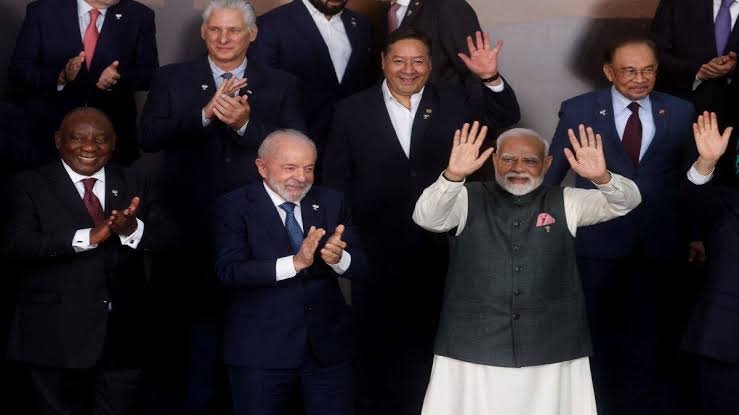
Ahead of the 18th BRICS Summit (New Delhi, September 2026), members are exploring faster and cheaper cross-border payments through national payment-system links and CBDCs.
About Cross-Border Payments
- International payments usually pass through correspondent banks, which act as intermediaries between banks of different countries.
- Since direct currency conversion may not always be available, a vehicle currency, mainly the US dollar, is often used, adding forex conversion costs, intermediary charges and settlement delays.
- SWIFT (Society for Worldwide Interbank Financial Telecommunication) provides a secure network for sending payment instructions between banks, while the actual transfer of funds takes place through the banking system.
Role of SWIFT
- SWIFT, headquartered in Belgium, is a secure messaging network used by over 11,000 financial institutions in 200+ countries to send standardised payment instructions.
- It does not transfer money itself; funds move through banks and correspondent banking arrangements.
- Its wide global network makes it difficult to replace, and it is overseen by the National Bank of Belgium and G-10 central banks.
Why Reform Is Needed
- High Costs: Multiple intermediaries and currency conversions increase transaction fees and forex margins. A 2019 BRICS survey reported margins of 2.5% for Brazilian payments, 8.5% for Africa-related payments and up to 20% in some cases.
- Shrinking Banking Network: Bank for International Settlements (BIS) reported a 20% decline in active correspondent banking relationships (2011–2018) despite rising payment volumes.
- Dollar Dependence: Reliance on the US dollar, euro and yen exposes developing economies to monetary and financial conditions in the countries issuing these currencies.
BRICS Alternatives Under Discussion
- National Payment System Linkages
- Direct Connectivity: Countries can link their instant-payment systems to reduce reliance on correspondent banks.
- India–Singapore: UPI–PayNow already enables cross-border retail payments.
- Limitation: Bilateral links become difficult to scale as more countries join.
- Project Nexus
- Common Platform: Developed by the BIS, it aims to connect multiple national instant-payment systems through a single platform.
- Timeline: Expected to become operational in 2027.
- CBDC-Based Settlement
- Cross-Border Use: BRICS is exploring CBDCs for international trade and settlement.
- Key Benefit: Simultaneous settlement can reduce settlement risk, transaction time and banks’ liquidity needs.
- mBridge: A BIS-supported multi-CBDC platform involving China, Thailand, Hong Kong and the UAE; over 95% of its settlement volume has been in China’s digital yuan.
- BRICS Clear
- Proposal: The 2024 Kazan Declaration called for examining the feasibility of BRICS Clear, an independent settlement mechanism.
- Status: Its absence from the subsequent Rio Declaration reflects differences among BRICS members over the extent of alternative financial infrastructure.
India’s Position
- CBDC Interoperability: India supports linking BRICS CBDCs for trade and tourism payments to enable faster and cheaper settlements.
- Efficiency Focus: India’s approach aims to reduce transaction costs, intermediaries and settlement time.
- Pragmatic Approach: India focuses on payment efficiency and financial diversification, rather than explicitly pursuing de-dollarisation.
Significance for BRICS
- Lower Costs: Fewer intermediaries and currency conversions can reduce payment costs.
- Faster Payments: Interoperable digital systems can enable quicker settlement.
- Trade & Inclusion: Easier payments can support intra-BRICS trade, remittances and small businesses.
- Financial Resilience: Multiple payment channels can reduce dependence on dominant currencies and strengthen strategic autonomy during financial or geopolitical disruptions.
Challenges
- System Compatibility: Different payment systems, currencies, technical standards and regulations must be made compatible.
- Limited Participation: The system needs wide adoption by countries and banks to become effective.
- Regulatory Differences: Variations in AML/CFT (Anti-Money Laundering and Countering the Financing of Terrorism), capital controls, data protection and payment rules can hinder integration.
- Currency & Geopolitical Risks: Local-currency settlement may face exchange-rate risks, while sanctions concerns—especially after Russia’s exclusion from SWIFT in 2022—may discourage participation.
- Strategic Differences: BRICS members differ on whether the focus should be payment efficiency or reducing dollar dependence.
- Cybersecurity: Greater digital connectivity increases risks related to cyberattacks, data protection and operational failures.
Way Forward
- Build Common Standards: Promote common technical, regulatory and cybersecurity standards for seamless payment connectivity.
- Scale UPI Globally: Expand UPI–PayNow-type linkages and use India’s digital-payment expertise to lead wider BRICS payment integration.
- Promote CBDC Cooperation: Develop CBDC interoperability for trade and remittances while ensuring secure and efficient settlement.
- Support Local-Currency Payments: Encourage local-currency settlement where viable, reducing unnecessary dependence on a single vehicle currency.
- Ensure Open Architecture: Support an interoperable and inclusive payment system rather than fragmented alternatives, strengthening India’s strategic autonomy and financial leadership.
Conclusion
BRICS seeks to make cross-border payments cheaper, faster and more resilient. India’s focus on CBDC interoperability and payment efficiency offers a pragmatic path towards greater financial resilience and strategic autonomy.
Additional Information:
- BRICS
- Origin: BRICS began as BRIC (Brazil, Russia, India and China); South Africa joined in 2010, making it BRICS.
- Purpose: It promotes South-South cooperation, economic coordination and greater representation of emerging economies in global governance.
- Key Institutions: The New Development Bank (NDB) finances infrastructure and sustainable-development projects, while the Contingent Reserve Arrangement (CRA) provides support against short-term external liquidity pressures.
- India’s Relevance: BRICS provides India a platform for strategic autonomy, Global South cooperation and reform of global financial institutions.
- BIS — Bank for International Settlements
- It is an international organisation that serves as a bank for central banks and promotes monetary and financial stability.
- Role: It provides a forum for central-bank cooperation and supports research and innovation in the financial system.
- Payment Systems: Its Innovation Hub has developed projects such as Project Nexus for connecting national instant-payment systems and mBridge for exploring CBDC-based cross-border payments.
- CBDC — Central Bank Digital Currency
- It is a digital form of a country’s fiat currency issued and backed by its central bank.
- Difference from Cryptocurrency: Unlike cryptocurrencies such as Bitcoin, CBDCs are centralised, sovereign-backed and have stable value.
- India: India’s CBDC is the e₹ (Digital Rupee), issued by the RBI.
- Cross-Border Potential: CBDCs can enable faster settlement, lower costs and simultaneous exchange of currencies, making them relevant for BRICS payment integration.
FAQs
Q1. Why is BRICS seeking alternative cross-border payment mechanisms?
Ans. To reduce transaction costs, settlement delays and dependence on correspondent banks and dominant currencies.
Q2. What is the role of CBDCs in cross-border payments?
Ans. CBDCs can enable simultaneous currency settlement, reducing settlement risk, transaction time and liquidity requirements.
Q3. What is Project Nexus?
Ans. It is a BIS-developed platform to connect national instant-payment systems through a common network. It is not a BRICS initiative.
Q4. What is India’s approach to BRICS payment reform?
Ans. India favours CBDC interoperability and payment efficiency, focusing on lower costs rather than explicitly pursuing de-dollarisation.