Context
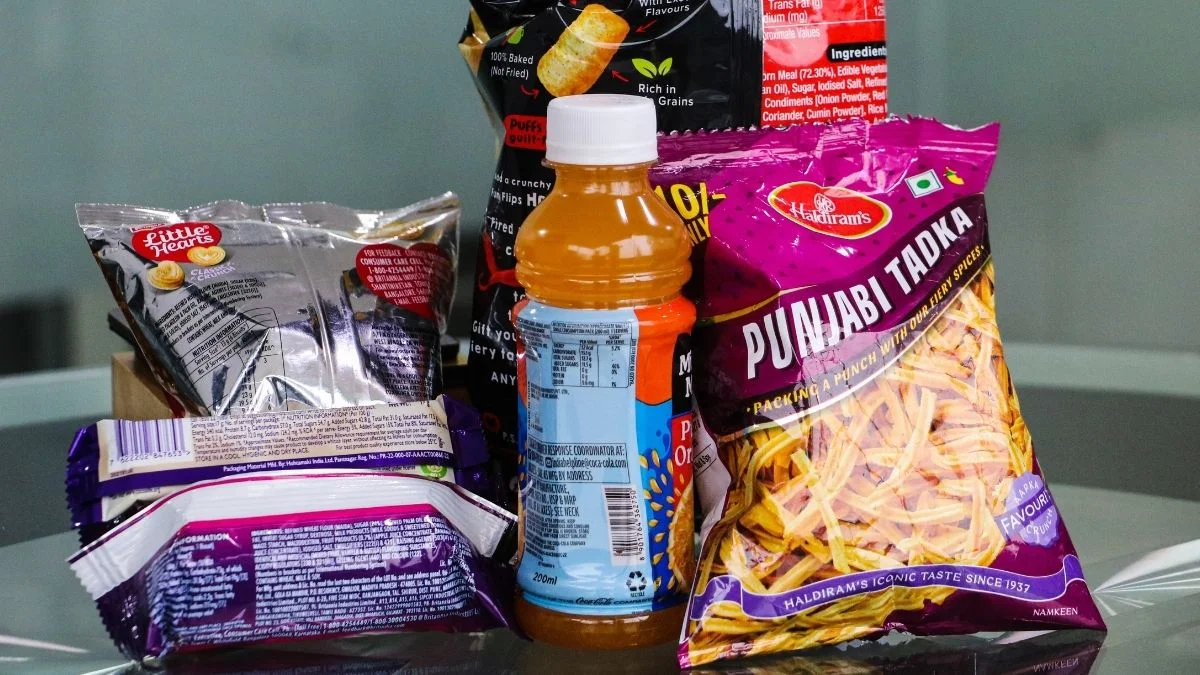
The Food Safety and Standards Authority of India (FSSAI) is tightening oversight of misleading food claims and nutritional labelling. It has issued over 150 notices to food companies and proposed red hexagonal front-of-pack warnings for packaged foods high in specified fat, sugar or salt.
About FSSAI
1. Food Safety and Standards Authority of India (FSSAI) is a statutory authority established under the Food Safety and Standards Act, 2006.
2. It works under the Ministry of Health and Family Welfare.
3. Headquarters: New Delhi.
4. Primary role: It lays down science-based food standards, regulates food safety, and oversees the manufacture, storage, distribution, sale and import of food.
5. It also regulates food labelling and advertising to protect consumers from misleading information.
Regulation of Food Claims
- FSSAI’s regulatory role covers not only the safety and composition of food, but also the accuracy of claims used to market food products.
- In the Bournvita matter, scrutiny focused on whether certain health and nutrient-related claims were adequately supported by evidence. The action did not establish that the product was unsafe.
- Mondelez India subsequently withdrew the claims flagged by FSSAI and removed related promotional material from e-commerce platforms.
- FSSAI has also advised food businesses against using absolute expressions such as “100%” where they could create an impression of complete purity or superiority.
- The scrutiny extends to e-commerce platforms, where online product descriptions and advertisements can influence consumers independently of physical packaging.
Proposed Front-of-Pack Warning Labels
- FSSAI has proposed a red hexagonal warning label on packaged foods that exceed prescribed levels of specified nutrients.
- Proposed declarations include “HIGH FAT,” “HIGH SUGAR,” “HIGH SALT” and “HIGHLY SWEETENED BEVERAGE,” wherever applicable.
- The nutritional thresholds are linked to the Dietary Guidelines for Indians, 2024, issued by the ICMR-National Institute of Nutrition.
- The warning would be displayed prominently on the front of the package, enabling consumers to identify nutritional concerns without relying solely on detailed information at the back.
- The proposal emerged in proceedings before the Supreme Court following a petition by 3S and Our Health Society, a Kerala-based organisation.
- No final implementation date has been notified so far.
Phased Implementation
- Phase I: The warning requirement would initially cover products high in at least two specified nutrients.
- Phase II: The requirement would subsequently extend to products exceeding the prescribed limit for any one specified nutrient.
- Single-ingredient products and certain foods inherently high in fat, sugar or salt, such as ghee, edible oil, sugar, jaggery and honey, would be excluded from these specific warnings, subject to other labelling requirements.
- The phased approach is intended to provide time for consumer adjustment and product reformulation.
Significance
- Consumer protection: Prominent warnings can help consumers make quicker and better-informed food choices.
- Evidence-based marketing: Requiring substantiation for health and nutrition claims can reduce misleading representations about food products.
- Public health: Better nutritional information can support efforts to address obesity and diet-related non-communicable diseases.
- Digital accountability: Monitoring online food listings is increasingly important as e-commerce becomes a major channel for food purchases.
Challenges and Way Forward
| Challenges | Way Forward |
| Limited Phase I coverage: Products high in only one specified nutrient may initially remain outside the warning requirement. | Timely expansion: Move to Phase II within a clearly defined timeframe to cover products exceeding the limit for any one specified nutrient. |
| Uncertain implementation timeline: The absence of a fixed date for Phase II may delay stricter regulation. | Clear regulatory milestones: Specify implementation dates and measurable compliance requirements for each stage. |
| Difficulty in assessing added nutrients: Determining the quantity of nutrients added during processing can complicate enforcement. | Standardised assessment: Establish uniform methods for testing, calculation and verification of nutrient levels. |
| Accessibility concerns: Limited language coverage or inadequate visibility may reduce the effectiveness of warnings. | Inclusive labelling: Use prominent formats and provide information in relevant Indian languages. |
| Online compliance gaps: Claims may differ between e-commerce listings, advertisements and physical packaging. | Digital surveillance: Regularly verify online claims and ensure consistency with approved product labels. |
| Risk of temporary compliance: Removal of a disputed claim may not prevent similar marketing practices from recurring. | Continuous enforcement: Conduct periodic monitoring and impose appropriate action for repeated violations. |
Conclusion
FSSAI’s recent measures indicate a shift towards greater transparency and accountability in food marketing. Their effectiveness will depend on clear standards, consistent enforcement and accessible information that enables consumers to make informed dietary choices.
FAQs
Q1. What is the main focus of FSSAI’s recent regulatory action?
Ans: It focuses on preventing misleading health and nutrition claims and improving the accuracy and transparency of food labelling and advertising.
Q2. What was the regulatory concern in the Bournvita matter?
Ans: The concern was whether certain health and nutrient-related claims were adequately supported by evidence and could mislead consumers. It was not a finding that Bournvita was unsafe.
Q3. What are front-of-pack warning labels?
Ans: These are prominent nutritional warnings placed on the front of food packages to help consumers quickly identify products containing high levels of specified nutrients.
Q4. What warnings has FSSAI proposed?
Ans: The proposed system includes “HIGH FAT,” “HIGH SUGAR,” “HIGH SALT” and “HIGHLY SWEETENED BEVERAGE” warnings, depending on the product’s nutritional composition.
Q5. How will the proposed warning system be introduced?
Ans: Phase I would cover products high in at least two specified nutrients, while Phase II would extend the requirement to products high in any one specified nutrient.
Q6. Why is regulation of online food advertisements important?
Ans: Online product listings can contain claims that influence purchasing decisions. Their regulation helps ensure that digital food marketing follows applicable food-safety and labelling standards.