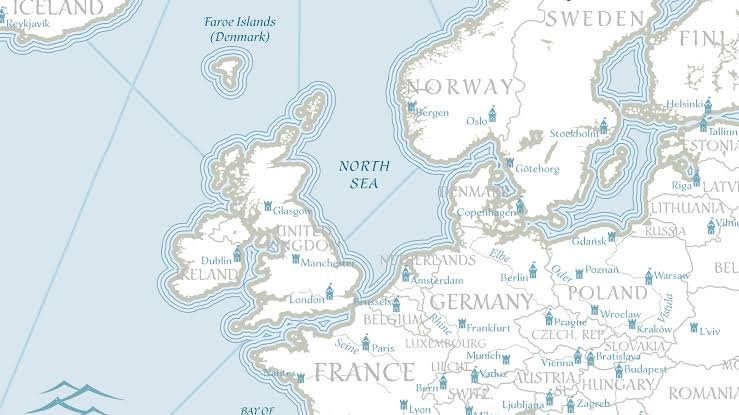
The Cool Temperate Western Margin Climate, commonly known as the British Type Climate, derives its name from the climatic conditions of the British Isles, where it is most extensively developed. It is one of the best examples of a maritime temperate climate and is also known as the North-West European Maritime Climate. This climatic region occurs along the western margins of continents between 40° and 60° latitudes. Its climate is primarily influenced by the Westerlies, the surrounding oceans and the frequent passage of temperate cyclones, producing a maritime environment characterised by equable temperatures, regular rainfall and distinct seasonal variations.
Distribution
- The British Type Climate is confined to the western coastal margins of continents in the temperate zone of both hemispheres. Its widest extent is found in Europe, where the uninterrupted influence of the Atlantic Ocean allows the climatic belt to extend far inland. It covers the United Kingdom and Ireland and extends across northern and western France, Belgium, the Netherlands, Denmark, western Norway and parts of north-western Iberia.
- In North America, the climatic belt is much narrower and is largely restricted to the coastal region of British Columbia. The Rocky Mountains act as a climatic barrier, preventing the moisture-bearing Westerlies from penetrating into the continental interior.
- The same climatic conditions are found in the Southern Hemisphere, particularly in southern Chile, southern Australia, Tasmania and most parts of New Zealand, where the surrounding oceans maintain a strong maritime influence throughout the year.
Climatic Characteristics
The British Type Climate is distinguished by equable temperatures, high humidity and the absence of a pronounced dry season. Frequent temperate cyclones cause rapid changes in weather, with clear skies often giving way to cloudiness, rainfall or strong winds within a short period. This high degree of weather variability is one of the defining features of this climatic region.
Temperature
- Temperatures remain moderate throughout the year, with the mean annual temperature generally ranging between 5°C and 15°C. The strong maritime influence limits seasonal extremes, resulting in a relatively small annual temperature range.
- Summers are generally mild and pleasant, while winters remain comparatively warm for their latitude, particularly in north-western Europe, owing to the warming influence of the North Atlantic Drift. However, occasional incursions of cold polar continental air masses, commonly associated with the Polar Vortex, may bring brief but intense cold spells during winter.
Rainfall
Rainfall is received throughout the year, with a slight increase during winter because of the frequent passage of frontal cyclones. The continuous supply of moisture prevents prolonged dry periods and provides favourable conditions for agriculture and natural vegetation.
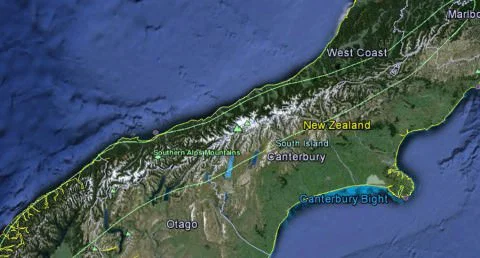
Relief significantly influences the spatial distribution of rainfall. In New Zealand, the western mountain slopes receive heavy orographic rainfall as moisture-laden winds are forced to ascend the mountain barriers. In contrast, the Canterbury Plains on the eastern side receive comparatively less rainfall because they lie in the rain-shadow region. Thus, both atmospheric circulation and topography play an important role in determining regional rainfall patterns.
Seasons
The British Type Climate experiences four distinct seasons, a characteristic feature of the temperate zone. Winter is generally cool, cloudy and humid, with frequent rainfall, fog and mist. As temperatures gradually rise, spring brings comparatively drier conditions and renewed vegetation growth. This is followed by a mild summer, characterised by long daylight hours and comfortable weather. During autumn, temperatures decline, winds become stronger and deciduous trees gradually shed their leaves before the onset of winter. The regular succession of these four seasons is one of the defining characteristics of this temperate maritime climate.
Natural Vegetation
The Cool Temperate Western Margin Climate supports extensive temperate deciduous forests, which constitute its characteristic natural vegetation. The combination of moderate temperatures and adequate rainfall throughout the year provides ideal conditions for the growth of broad-leaved trees. A distinctive feature of these forests is the seasonal shedding of leaves during autumn, an adaptation that reduces moisture loss and protects the trees from frost and severe winter conditions. The decomposition of fallen leaves further enriches the soil with humus, maintaining its fertility.
The forests are dominated by species such as oak, elm, ash, beech, birch and poplar, while willow commonly occurs in wetter areas. As altitude increases, lower temperatures and poorer soils gradually reduce the dominance of deciduous trees. They are progressively replaced by coniferous forests, whose needle-shaped leaves and conical form enable them to withstand heavy snowfall, colder temperatures and relatively infertile soils. This gradual transition from deciduous to coniferous vegetation is a characteristic feature of mountainous regions within this climatic zone.
Besides maintaining ecological stability, these forests constitute an important natural resource and provide the raw material for several timber-based industries.
Economic Significance
The favourable combination of a moderate climate, dependable rainfall, fertile soils and abundant forest resources has made the British Type Climate one of the world’s most economically developed temperate regions. Agriculture, forestry, livestock rearing and manufacturing have evolved together, creating diversified and highly productive economies.
Forestry and Lumbering
Forestry is an important economic activity because many deciduous tree species occur in relatively pure stands, making scientific forest management and timber extraction more efficient than in tropical mixed forests. The hardwood obtained from these forests is extensively used in furniture making, construction, flooring and fuel.
In Tasmania, extensive temperate eucalyptus forests provide valuable commercial timber. At higher elevations, coniferous forests supply softwood, which serves as the principal raw material for the paper, pulp and cardboard industries. The abundance of commercially valuable timber has therefore encouraged the growth of a well-developed wood-processing industry throughout the region.
Agriculture and Mixed Farming
Agriculture in this climatic region is highly diversified and closely integrated with livestock rearing through the system of mixed farming. Moderate temperatures, reliable rainfall and fertile soils create favourable conditions for cultivating cereals, root crops and temperate fruits. Owing to the dense population of north-western Europe, much of the agricultural output is consumed domestically rather than exported.
Among the cereals, wheat is the principal crop, while barley occupies an important position because of its use in the brewing and whisky-distillation industries. Other important crops include oats, potatoes and sugar beet.
Mixed farming combines crop cultivation with animal husbandry on the same farm, ensuring efficient utilisation of land, labour and agricultural by-products. Cattle form the backbone of this system by providing both milk and meat, while crop residues are effectively utilised as livestock feed. This integration of farming activities has made mixed farming one of the most productive agricultural systems in the temperate world.
Dairy Farming and Livestock Rearing
The cool and humid climate promotes the growth of nutritious natural pastures, making this region ideally suited for intensive dairy farming. Scientific livestock management, improved cattle breeds and mechanised farming practices have further enhanced productivity and enabled several countries to become globally recognised dairy producers.
The Netherlands is internationally renowned for its cheese, while Denmark and New Zealand are well known for the production of high-quality butter. Fresh milk is also processed into condensed milk, evaporated milk, cheese and several other dairy products for domestic consumption and export.
Livestock farming extends beyond dairying. Pigs and poultry are commonly reared alongside cattle, allowing efficient utilisation of agricultural and dairy by-products. This integrated farming system has enabled Denmark to become a major exporter of bacon, produced from pigs fed on skimmed milk generated during butter production.
Industrial Development
The availability of raw materials from agriculture and forestry, together with favourable climatic conditions, a skilled workforce and efficient transport networks, has encouraged rapid industrialisation across this climatic region. As a result, several of the world’s oldest and most diversified industrial centres have developed here.
The Ruhr Region in Germany and the industrial belts of Yorkshire, Manchester and Liverpool in the United Kingdom are among the leading manufacturing centres. The automobile industry occupies a particularly significant position, with internationally renowned companies such as BMW, Volkswagen, Audi and Mercedes-Benz headquartered in Germany.
The strong agricultural base has also promoted the growth of agro-based industries. Dairy-processing industries are highly developed in Denmark, the Netherlands and New Zealand, while Tasmania is internationally recognised for the production of high-quality Merino wool, which is exported to textile industries in different parts of the world. Thus, the close interaction between favourable climatic conditions, natural resources and human enterprise has enabled the region to develop a balanced and diversified economy.
Conclusion
The British Type Climate demonstrates the close relationship between climate and economic development. Its moderate temperatures, dependable rainfall and abundant natural resources have supported productive agriculture, commercial forestry and diversified industries, making it one of the world’s most economically advanced temperate climatic regions.
Q1. Why is the Cool Temperate Western Margin Climate also known as the British Type Climate?
Answer:
The climate derives its name from the British Isles, where it is most extensively developed. It is characterised by the year-round influence of the Westerlies, maritime conditions and frequent temperate cyclones, which produce mild temperatures, regular rainfall and highly changeable weather. It is also known as the North-West European Maritime Climate.
Q2. Why does north-western Europe experience milder winters than other regions at similar latitudes?
Answer:
The comparatively mild winters are mainly due to the warming influence of the North Atlantic Drift, a warm ocean current. This maritime influence moderates winter temperatures and prevents the severe cold conditions commonly experienced in continental regions located at similar latitudes.
Q3. Why is the British Type Climate confined to a narrow coastal belt in North America?
Answer:
In North America, the Rocky Mountains prevent the moisture-bearing Westerlies from moving inland. As a result, the maritime influence remains confined to the coastal region of British Columbia, restricting the spatial extent of this climatic zone.
Q4. How does relief influence rainfall in the British Type Climate?
Answer:
Mountain barriers significantly modify rainfall distribution. In New Zealand, the western slopes receive heavy orographic rainfall as moist maritime winds rise over the mountains, whereas the Canterbury Plains on the eastern side receive comparatively less rainfall because they lie in the rain-shadow region.
Q5. Why are temperate deciduous forests the characteristic vegetation of this climatic region?
Answer:
Moderate temperatures and rainfall throughout the year favour the growth of temperate deciduous forests. These trees shed their leaves during autumn as an adaptation to withstand the cold and frosty conditions of winter while conserving moisture.
Q6. Why is mixed farming widely practised in the British Type Climate?
Answer:
The region’s moderate climate, fertile soils and dependable rainfall support both crop cultivation and livestock rearing. Mixed farming combines these two activities on the same farm, ensuring efficient use of land and agricultural by-products while providing a stable source of income to farmers.
Q7. Why has the British Type Climate become one of the world’s leading dairy-producing regions?
Answer:
The cool and humid climate supports the growth of nutritious natural pastures, creating favourable conditions for intensive dairy farming. Scientific livestock management and improved cattle breeds have further enhanced dairy productivity in countries such as the Netherlands, Denmark and New Zealand.
Q8. How has the British Type Climate contributed to industrial development?
Answer:
The availability of forest resources, agricultural raw materials, favourable climatic conditions and efficient transport networks has promoted rapid industrialisation. As a result, important manufacturing centres such as the Ruhr Region, Yorkshire, Manchester and Liverpool developed in this climatic region, along with globally significant automobile, timber, paper and dairy industries.