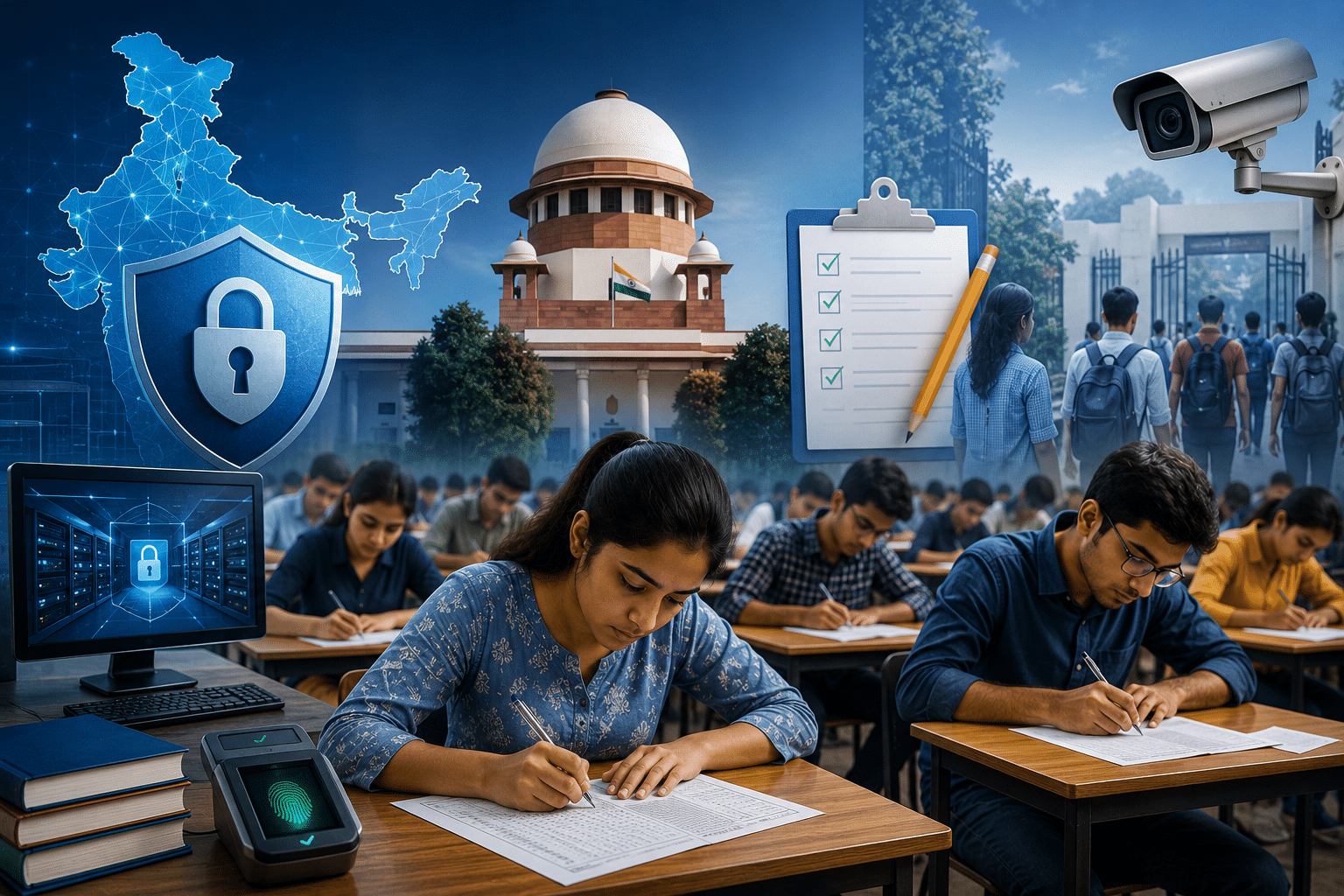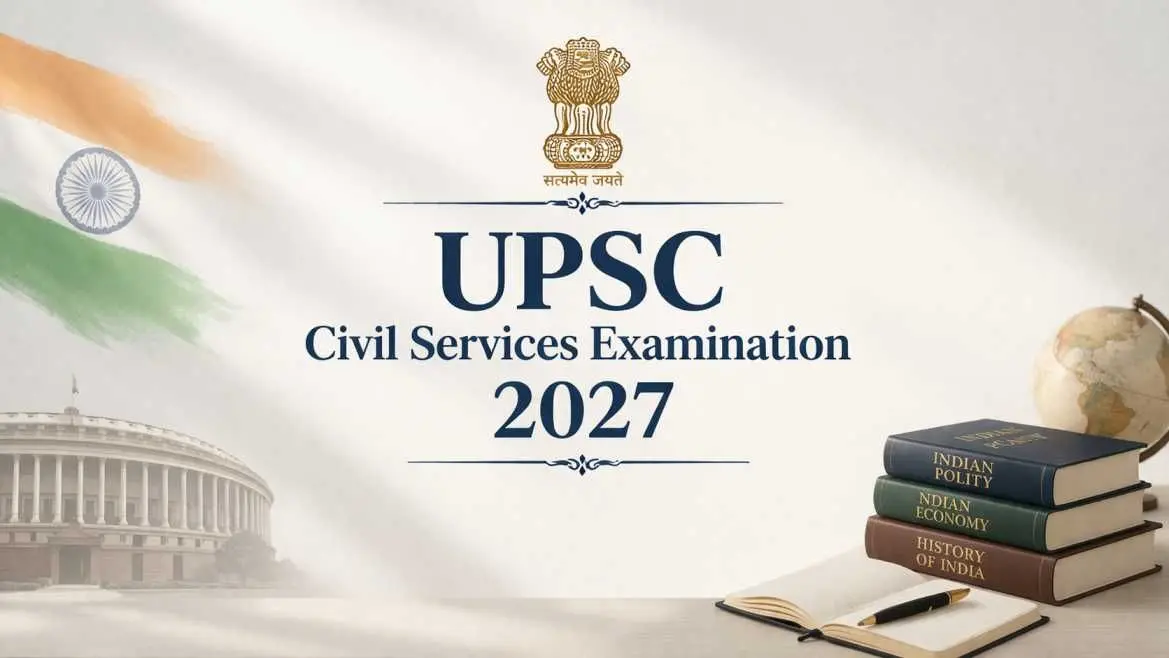
The Union Public Service Commission (UPSC) Civil Services Examination (CSE) is one of India’s most prestigious and competitive examinations. Every year, lakhs of aspirants appear for the exam with the dream of becoming IAS, IPS, IFS, IRS, and other civil servants. However, before starting preparation, understanding the UPSC exam pattern is essential.
The UPSC Civil Services Examination 2026 follows a three-stage selection process: the Preliminary Examination, the Main Examination, and the Personality Test (Interview). Each stage evaluates different skills, including analytical ability, subject knowledge, decision-making, and personality traits.
In this detailed guide, we will explain the complete UPSC exam pattern for 2026, including the marking scheme, number of papers, subjects, qualifying criteria, and important tips for aspirants.
UPSC Exam Pattern 2026: Overview
| Particulars | Details |
|---|---|
| Conducting Body | Union Public Service Commission (UPSC) |
| Examination Name | Civil Services Examination (CSE) 2026 |
| Selection Stages | Prelims, Mains, Interview |
| Mode of Examination | Offline (Pen and Paper) |
| Number of Papers | 11 Papers (2 Prelims + 9 Mains) |
| Total Marks for Final Merit | 2025 Marks |
| Negative Marking | Yes (Prelims only) |
| Official Website | https://www.upsc.gov.in |
Stages of the UPSC Civil Services Examination
The UPSC examination consists of three stages:
- Preliminary Examination (Prelims)
- Main Examination (Mains)
- Personality Test (Interview)
Candidates must qualify at each stage to move to the next phase.
UPSC Prelims Exam Pattern 2026
The Preliminary Examination serves as the first stage of the UPSC selection process. It is an objective-type examination conducted offline.
The marks obtained in the Preliminary Examination are not included in the final merit list. They are only used to shortlist candidates for the Main Examination.
UPSC Prelims 2026: Papers
| Paper | Subject | Marks | Duration |
|---|---|---|---|
| Paper I | General Studies (GS) | 200 | 2 Hours |
| Paper II | CSAT | 200 | 2 Hours |
UPSC Prelims Marking Scheme
General Studies (Paper I)
- Total questions: 100
- Total marks: 200
- Marks per question: 2
- Negative marking: 0.66 marks
CSAT (Paper II)
- Total questions: 80
- Total marks: 200
- Marks per question: 2.5
- Negative marking: 0.83 marks
- Qualifying nature
- Minimum qualifying marks: 33%
Subjects Covered in UPSC Prelims
General Studies (GS Paper I)
The paper generally includes questions from:
- History of India
- Indian National Movement
- Geography
- Indian Polity and Governance
- Economy
- Environment and Ecology
- Science and Technology
- Current Affairs
- International Relations
CSAT (Paper II)
The CSAT paper tests:
- Reading comprehension
- Logical reasoning
- Analytical ability
- Decision-making
- Basic numeracy
- Data interpretation
- Mental ability
Important Points About UPSC Prelims
- Both papers are conducted on the same day.
- CSAT is qualifying in nature.
- Candidates must clear both the GS cut-off and the CSAT qualifying marks.
- Prelims marks are not counted in the final ranking.
UPSC Mains Exam Pattern 2026
Candidates who qualify for the Preliminary Examination become eligible to appear for the Main Examination.
The UPSC Main Examination is descriptive in nature and consists of nine papers.
UPSC Mains 2026: Complete Paper Structure
| Paper | Subject | Marks |
|---|---|---|
| Paper A | Indian Language (Qualifying) | 300 |
| Paper B | English (Qualifying) | 300 |
| Paper I | Essay | 250 |
| Paper II | General Studies I | 250 |
| Paper III | General Studies II | 250 |
| Paper IV | General Studies III | 250 |
| Paper V | General Studies IV | 250 |
| Paper VI | Optional Subject Paper I | 250 |
| Paper VII | Optional Subject Paper II | 250 |
Total Mains Marks: 1750
UPSC Mains Papers Explained
Paper A: Indian Language
This paper is qualifying in nature and candidates need to secure minimum qualifying marks.
The paper generally includes:
- Essay writing
- Translation
- Comprehension
- Grammar
- Precis writing
Candidates from certain northeastern states may be exempted from this paper.
Paper B: English
The English paper evaluates:
- Comprehension
- Precis writing
- Grammar
- Vocabulary
- Short essays
Like Paper A, it is qualifying in nature.
Paper I: Essay
Candidates are required to write two essays.
Topics may come from:
- Governance
- Society
- Economy
- Ethics
- Technology
- Philosophy
- International relations
Marks in the essay paper directly affect the final rank.
General Studies Paper I
This paper covers:
- Indian heritage and culture
- Ancient, medieval, and modern history
- World history
- Geography of India and the world
- Indian society
General Studies Paper II
Topics include:
- Constitution
- Governance
- Parliament
- Judiciary
- Federalism
- International relations
- Welfare schemes
General Studies Paper III
This paper focuses on:
- Indian economy
- Agriculture
- Science and technology
- Environment
- Disaster management
- Internal security
This paper evaluates ethics and integrity.
Major topics include:
- Ethics
- Aptitude
- Emotional intelligence
- Probity in governance
- Case studies
Optional Subject Papers
Candidates must choose one optional subject from the UPSC list.
Each optional consists of two papers:
- Optional Paper I – 250 marks
- Optional Paper II – 250 marks
Total optional marks:
500 marks
List of Popular UPSC Optional Subjects
Some of the most popular optional subjects are:
- Geography
- Political Science and International Relations
- Sociology
- Public Administration
- History
- Anthropology
- Psychology
- Philosophy
- Economics
- Mathematics
- Hindi Literature
- English Literature
UPSC Mains Exam Duration
Each paper in the Main Examination is conducted for:
- Duration: 3 hours
- Extra time for PwBD candidates as per rules
UPSC Interview (Personality Test) Pattern 2026
Candidates who clear the Main Examination are called for the Personality Test.
The interview carries:
| Stage | Marks |
|---|---|
| Personality Test | 275
|
What Does UPSC Evaluate in the Interview?
The UPSC board assesses:
- Personality
- Leadership skills
- Decision-making ability
- Mental alertness
- Communication skills
- Integrity
- Administrative aptitude
- Awareness of current affairs
The interview is not a test of factual knowledge alone. It aims to evaluate whether a candidate possesses the qualities required for public service.
UPSC Final Merit Calculation
The final merit list is prepared using:
| Component | Marks |
|---|---|
| Mains Examination | 1750 |
| Interview | 275 |
| Total | 2025 |
Important Note:
- Prelims marks are not counted.
- Only Mains and Interview marks determine the final rank.
UPSC Negative Marking Rules 2026
Negative marking applies only to the Preliminary Examination.
Formula for Negative Marking
- One-third of the marks assigned to the question are deducted for every incorrect answer.
For example:
- GS question: –0.66 marks.
- CSAT question: –0.83 marks.
No marks are deducted for unanswered questions.
Medium of Examination
Candidates can write:
Prelims
- Hindi
- English
Mains
Candidates can write the examination in:
- Hindi
- English
- Any language listed in the Eighth Schedule of the Constitution.
Key Changes Aspirants Should Know
Candidates should remember:
- CSAT remains qualifying with 33% marks.
- UPSC Mains consists of nine papers.
- Essay and optional subjects play a major role in rank determination.
- The interview carries 275 marks.
- Final merit is based on Mains and Interview only.
Preparation Tips According to the UPSC Exam Pattern
For Prelims
- Focus on NCERTs and current affairs.
- Practice MCQs regularly.
- Strengthen CSAT preparation.
For Mains
- Develop answer-writing skills.
- Prepare notes for General Studies.
- Choose the optional subject carefully.
For Interview
- Improve communication skills.
- Read newspapers daily.
- Practice mock interviews.
Conclusion
The UPSC Civil Services Examination 2026 follows a rigorous three-stage selection process designed to assess a candidate’s knowledge, analytical ability, ethics, and personality. Understanding the exam pattern helps aspirants create an effective preparation strategy and avoid common mistakes.
The journey from Prelims to the final interview requires consistency, discipline, and smart preparation. Candidates who understand the structure of the examination early can plan their studies more efficiently and improve their chances of success.
Frequently Asked Questions (FAQs)
How many stages are there in the UPSC exam?
The UPSC Civil Services Examination consists of three stages: Prelims, Mains, and Interview.
Are UPSC Prelims marks counted in the final merit list?
No, the marks obtained in the Preliminary Examination are only used for qualification and are not included in the final merit list.
How many papers are there in UPSC Mains?
UPSC Mains consists of nine papers, out of which seven papers are counted for merit ranking.
Is CSAT qualifying in UPSC?
Yes, CSAT is qualifying in nature, and candidates must score at least 33% marks.
What is the total marks of UPSC Mains and Interview?
The Mains examination carries 1750 marks, while the interview carries 275 marks, making a total of 2025 marks.
Is there negative marking in UPSC?
Yes, negative marking applies only to the Preliminary Examination.
How many optional papers are there in UPSC?
There are two optional subject papers, each carrying 250 marks.
What is the duration of each UPSC Mains paper?
Each UPSC Mains paper is conducted for three hours.