Context
A recent volunteer-led clean-up drive at the historic Nabha Fort in Patiala district of Punjab has renewed calls for the conservation and restoration of the monument, which is associated with Maharaja Ripudaman Singh, and its development as a heritage tourism destination.
About Nabha Fort
- It was the residence of the rulers and the administrative centre of the former Nabha princely state under the Phulkian dynasty.
- The fort was developed over a period of more than 150 years, with rulers such as Maharaja Hira Singh (1843–1911) contributing to its expansion and beautification.
- During the Anglo-Sikh Wars, the Nabha State supported the British, which helped it retain its princely status during British rule.
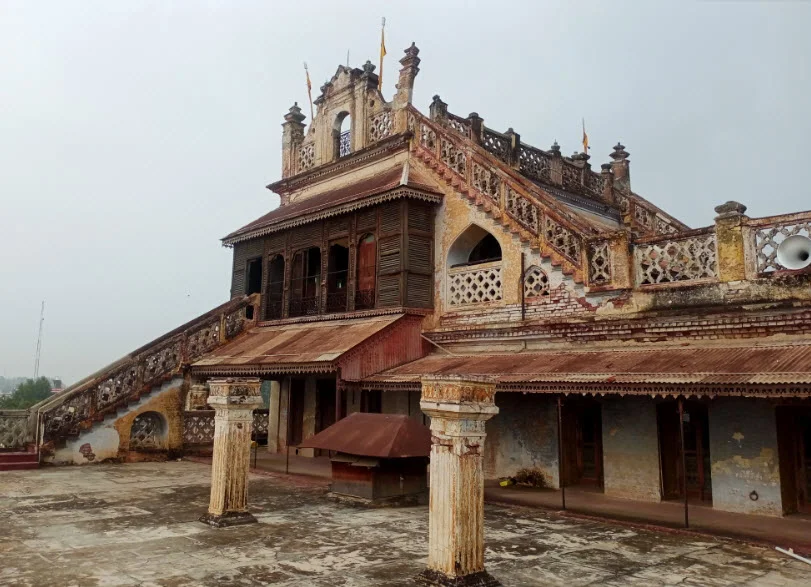
- The fort includes fortified walls, bastions, gateways, palaces, gardens, and audience halls, reflecting both defensive and residential functions.
- Its architecture shows a blend of Mughal, Rajput, and Sikh styles.
- The interiors feature frescoes, mirror work, coloured glass, wood carvings, decorative plasterwork, stone door frames, and stone jaalis.
- Important discoveries at the site include wall paintings depicting Maharaja Ranjit Singh’s army and the Sard Khana, a traditional basement cooling system.