Context
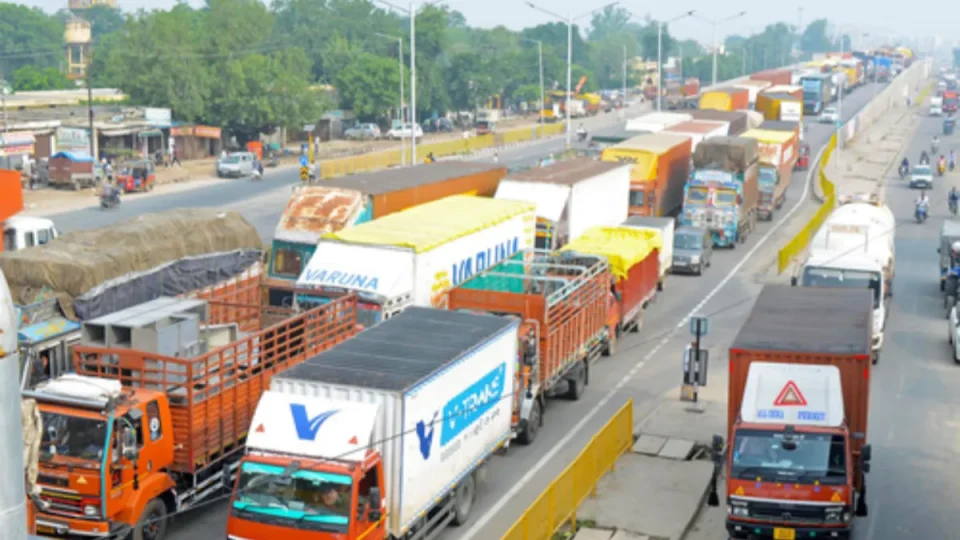
The Union Cabinet has approved a two-year Clean Mobility Scheme for Delhi-NCR to encourage the replacement of old and polluting trucks and buses with BS-VI or higher-emission-compliant vehicles. The scheme is expected to benefit around 2.07 lakh commercial vehicles, including nearly 1.91 lakh trucks and 16,329 buses.
Bharat Stage (BS) Emission Norms
- Bharat Stage (BS) norms are emission standards prescribed by the Government of India to regulate pollutants released by motor vehicles.
- Evolution of BS norms:
-
- BS-II: 2000 (four-wheelers) and 2001 (heavy vehicles)
- BS-III: 2005
- BS-IV: 2010
- BS-VI: 2020
- India directly transitioned from BS-IV to BS-VI, bypassing BS-V.
- BS-VI standards mandate cleaner fuels, stricter emission limits, and advanced pollution-control technologies.
Rationale for the Scheme
- Delhi-NCR has nearly 2.98 crore registered vehicles, making transport a major contributor to air pollution.
- Older commercial vehicles contribute disproportionately to emissions of PM2.5, NOx, and other harmful pollutants.
- These emissions adversely affect air quality and pose significant public health risks.
- A substantial share of commercial buses and trucks in the region still operate under pre-BS-VI standards.
Impact of Legacy Vehicles on Air Quality
- Older vehicles operate under less stringent emission norms and generate significantly higher emissions.
- Engine deterioration over time reduces combustion efficiency and increases pollutant release.
- Most legacy vehicles lack advanced emission-control technologies such as:
-
- Diesel Particulate Filters (DPF)
- Selective Catalytic Reduction (SCR) systems
- Consequently, they emit substantially higher levels of particulate matter and nitrogen oxides than BS-VI-compliant vehicles.
Key Features of the Scheme
- Encourages the replacement of ageing commercial vehicles with cleaner alternatives.
- BS-III and older vehicles are required to be scrapped.
- BS-IV vehicles may either be scrapped or sold outside NCR.
- Such vehicles cannot be transferred to cities covered under the National Clean Air Programme (NCAP).
- Government-owned vehicles are excluded from the scheme.
Significance
- Facilitates the transition towards a cleaner commercial vehicle fleet.
- Reduces emissions of PM2.5, NOx, and other harmful pollutants.
- Supports improved air quality and public health outcomes in Delhi-NCR.
- Promotes the adoption of cleaner technologies and stricter emission standards.
- Complements India’s broader clean mobility and environmental goals.
Related Initiatives and Institutional Framework
- National Clean Air Programme (NCAP) aims to reduce particulate pollution in non-attainment cities.
- PM-eBus Sewa Scheme promotes cleaner public transport through electric buses.
- The Commission for Air Quality Management (CAQM) coordinates air quality management measures across Delhi-NCR and adjoining areas.
- CAQM assessments indicate that a significant proportion of commercial vehicles in the region still belong to pre-BS-VI categories, highlighting the need for fleet modernisation.
Conclusion
The Clean Mobility Scheme addresses a major source of urban air pollution by accelerating the replacement of ageing commercial vehicles. Its effective implementation can strengthen clean-air efforts, improve public health outcomes, and support the transition towards sustainable urban transport.