Context
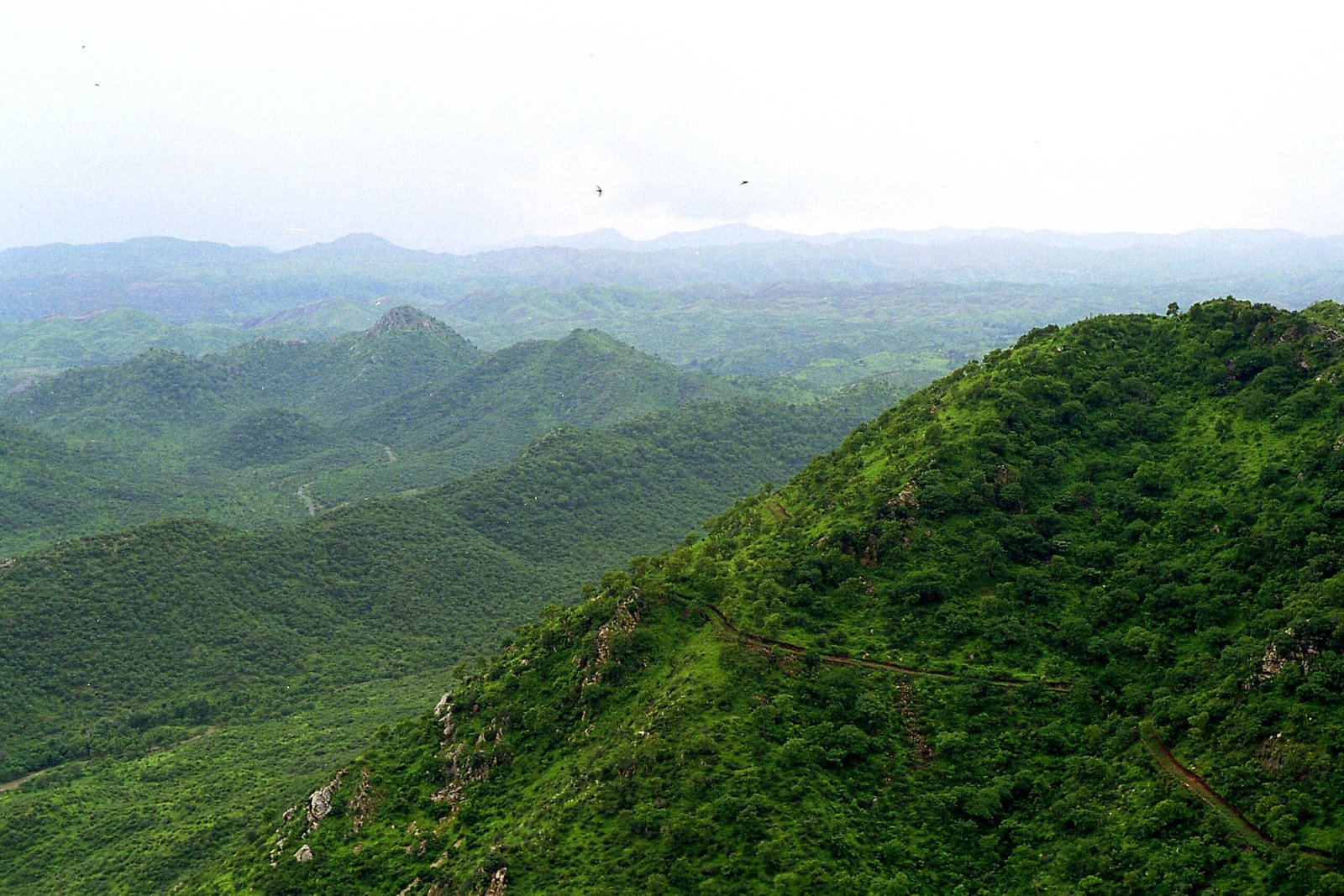
A recent dust storm in Rajasthan has highlighted the ecological significance of the Aravalli Range, which acts as a natural barrier between the Thar Desert and the densely populated Indo-Gangetic Plains. However, increasing anthropogenic pressures are weakening this protective function.
Ecological Significance of the Aravalli Range
- The Aravalli Range acts as a natural barrier that restricts the movement of dust and sand from the Thar Desert towards the Indo-Gangetic Plains.
- Obstacle dunes along its western slopes provide evidence of its role in trapping wind-borne sediments.
- Vegetation cover further reduces dust transport by filtering airborne particles and slowing wind movement.
Extent and Causes of Degradation
- A Forest Survey of India (2018) assessment reported the disappearance of several Aravalli hills due to anthropogenic pressures.
- Significant degradation has been recorded in areas such as Naraina, Kalwar, Kotputli, Jhalana, and Sariska.
- Major drivers of degradation include:
- Mining activities;
- Deforestation and loss of vegetation cover;
- Urbanisation and infrastructure expansion;
- Land-use changes and encroachments;
- Overgrazing and unsustainable resource use.
- The formation and expansion of gaps within the range have weakened its capacity to intercept dust-laden winds.
Implications of Degradation
- Increased movement of dust into the Indo-Gangetic Plains.
- Deterioration of air quality, particularly in Delhi-NCR and adjoining regions.
- Changes in local rainfall and microclimatic conditions.
- Adverse impacts on agriculture, public health, and ecosystem stability.
- Increased environmental vulnerability and reduced climate resilience in northern India.
Conclusion
The Aravalli Range is a critical ecological asset that plays a vital role in environmental security and climate regulation in northern India. Conserving and restoring the range through sustainable land-use practices, afforestation, and regulation of mining activities is essential for enhancing climate resilience and ensuring environmental sustainability.