Context
The Holy Relics of Arhat Sariputra and Arhat Mahamoggallana were ceremonially enshrined at the Gandantegchenling Monastery in Ulaanbaatar, Mongolia, highlighting the shared Buddhist heritage and long-standing cultural and spiritual ties between India and Mongolia.
About Mongolia
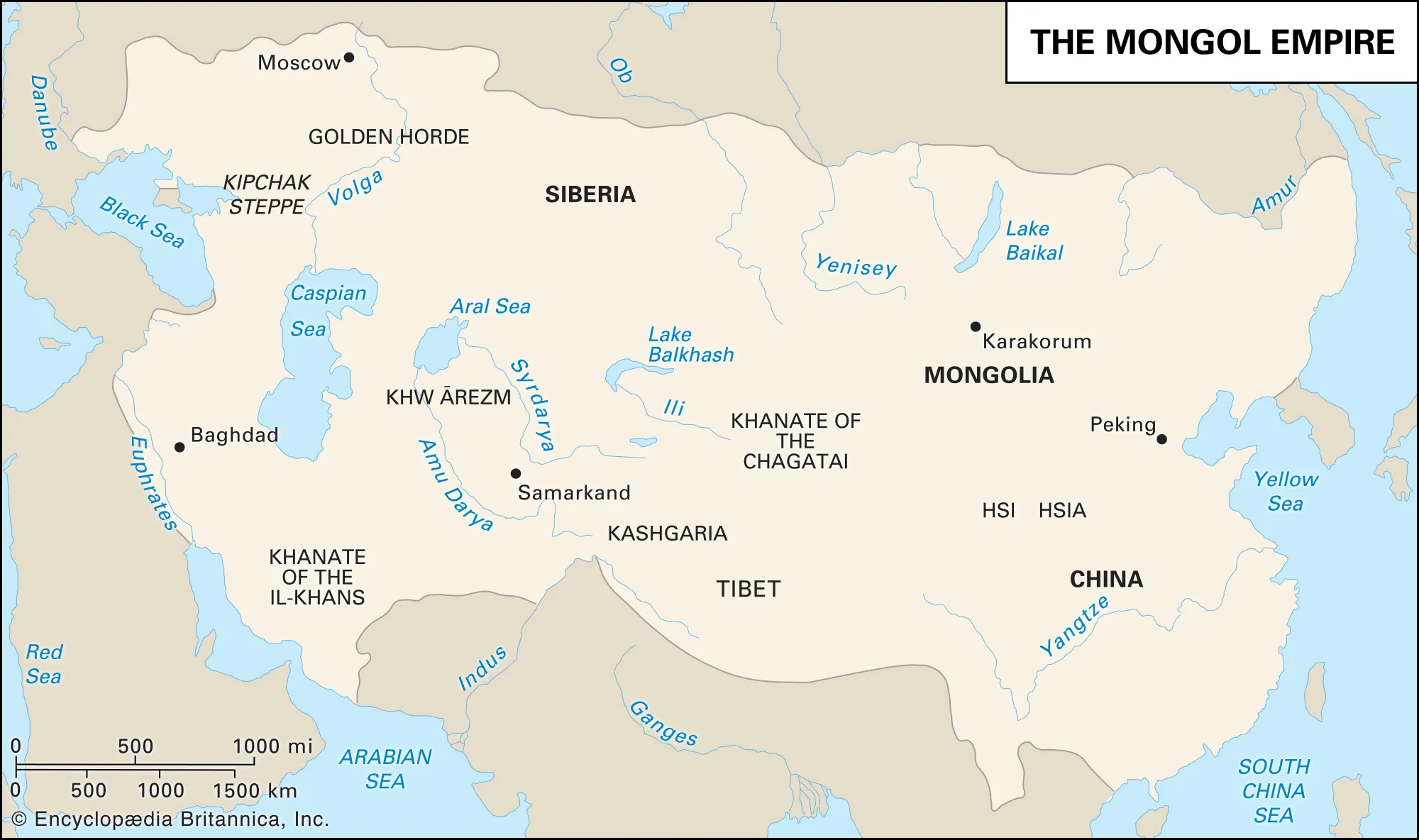
- Mongolia is a landlocked nation in north-central Asia, bordered by Russia to the north and China to the south. Its capital is Ulaanbaatar.
- Mongolia has a continental climate with long, harsh winters and short summers due to its high elevation and inland location.
- Its natural vegetation is distributed across four major ecological zones: forest-steppe, steppe, semi-desert, and desert.
- The country’s terrain comprises diverse landforms, including vast plains, desert regions, and prominent mountain systems.
- Major mountain ranges include the Altai, Khangai, and Khentii Mountains.
- Nayramadlin Orgil, located in the Altai Mountains, is the highest point in Mongolia, rising to 4,374 metres.
- The Orkhon River is a major river of Mongolia and flows through the Orkhon Valley Cultural Landscape, a UNESCO World Heritage Site.
- Hovsgol Nuur is one of Asia’s largest freshwater lakes and lies near the Russia–Mongolia border.
- Mongolia possesses substantial reserves of coal, copper, gold, silver, fluorite (fluorspar), and other metallic ores.