Context
The Idu Mishmi tribe of Arunachal Pradesh is known for its traditional belief system that promotes harmony with nature and wildlife conservation.
About Idu Mishmi tribe
- The Idu Mishmi are a tribal community of Arunachal Pradesh mainly inhabiting the Dibang Valley, Lower Dibang Valley and Lohit districts in the Mishmi Hills along the India–Tibet border.
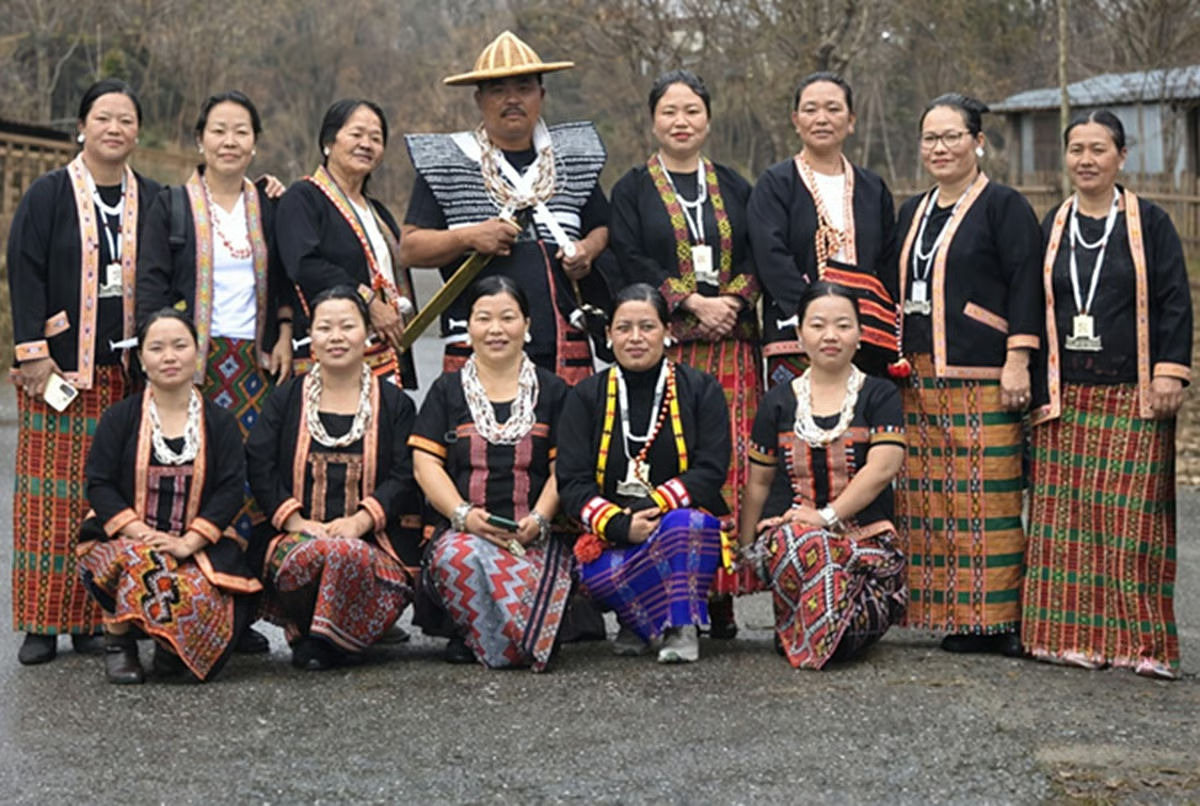
- They are known for their distinctive attire, unique hairstyles and intricate weaving patterns.
- Traditionally animists, the community shares a close spiritual relationship with forests, wildlife and the natural environment.
- In Idu folklore, tigers are regarded as “elder brothers”, due to which the animal occupies a sacred position in their culture.
- Their customary belief system, known as Iyu-ena, imposes taboos on hunting several animals and strictly prohibits the killing of tigers, thereby contributing to wildlife conservation.
- The tribe is also recognised for its weaving and craftsmanship traditions.
- UNESCO has classified the Idu Mishmi language as endangered.
- Reh and Ke-Meh-Ha are the major festivals of the community, while Ebu is their traditional rice beer.
- The Idu Mishmi society is patriarchal and patrilineal, with property generally inherited through the male line.