Context
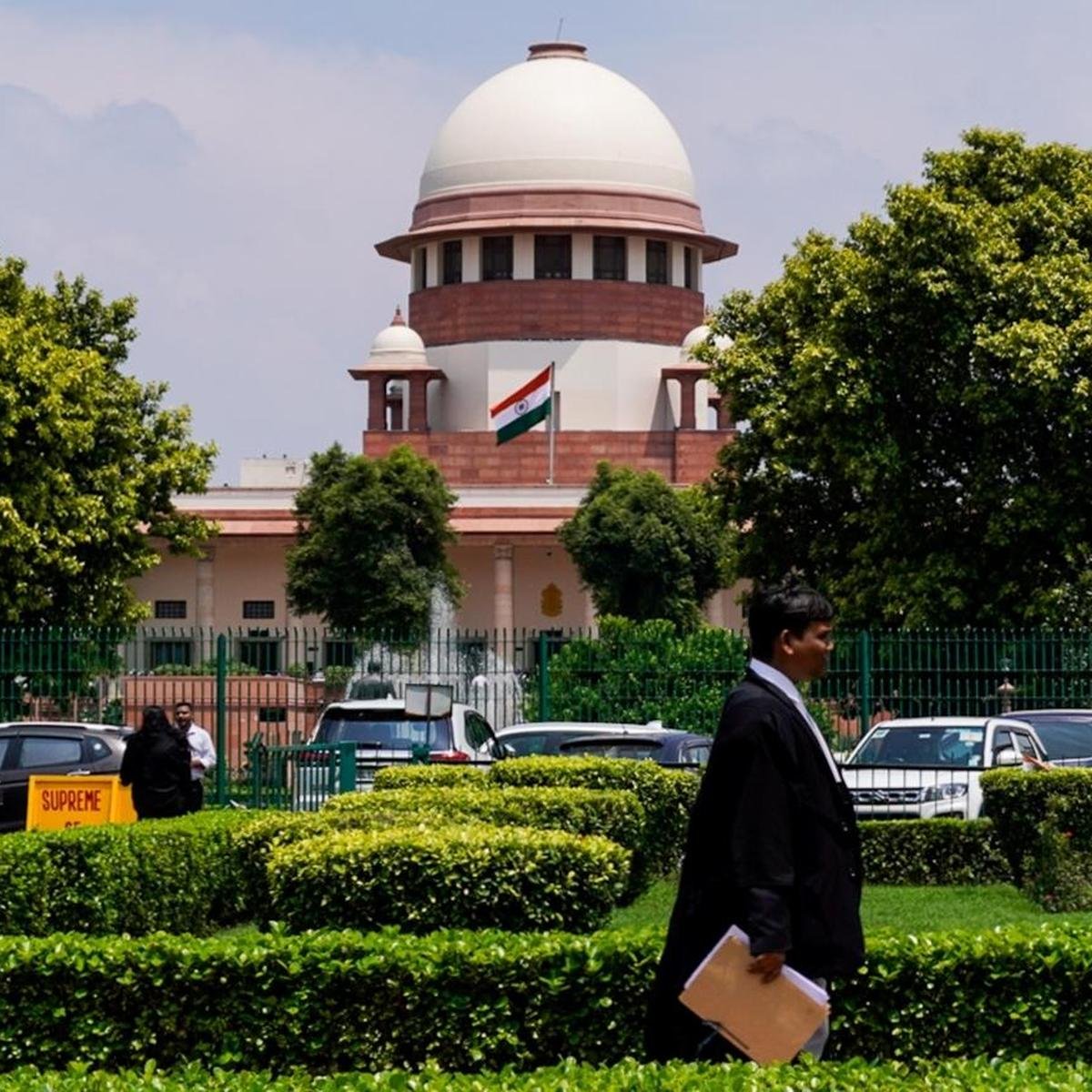
Recently, the President of India promulgated the Supreme Court (Number of Judges) Amendment Ordinance, 2026 under Article 123 of the Constitution to increase the sanctioned strength of Supreme Court judges from 33 to 37, excluding the Chief Justice of India.
Ordinance-Making Power in India
- Article 123 of the Constitution empowers the President to promulgate ordinances when Parliament is not in session and immediate legislative action becomes necessary.
- Since ordinances are issued by the executive, Parliament itself cannot promulgate an ordinance.
- An ordinance carries the same force and effect as a law enacted by Parliament.
- However, it is a temporary law and must receive Parliamentary approval within six weeks of the reassembly of Parliament.
- If the two Houses of Parliament reconvene on different dates, the later date is considered for calculating the six-week period.
- An ordinance can remain in force for a maximum period of six months and six weeks if Parliament does not meet earlier.
- Article 213 grants similar ordinance-making powers to the Governor when the State Legislature is not in session.
Enactment Process
- The Union Cabinet plays the central role in the promulgation of an ordinance, as the President acts on the aid and advice of the Council of Ministers.
- The President may return the proposal for reconsideration, but must promulgate the ordinance if the Cabinet sends it again.
- An ordinance may also have retrospective effect and can amend or repeal an existing Parliamentary law or another ordinance.
Withdrawal and Limitations
- The President may withdraw an ordinance at any time.
- Parliament can also disapprove an ordinance through resolutions passed by both Houses.
- Rejection of an ordinance may indicate that the government has lost majority support in Parliament.
- Any ordinance issued on a subject outside Parliament’s legislative competence becomes void.
Re-promulgation of Ordinances
- The government may re-promulgate an ordinance if it lapses before Parliamentary approval.
- However, the Supreme Court in Krishna Kumar Singh v. State of Bihar (2017) held that repeated re-promulgation without legislative approval is unconstitutional.
- The Court emphasised that ordinance-making power is an emergency provision and cannot be used to bypass the legislature.
Ordinance-Making Power: Advantages and Concerns
| Advantages | Concerns |
| Ordinances enable the government to take immediate action during urgent situations when Parliament is not in session. | Frequent use of ordinances bypasses the normal legislative process and weakens parliamentary scrutiny. |
| They help the executive respond quickly to emergencies, economic issues or unforeseen developments. | Excessive reliance on ordinances can disturb the balance between the executive and legislature. |
| Ordinances provide temporary legal backing in situations requiring immediate policy intervention. | Since ordinances are temporary, they may create uncertainty in law and governance. |
| They ensure continuity in governance when immediate legislation becomes necessary. | Governments may misuse ordinance powers to avoid debate, opposition or public discussion in Parliament. |
| Ordinances can address legal gaps until Parliament formally considers the matter. | Repeated re-promulgation undermines democratic accountability and constitutional morality. |
Important Judicial Pronouncements on Ordinances
- C. Cooper v. Union of India (1970)
- The case arose from the Banking Companies (Acquisition and Transfer of Undertakings) Ordinance, 1969, through which the government nationalised 14 major banks.
- The Supreme Court ruled that the President’s satisfaction in issuing an ordinance is not beyond judicial scrutiny.
- The Court also held that ordinances must comply with constitutional provisions and cannot infringe Fundamental Rights.
- K. Roy v. Union of India (1982)
- The case examined the constitutional validity of the National Security Ordinance, 1980, related to preventive detention.
- The Supreme Court upheld the ordinance but introduced safeguards such as review by an advisory board and communication of detention grounds to the detainee.
- The Court observed that ordinance-making power should be exercised only in urgent and exceptional situations, not as a routine legislative tool.
- C. Wadhwa v. State of Bihar (1987)
- The case challenged the Bihar government’s repeated re-promulgation of ordinances without legislative approval.
- The Supreme Court declared the practice unconstitutional and termed it a misuse of constitutional authority.
- The Court clarified that an ordinance automatically ceases to operate if the legislature does not approve it within six weeks of reassembly and cannot continue through repeated re-promulgation.
Need to Increase the Strength of the Supreme Court
- Rising pendency of cases has placed severe pressure on the Supreme Court, with pending cases crossing 93,000.
- The post-pandemic rise in e-filing, increasing Special Leave Petitions (SLPs), constitutional disputes, PILs and commercial litigation have further increased the workload.
- Judicial delays weaken the rule of law, reduce public confidence and affect effective enforcement of Fundamental Rights.
- Increasing the number of judges is expected to improve disposal rates, reduce delays and enable the formation of more Constitution and specialised benches.
- Expanding responsibilities of the Court in areas such as federal disputes, electoral matters, digital privacy, environmental litigation and economic regulation have also necessitated institutional strengthening.
Wider Judicial Reforms Required
- Increasing the number of Supreme Court judges alone cannot resolve the structural problems of the judiciary unless High Courts and subordinate courts are also strengthened.
- Large vacancies in the judiciary require timely appointments through better coordination between the collegium and the government.
- Establishing an All India Judicial Service under Article 312 can improve recruitment standards and bring greater uniformity in the lower judiciary.
- The Supreme Court should focus more on constitutional and nationally significant matters instead of functioning primarily as a regular appellate court.
- Greater emphasis on mediation, arbitration and Lok Adalats can reduce litigation burden through Alternative Dispute Resolution (ADR) mechanisms.
- Judicial infrastructure requires expansion through additional courtrooms, trained staff, digital systems and research support.
- Wider use of technology such as e-courts, AI-assisted case management, virtual hearings and scientific case allocation systems can improve efficiency.
- Permanent Constitution Benches may help in faster disposal of important constitutional cases.
Conclusion
The increase in the sanctioned strength of the Supreme Court represents an important step towards addressing mounting judicial pendency and improving access to timely justice. However, long-term improvement in judicial efficiency requires comprehensive reforms across all levels of the justice delivery system, including infrastructure expansion, technological integration and strengthening of subordinate