Context
Oman’s Sohar and Salalah ports, located along the Indian Ocean, are helping facilitate the smooth export of food products from India to six Gulf Cooperation Council (GCC) countries.
About Oman
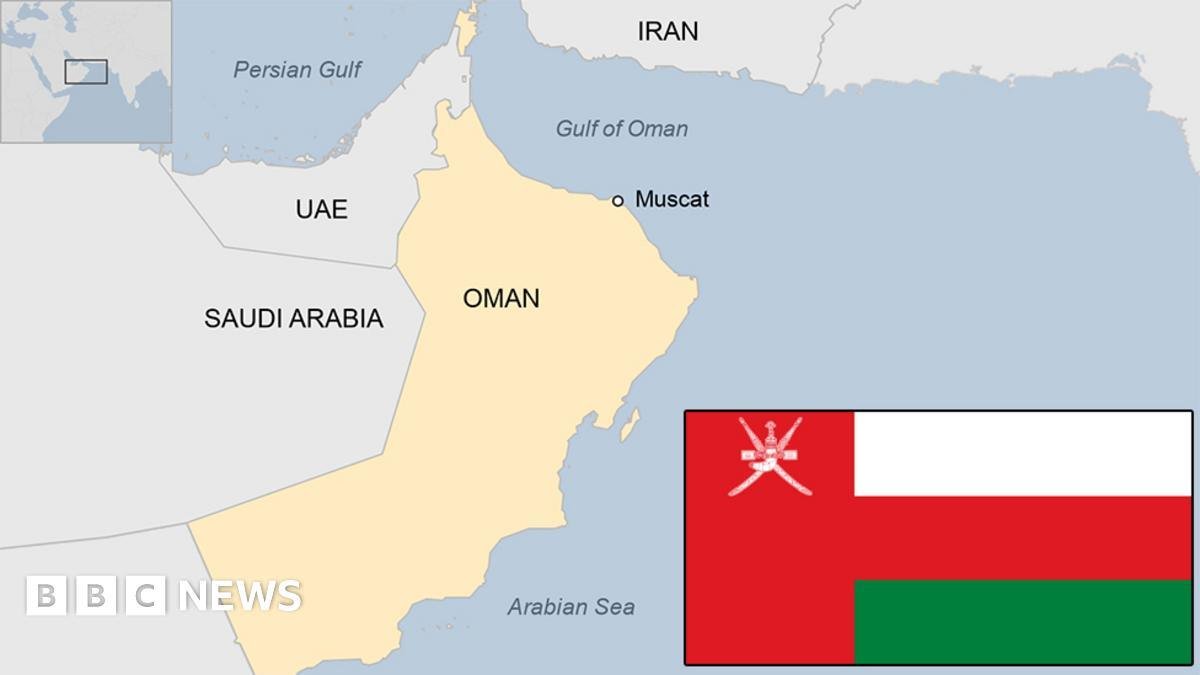
- Oman is located in Western Asia on the Arabian Peninsula, occupying a key position at the south-eastern edge of the region near the mouth of the Persian Gulf.
- It shares land borders with the United Arab Emirates (north-west), Saudi Arabia (west), and Yemen (south-west), giving it strong regional connectivity.
- The country has an important maritime location with coastlines along the Arabian Sea (south and east) and the Gulf of Oman (north-east).
- Oman also includes offshore islands such as Masirah Island and Al-Hallaniyah Island, extending its maritime domain.
- The capital city of Oman is Muscat, located along the northern coast.
Physical Geography and Climate
- The country experiences a largely arid desert climate, with hot and dry conditions in the interior and hot, humid weather along the coastal areas.
- In the southern region, Oman is influenced by the Southwest monsoon (May to September), which brings seasonal climatic variation.
- The highest peak in the country is Jebel Shams (Mount Shams), rising to about 9,777 feet.
- A significant desert feature is the Rub’ al-Khali (Empty Quarter), which Oman shares with Saudi Arabia and Yemen and forms part of one of the world’s largest sand deserts.
Economy and Natural Resources
- Oman is rich in natural resources such as petroleum, natural gas, copper, chromium, gypsum, asbestos, marble, and limestone, which form the backbone of its economy.
- The country’s largest port is the Port of Salalah, which plays a key role in regional and international maritime trade.
- Due to its strategic location and port infrastructure, Oman serves as an important link between West Asia, the Indian Ocean region, and global shipping routes.