Context
Scientists have recently reported the presence of the buff tip moth as an invasive species in Ladakh, where it is emerging as a threat to the region’s farm-based economy.
About Buff Tip Moth
- The buff tip moth, scientifically known as Phalera bucephala, belongs to the Notodontidae family and is naturally found across Europe, East Asia, and parts of Africa, where it is not regarded as an invasive species.
- It follows a seasonal life cycle, where adults emerge around mid-June, mate quickly, and lay egg clusters that may contain up to 150 eggs.
- After hatching in July, the larvae begin feeding in groups, initially scraping leaf surfaces and eventually consuming the leaves completely.
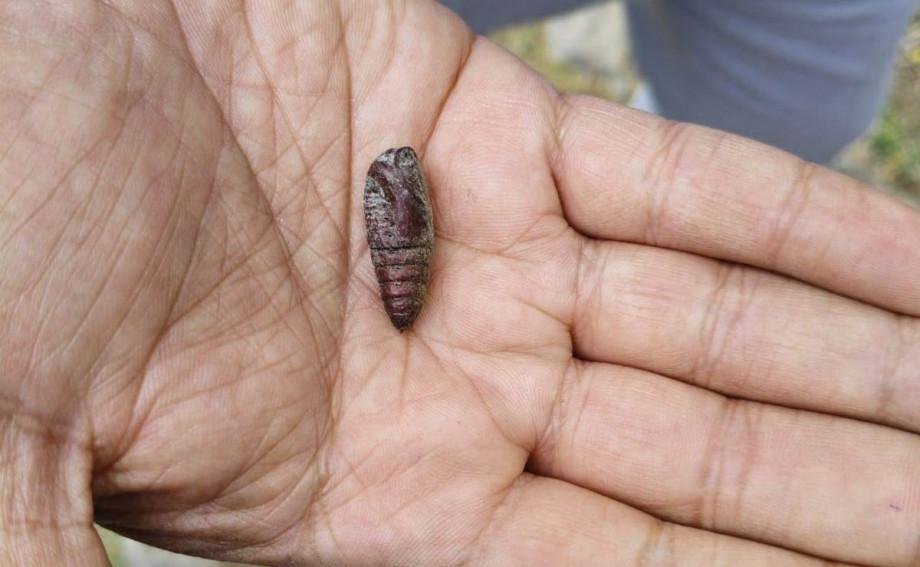
- As summer ends, the caterpillars move into the soil to pupate, where they remain dormant through winter and reappear in the next season.
- The species has a strong camouflage adaptation, closely resembling a birch twig, which helps it escape predators.
- It is a highly destructive defoliator, capable of stripping trees of their foliage in a short time span.
- Its polyphagous nature, allowing it to feed on many different plant species, increases its spread potential and makes it a serious threat to vegetation and agriculture.